
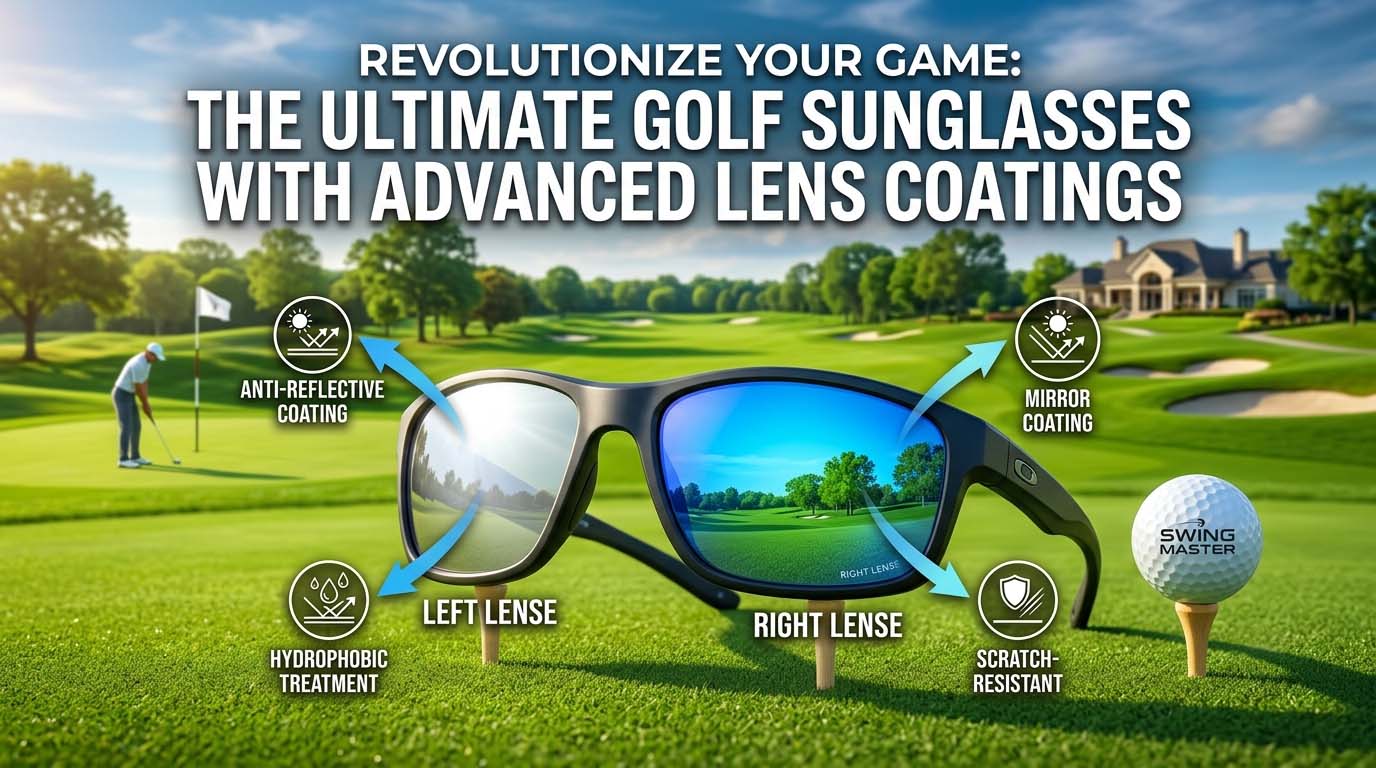
Lens coatings are thin layers applied to sunglass lenses that do more than just protect the surface. They manage light, repel water, resist scratches, and reduce glare. For golf, the right mix of coatings means the difference between picking out the ball against a bright sky and squinting through a hazy reflection off a bunker.
This guide breaks down each coating type, what it actually does on the course, and why coatings and tints work together in ways most articles ignore.
What Are Lens Coatings and Why Do They Matter for Golf?
A lens coating is a functional treatment added to the lens surface after the base tint is applied. The tint controls how much light enters and what color balance you see. The coating handles everything else: reflections, durability, moisture, and cleaning ease. On the golf course, conditions change fast.
You walk from shade to full sun, you sweat, you wipe your lenses with a shirt, you set them down on damp grass. Each coating tackles a specific problem that comes up during a round.
- Light management: Coatings reduce glare from overhead sun or reflections off water and sand, so your eyes stay relaxed, and you see the course clearly.
- Durability: Scratch-resistant layers keep your lenses from marring when you drop them or wipe off grit. Hydrophobic coatings make cleaning easy and keep dew from blurring your view.
- Comfort: Anti-reflective coatings on the back of the lens stop light from bouncing into your eye from behind, which reduces eye strain when you’re looking down at the ball on a sunny day.
The Key Types of Lens Coatings for Golf Sunglasses
Not all coatings are the same, and not every coating is useful in every situation. Here are the main ones you’ll encounter and how they perform on the course.
Anti-Reflective (AR) Coating
AR coating is applied to the back of the lens. It eliminates the reflection of light that comes from behind you, like the sun over your shoulder. Without it, that light bounces off the inner surface of the lens and into your eye, creating a ghost image or making you squint.
For golf, this is critical when you’re addressing the ball with the sun behind you. An AR-coated lens keeps that reflection from interfering with your focus on the ball and the green. Premium AR coatings also reduce glare from artificial lights, though that’s less relevant outdoors.
Mirror Coating
Mirror coating is a thin metallic layer on the front of the lens that reflects a portion of incoming light away. It reduces the overall brightness that reaches your eye, making it useful on the brightest days.
Because it reflects visible light, a mirror coating can make the view appear slightly darker than the lens’s stated VLT (visible light transmission). It also changes the perceived color of the lens from the outside, but the view through the lens remains the same tint.
For golf, a mirror coating is a good choice when you play on open fairways in high sun and want to cut harsh brightness without losing contrast.
Scratch-Resistant Coating
A hard coating that protects the lens from abrasion. Golf involves plenty of opportunities for scratches: wiping sweat with a glove, setting sunglasses lens-down on a cart seat, or brushing against sand on a bunker shot.
Scratch-resistant coatings reduce micro-scratches that accumulate over time and degrade optical clarity. They’re not shatterproof, but they extend the life of the lenses noticeably. Polycarbonate lenses are naturally more scratch-prone than glass, so a scratch-resistant coating is especially valuable on lightweight plastic lenses.
Hydrophobic and Oleophobic Coating
Hydrophobic coatings repel water; oleophobic coatings repel oils (like fingerprints). Together, they keep the lens surface clean and clear. For early morning tee times, dew settles on your lenses and can blur your view until you wipe it off.
A hydrophobic coating makes water bead up and roll away, so even a quick shake or a wipe with a microfiber cloth clears the lens instantly. The oleophobic element stops grease from your skin or sunscreen from smearing across the lens, which means you don’t have to clean them as often during the round.
Anti-Static Coating
Less common but worth mentioning. An anti-static coating reduces the lens’s attraction to dust and pollen. If you play in areas with high pollen or on dusty courses, this can keep your lenses cleaner between wipes.
It’s not essential, but it’s a nice extra if you have sensitive eyes or play in arid conditions.
How Each Coating Interacts with Lens Tints (Rose, Brown, Gray)
Coatings don’t change the base tint color, but they do affect how much light reaches your eye and how the image appears. The same coating behaves differently depending on the lens tint because the tint already affects contrast and brightness.
- Rose tint with mirror coating: The rose tint boosts contrast by filtering green light, which makes the ball and contours of the green stand out. Adding a mirror coating reduces overall light transmission, so the lens feels effectively darker than its rated VLT. This combination works well for bright days when you want maximum contrast but need to cut glare.
- Gray tint with AR coating: Gray provides a neutral view with true color perception. The AR coating on the back eliminates rear reflections, so you get a clean, glare-free image. This is a good all-rounder for golfers who want no color distortion and maximum clarity, especially in variable light.
- Brown tint with hydrophobic and scratch-resistant coatings: Brown enhances contrast and depth perception without oversaturating colors. Adding hydrophobic and scratch-resistant coatings makes the lens practical for dewy mornings and rough handling. This combination is versatile for most conditions if you prefer a slightly warmer view than gray.
Choosing the Right Coating Combination for Common Golfing Conditions
Your ideal coating set depends on when and where you usually play. Here is how to match coatings to typical conditions.
Bright Sunny Days on Open Fairways
You need to cut the brightness and handle sweat. A mirror coating on the front reduces harsh light, and a hydrophobic coating keeps sweat from streaking the view.
Add a scratch-resistant coating because you’re likely to wipe the lenses often and might set them down on rough surfaces. AR coating on the back is still useful if the sun is behind you, but the mirror coating already cuts front glare significantly.
Overcast or Late Afternoon
Light is softer, so you don’t need a mirror coating. AR coating is more important here to maintain clarity without darkening the view.
Hydrophobic coating helps if there’s lingering moisture in the air or light rain. Skip the mirror unless you want the aesthetic; it will make the lens darker than necessary and reduce the already limited light.
Morning Dew or Early Tee Times
Hydrophobic and oleophobic coatings are the priority. Dew and fog bead up and roll off rather than sit on the lens and blur your vision. Scratch-resistant coating is still wise because you might wipe the lenses frequently. AR coating on the back helps when the low sun is behind you.
A quick note on polarization: Polarization is not a coating but a filter laminated between layers of the lens. It cuts horizontal glare from flat surfaces like water. For golf, many players avoid polarization because it can interfere with depth perception and make it harder to read slopes and greens.
A non-polarized lens with a mirror coating is often a better choice for most rounds. But if you play courses with a lot of water hazards, a polarized option might help you see through surface glare. It’s a personal call, not a coating decision.
The Coating–Tint Interaction: A Critical Consideration Often Overlooked
Most articles treat coatings and tints as completely separate. They’re not. The same mirror coating on a dark gray lens versus a light rose lens produces very different visual outcomes because the lens already has a certain VLT and color shift. Coatings can amplify or counterbalance the tint’s effects.
| Base Tint | Coating Added | Resulting Characteristic |
|---|---|---|
| Rose (VLT ~22%) | Mirror | Warm contrast, effectively darker than stated VLT; good for bright sun if you want contrast without harshness. |
| Gray (VLT ~15%) | AR + Hydrophobic | Neutral, glare-free, moisture-repelling; best for overall clarity in variable conditions. |
| Brown (VLT ~18%) | Hydrophobic + Scratch-resistant | Enhanced depth, moisture-safe, durable, versatile for morning rounds and mixed light. |
The key takeaway: more coatings are not always better. Stacking coatings reduces light transmission, adds weight, and increases cost. Pick only the coatings that solve problems you actually encounter on the course.
If you play mostly in overcast conditions, a mirror coating is unnecessary and will make the view too dim. If you never play in dew, a hydrophobic coating is a nice extra but not essential.
Frequently Asked Questions
Do I need an anti-reflective coating if I already have a mirror coating?
Not strictly, but AR on the back is still beneficial. A mirror coating only reflects light from the front; light from behind you can still bounce off the inner surface into your eye. Many premium lenses include both. If you often play with the sun at your back, AR on the back surface is worth having.
Are scratch-resistant coatings enough to prevent damage from sand and grass?
They reduce micro-scratches but are not bulletproof. Sand and grass blades can still leave fine marks if you wipe the lenses with debris on them. Always rinse with water first or use a blower before wiping with a microfiber cloth. Scratch-resistant coatings buy you time, but careful maintenance is still required.
Can I get all coatings on a prescription golf lens?
Yes. Most optical labs offer AR, scratch-resistant, and hydrophobic coatings on prescription lenses.
Mirror coatings are also available, though color options may be more limited. When ordering, ask for an “all-coating” package and specify golf use so they can recommend the best combination.
Do hydrophobic coatings wear off over time?
Yes. Factory-applied hydrophobic coatings typically last 6 to 12 months of regular use before the beading effect diminishes. They can be reapplied by an optical lab or with aftermarket products, but factory layers are more durable and uniform.
If you play in wet conditions often, consider buying lenses with a high-quality factory hydrophobic coating.
Is a mirror coating better than a polarized coating for golf?
They serve different purposes. Mirror reduces overall brightness; polarization cuts horizontal glare from flat surfaces like water. For golf, a mirror coating is often preferred because it doesn’t interfere with depth perception or the ability to read greens.
Many golfers choose a non-polarized lens with a mirror coating. If you play near water hazards and find glare distracting, polarized lenses may help, but test them on the course first to see if it affects your feel for slopes.
Lens coatings for golf sunglasses explained isn’t just a list of terms; it’s about understanding how each coating solves a specific problem on the course.
The right combination depends on your typical conditions, your lens tint, and how much maintenance you’re willing to do. Pick the coatings that match your game, and you’ll see the difference in every round.