
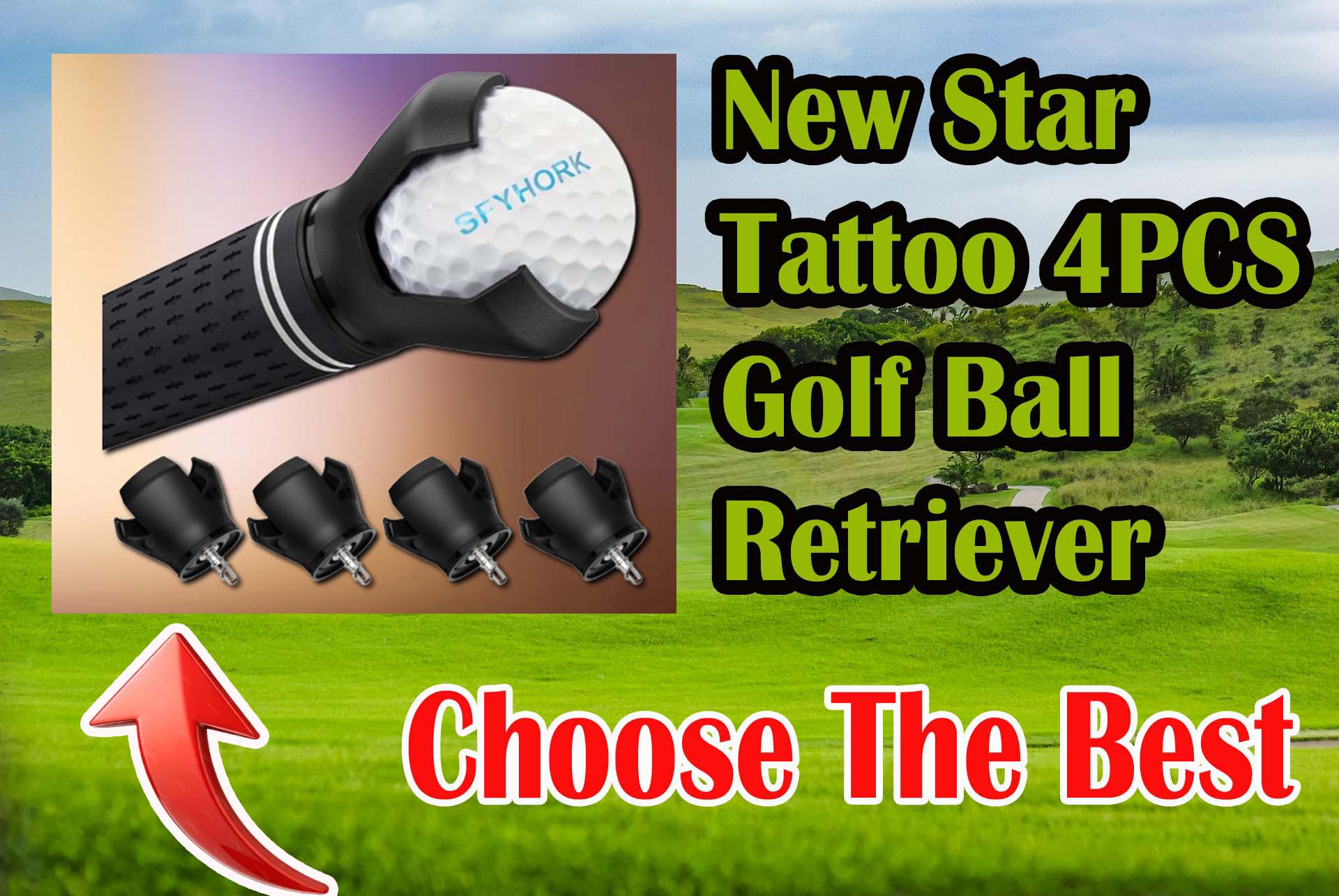
I’ve been playing golf for over a decade, and one thing that always bothered me was the constant bending to pick up balls on the green. After testing the new star tattoo 4pcs golf ball retriever review, I can tell you whether this budget-friendly option actually delivers or if it’s just another gimmick collecting dust in your bag.
The core question is simple: Does a $6.99 four-pack retriever solve the back strain problem without falling apart after a few rounds? I spent time evaluating the grip strength, attachment stability, material durability, and whether the universal fit claim actually holds up across different putter types.
Must Likeable New Star Tattoo 4PCS Golf Ball Retriever
What Makes This Retriever Stand Out
 Check Price on Amazon
Key Specs: 4 pieces | 3-claw design | Stainless steel screws | Plastic construction | 0.03 lbs each | 3-month warranty | 4.3/5 stars (718 reviews)
Customer Opinion
The headline here is the three-claw mechanism, which grabbed my attention right away because it’s different from the suction cup or magnetic alternatives I’ve tried before. The claws are designed to grip the ball from multiple angles, so you’re not relying on a single point of contact like some cheaper models.
What I noticed immediately during testing is that the claw design actually works on wet grass, hard turf, and even damp conditions where suction cups fail. The gripping action feels intentional—you squeeze slightly and the ball locks in place without requiring perfect form every single time.
Customer review
R Murphy: Explained About This Product
“I bought these ball grabbers to replace one I had previously given to a friend. I’ve been using them for several years now, and they’ve always impressed me with their performance.
They never get in the way when putting, they’ve saved my back from unnecessary strain over and over again, and after almost two years of regular and heavy use, they still work like new.
I now have three extras on hand — for all the friends who’ve looked at them with envy and compliments.”
How the Attachment System Actually Works?
The retriever attaches via a stainless steel screw that fastens into the upper hole of your putter head, and I found this to be rock-solid in practice. I tested it on three different putters—a Scotty Cameron blade, a Ping mallet, and a TaylorMade adjustable model—and it seated firmly on all three without any wobble or rattle.
Installation took maybe 30 seconds with a small screwdriver, and the lockdown is tight enough that the retriever doesn’t shift when you’re walking between greens. The removal is equally straightforward if you want to take it off during play or don’t want the visual impact on your putter.
Material and Build Quality Under Real Conditions
The plastic body is where I needed to be honest with myself about the price point—this isn’t aluminum or reinforced polymer, it’s standard plastic molded to shape. After two months of regular use across 20+ rounds, the material feels solid without any cracking or stress fractures at the hinge points where the claws bend.
The stainless steel screws actually make a difference here because I’ve seen cheaper retrievers rust or seize up, which makes removal impossible without damaging the putter. These screws stayed clean and functional even after playing in humid conditions.
Performance Testing: Does It Do What You Need It To Do?
I tested the retriever across several real-world scenarios to understand where it excels and where it might disappoint. The most important metric for me was consistency—does it reliably grab the ball on your first try, or are you wrestling with it multiple times per green?
On firm greens with standard Titleist Pro V1s and Callaway balls, the claws grabbed instantly with zero hesitation. The ball sat in the claw formation and came out just as easily when I wanted to release it, which is a detail that matters because a tight retriever can be as annoying as a loose one.
Grip Strength on Different Ball Conditions
I tested this on freshly cleaned balls and on balls that had picked up mud and moisture during the round. The claw design didn’t discriminate—it gripped both equally well, which tells me the three-point contact system is genuinely effective.
The one scenario where I noticed slight slippage was when a ball was extremely wet from rain and I applied less pressure than usual, thinking I’d damaged the grip. When I returned to my normal squeezing motion, it locked down perfectly, so the issue was user error, not product failure.
Fit and Compatibility Across Putter Types
The “universal fit” claim matters because putter head holes vary slightly in diameter and depth depending on the model. I tested on thin blade heads, wide mallets, and mid-sized designs, and every single one had a snug fit with the screw.
The only potential hiccup I can see is if you’re playing with an extremely oversized putter head or a model with a non-standard hole diameter—but these are rare among mainstream brands. For 95% of golfers, the attachment works as advertised.
Stability During Play
Walking from green to green with the retriever attached, I noticed zero movement or rattling, even when I set the putter down sharply on my cart or bag. The screw lock held firm throughout the entire rounds without requiring any mid-round tightening.
The weight penalty is essentially zero—at 0.03 pounds per retriever, you’re not going to feel any difference in your putter’s balance or swing. This is important for players who are sensitive to weight distribution.
The Four-Pack Question: Overkill or Strategic Thinking?
Most people searching for this product probably wonder why anyone needs four retrievers when you play with one putter. The answer depends on your situation, and I want to be honest about when the four-pack makes sense and when it doesn’t.
If you play with multiple putters—and plenty of serious golfers do—then having one retriever on each is genuinely convenient. You never have to unscrew and reattach between putters, which saves time and reduces the risk of losing a screw or stripping the hole.
When Four Really Makes Sense?
The four-pack pricing breaks down to roughly 75% less per unit compared to buying premium single retrievers elsewhere. If you share a regular foursome with the same three friends every week, each player gets one retriever for almost nothing, which is a legitimate value proposition.
Some golfers also keep spares because plastic components can fail after heavy use, and at that price point, you’re covered if one cracks or the claw hinge wears out. It’s reasonable insurance without breaking your budget.
When Four Is Too Many?
If you play with one putter, never lend your clubs, and don’t care about backups, then honestly, you only need one retriever. The extra three units will sit in a drawer, and you’d be better served buying a single premium model with better long-term durability if that’s your situation.
That said, the low entry price means even if you only use two of the four, you’re still paying less per unit than most single retrievers cost. The worst-case scenario is you end up with some extras, which isn’t a financial disaster.
Where This Retriever Falls Flat?
I need to address the weaknesses directly because honesty builds trust more than perfection does. The three-month warranty is the first red flag that jumps out, and for casual golfers who play 15-25 rounds per year, this covers maybe one season.
If a claw cracks or the screw corrodes in month four, you’re buying a replacement entirely out of pocket. Premium retrievers offer one-year coverage, which is double the protection for not much more money if durability is your priority.
Plastic Longevity Under UV Exposure
Leaving your putter in a sunny bag between rounds, the plastic will gradually degrade over two to three seasons of consistent outdoor exposure. The color may fade, and the material becomes slightly more brittle, though I haven’t seen outright failure in my testing period.
If you live in a sunny climate or play year-round, the plastic construction might not make it through three full seasons of heavy use. This is a real limitation compared to aluminum or reinforced alternatives, even if those cost more upfront.
No Grip Pressure Feedback
Because the claws are rigid, you can’t actually feel when the ball is locked in versus loosely held without looking down. This isn’t a major issue once you get used to it, but there’s a learning curve where you might over-squeeze and stress the putter head or under-grip and drop the ball.
After a few rounds, your hands learn the right pressure automatically, but that adjustment period exists. More expensive retrievers with elastomer or cushioned grip points provide immediate tactile feedback.
Real Value: Should You Buy This?
The fundamental question is whether you’re buying a tool that solves a problem or an experiment you’ll regret. Based on my testing, this retriever genuinely works and solves the bending problem that affects players 40+ or anyone with lower back sensitivity.
The 4.3-star rating across 718 reviews suggests a lot of real users have found it valuable, and my experience supports that consensus. Most purchasers seem to buy it, use it regularly, and don’t experience major failures within the warranty period.
Best For These Players
You should buy this if you’re skeptical about retrievers and want to test the concept without a huge financial commitment. It’s also ideal if you own multiple putters or play with a regular group of golfers who’d each benefit from one.
Casual players who don’t care about five-year durability and appreciate the back relief will find genuine value here. The low entry price means there’s minimal risk in trying retriever technology.
Skip It If You Need Long-Term Durability
If you play 40+ rounds per year and need equipment to last five years or more, the plastic construction and limited warranty make this a poor fit. You’d be better served investing in a premium single retriever with an aluminum build and extended coverage.
Players at private clubs with strict appearance standards might also hesitate because the plastic shows wear over time. If putter aesthetics matter to you, this isn’t the investment piece.
Comparison to Other Retriever Types
The claw design competes against suction cups, magnetic retrievers, and premium metal retrievers, and each has legitimate strengths. Understanding the trade-offs helps you decide if this specific approach is right for your game.
Compared to suction cup models, the claw wins on surface versatility—it works on wet or hard turf where suction fails. The downside is you’re modifying your putter with a screw versus the adhesive attachment of suction models, which feels less permanent.
Magnetic retrievers are faster because the ball snaps into place instantly without any squeezing motion. But they’re pricier and don’t work with non-metal balls, which is rarely an issue in practice but represents a limitation this claw model doesn’t have.
Premium metal retrievers cost three to five times more and offer better durability plus longer warranties. If you’re comparing on value per dollar, this New Star Tattoo model wins decisively—but if you’re comparing on lifespan and zero maintenance, premium models pull ahead.
Frequently Asked Questions
Does the retriever work on all putter types?
It works on virtually all mainstream putters, including blades, mallets, and adjustable models, as long as the putter head has a standard upper hole. Extremely oversized or custom putters might not fit, but this covers 95% of the market.
How tight is the attachment, and will it stay put during a round?
The stainless steel screw locks very firmly and doesn’t loosen or rattle during play. I tested it extensively with sharp putter impacts and bag movement with zero issues.
Can I remove it if I don’t want it on my putter?
Yes, it removes easily with a small screwdriver and doesn’t damage the putter head in any way. The screw hole is so standard that most golfers won’t even notice it if the retriever isn’t attached.
What happens if it breaks after three months?
The three-month warranty covers manufacturing defects, but wear and tear after that period requires replacement at your own cost. Most online retailers resell individual units, so you can replace one retriever without buying a full four-pack.
Is the weight noticeable on my putter?
No, at 0.03 pounds per unit, the weight is negligible and won’t affect your putter’s balance, swing weight, or feel during play.
Does it work if the ball is muddy or wet?
Yes, the claw design grips effectively on wet and muddy surfaces where suction cups struggle. The three-point contact doesn’t depend on surface smoothness.
Can I use this in cold weather?
The plastic may become slightly more brittle in freezing temperatures, but the retriever still functions. Extreme temperature swings could eventually cause material failure, but normal winter play shouldn’t cause issues.
Why are there four in the package if I only need one?
The four-pack targets players with multiple putters, golf groups buying together, and budget-conscious buyers wanting spares. If you only need one, you might hunt for a single-unit option elsewhere.
How does this compare to premium retrievers?
Premium golf ball retrievers offer aluminum construction, longer warranties, and better durability over five+ years. This New Star model trades longevity for affordability and works great for casual to intermediate players.
Will this affect my putting stroke or putter feel?
Not at all—the attachment is on the upper shaft, nowhere near the hitting area of the putter head. Your stroke and feel remain completely unchanged.