
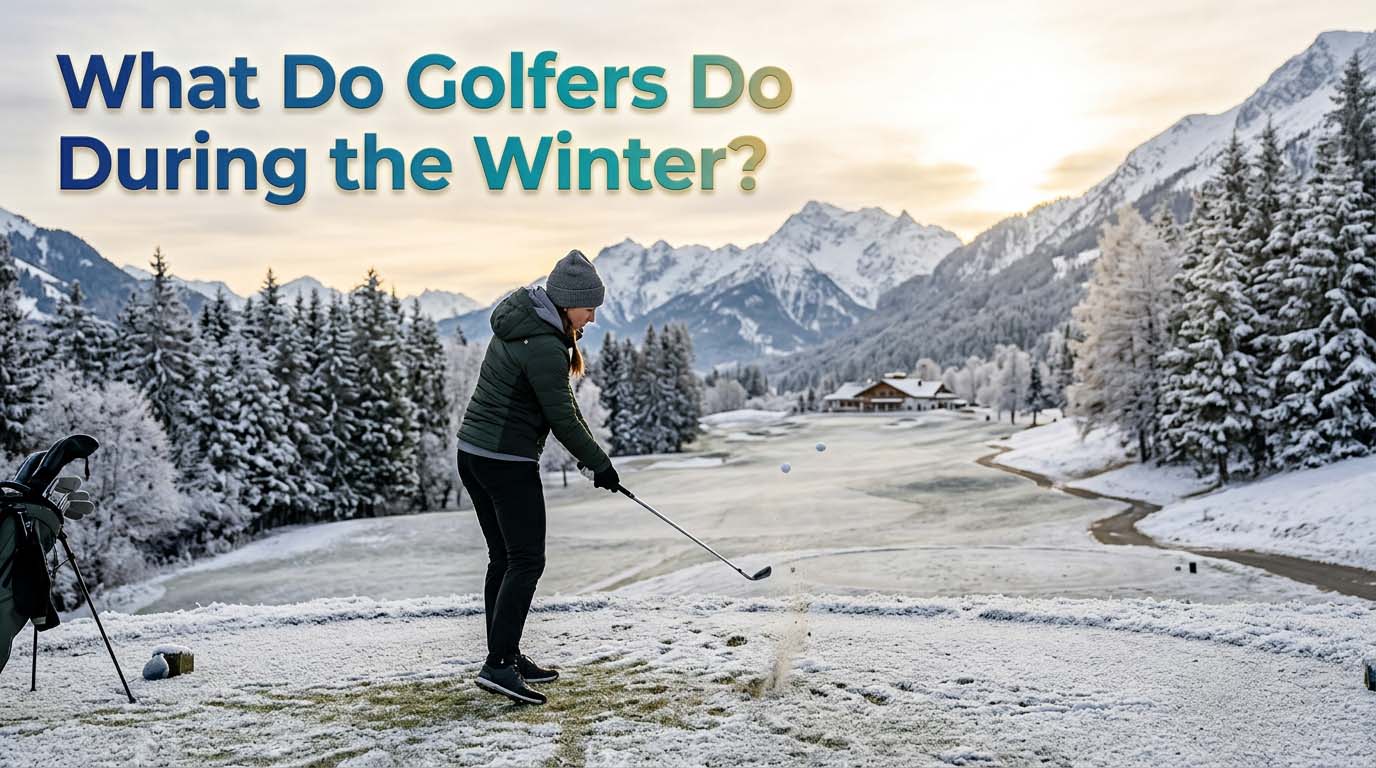
You are here because the outdoor rounds are fading. The days are shorter, the ground is harder, and your clubs are starting to collect dust in the corner. Most guides about winter golf assume you want to keep playing at a high level or that you have a big budget. This guide is different.
The best golfers use winter for focused, deliberate practice on weaknesses that get ignored during the busy summer. The single answer to what golfers do during the winter is “strategic preparation” segmented by your access level. But first, you need to figure out which kind of winter golfer you are.
Find Your Winter Golfer Archetype
Before you read through a list of ideas, stop and identify yourself. Your budget, your climate, and your goals determine the right path. There are three main types of winter golfers. Pick the one that fits you best.
The Hobbyist
You are not going to spend a lot of money on winter golf. Your clubs might stay in the basement for months. You play for fun in the summer, and you are fine taking a break. But you still want to stay somewhat sharp.
What this means for you: Focus on home drills, fitness, and reading. Do not feel pressured to buy a simulator or join a league.
The Sim Player
You have access to a paid indoor facility. Maybe a local golf dome, a TrackMan bay, or a Topgolf. You want to keep swinging, and you have some money to spend. But you need to use that time wisely.
What this means for you: Focus on how to use data correctly. Avoid bad swing habits that can develop indoors when you are hitting off mats.
The Warrior
You play outdoors no matter what. Rain, snow, freezing wind. You just want to play golf. You need to know how to stay warm, how to manage the ball in terrible conditions, and how to keep your swing working when you are bundled up.
What this means for you: Focus on gear science and course management. Your winter scores will be higher, but you will learn more about your game than anyone else.
How to Stay On Course
If you want to keep hitting balls, you have options at every budget.
High Access: Simulators and Heated Ranges
Golf simulators give you the closest thing to real golf. Topgolf is social and fun, but not great for data. TrackMan and GCQuad bays give you launch numbers. Use them to check your carry distances and spin rates. One session a month is enough to keep your swing from falling apart.
Heated ranges are the middle ground. You can hit real balls off real grass, but you are in a heated bay. Bring a good glove and a towel to keep your grips dry. Most heated ranges have lights, so you can go after work.
Mid Access: Cold Weather Gear Strategy
You do not need expensive gear to play in the cold. But you need a system. Layering is the key. Start with a base layer that wicks sweat. Add a mid layer for warmth. Finish with a windproof outer layer. Keep your hands warm with a pair of all-weather gloves. Use a hand warmer in your pocket.
The ball does not travel as far in cold weather. Expect to lose about 2 yards per 10 degrees below 70. Use a softer compression ball to keep some feel.
Low Access: Home Practice
A small budget can still keep your swing alive. A foam or plastic practice ball costs almost nothing. Hang a sheet or get a cheap impact net in the garage. Even a 10×10 foot space is enough to work on your setup and swing path.
A putting mat is the best investment for the hobbyist. You can putt for 15 minutes a day while watching television. That alone will save you strokes in the spring.
How to Redesign Your Swing
Winter is the only time to make mechanical changes. During the summer, you are playing rounds and chasing scores. You do not have the patience to break bad habits. Winter gives you that time.
Video Analysis
Record your swing in slow motion. Watch it side by side with a pro on YouTube. Look for one specific thing: your grip, your takeaway, or your posture. Do not try to fix everything at once. Pick one change and drill it for a month.
As you practice that change, pay close attention to your grip and posture resets. These are two areas that get sloppy when you are tired or rushed. Setting your hands correctly and standing to the ball the same way every time will improve your consistency more than any swing thought.
Short Game Mastery
Putting on a mat has the highest return on investment of any winter practice. A flat carpet can teach you speed control and path control. Get a simple gate drill: two tees just wider than your putter head. Practice making strokes that do not touch the tees. This builds a square putter face.
For chipping, use a pillow or a laundry basket as a target. Hit chips from a carpet into the target. Focus on landing the ball at the same spot every time. This is feel practice that does not require a real ball flight.
How to Upgrade the Player
Your swing is only part of the game. Winter is a great time to improve your body and your equipment.
Golf Fitness
You do not need a gym membership. Basic mobility work takes ten minutes a day. Focus on hip rotation and thoracic spine mobility. These two areas are the most common restrictions for golfers. Stretch your hamstrings and your lower back. Do bodyweight squats to keep your legs strong.
If you have more time, add rotational exercises with a resistance band or a light medicine ball. Strong glutes and core prevent injuries and add power.
Gear Audit
Look at your clubs. When was the last time you changed the grips? Worn grips cause you to hold the club too tight, which kills distance and accuracy. Re-gripping your clubs is cheap and makes a huge difference.
Check your grooves. Sharp grooves create spin. Dull grooves make the ball slide. Use a groove sharpener or get your clubs professionally cleaned.
Course Strategy Study
Reading about course management is free. Spend time on YouTube watching strategy videos.
Learn about the 70/30 rule: hit 70 percent of your shots with the club that gives you the most control, not the one that goes the farthest. Learn how to aim away from trouble.
Mental game scripting works too. Write out your pre-shot routine. Practice it at home. When spring comes, you will step up to every shot with the same calm, repeatable process.
The Reality Check
A lot of winter advice sounds good but does not work in real life. Let us clear up two common myths.
Myth: You need a simulator to improve.
Reality: Grip and posture changes in a mirror can drop your handicap more than random simulator sessions. A simulator gives you numbers. A mirror shows you how you actually set up.
Myth: You must practice every day.
Reality: Three focused 20-minute sessions on weaknesses are more productive than five hours of aimless hitting. Your brain learns better when you practice with intention, not volume.
Frequently Asked Questions
What is a good practice routine for golf during the winter?
A strong routine balances putting, mirror work, and swings. Try this: 15 minutes of lag putting from different distances, 10 minutes of grip and posture checks in a mirror, and 5 minutes of slow-motion swings with a club. Do this three times a week. Consistency matters more than total time.
How do golfers in cold climates like Canada stay sharp?
Canadian golfers rely heavily on indoor sim leagues and building elaborate basement greens. Many join a local golf dome or a heated practice facility.
The key is to keep a social game alive. Playing against friends on a simulator keeps you engaged and motivated. Without the social aspect, winter practice gets boring fast.
What do most golfers actually do during the winter?
Honest answer: many take a full break. They do not touch a club for three or four months. The smart minority uses the time for one specific project.
They fix one swing fault, get fitted for new clubs, or work on their fitness. They come back in the spring with a clear goal, not a pile of bad habits.
Are Amazon golf balls good for winter practice?
Amazon golf balls are fine for shag bags, impact screens, and simulators. You can buy a bulk pack of low-compression balls and not worry about losing them.
But they lack the feel of premium balls for serious putting work. If you are working on short game feel, use the same ball you play in the summer. The feel matters.