
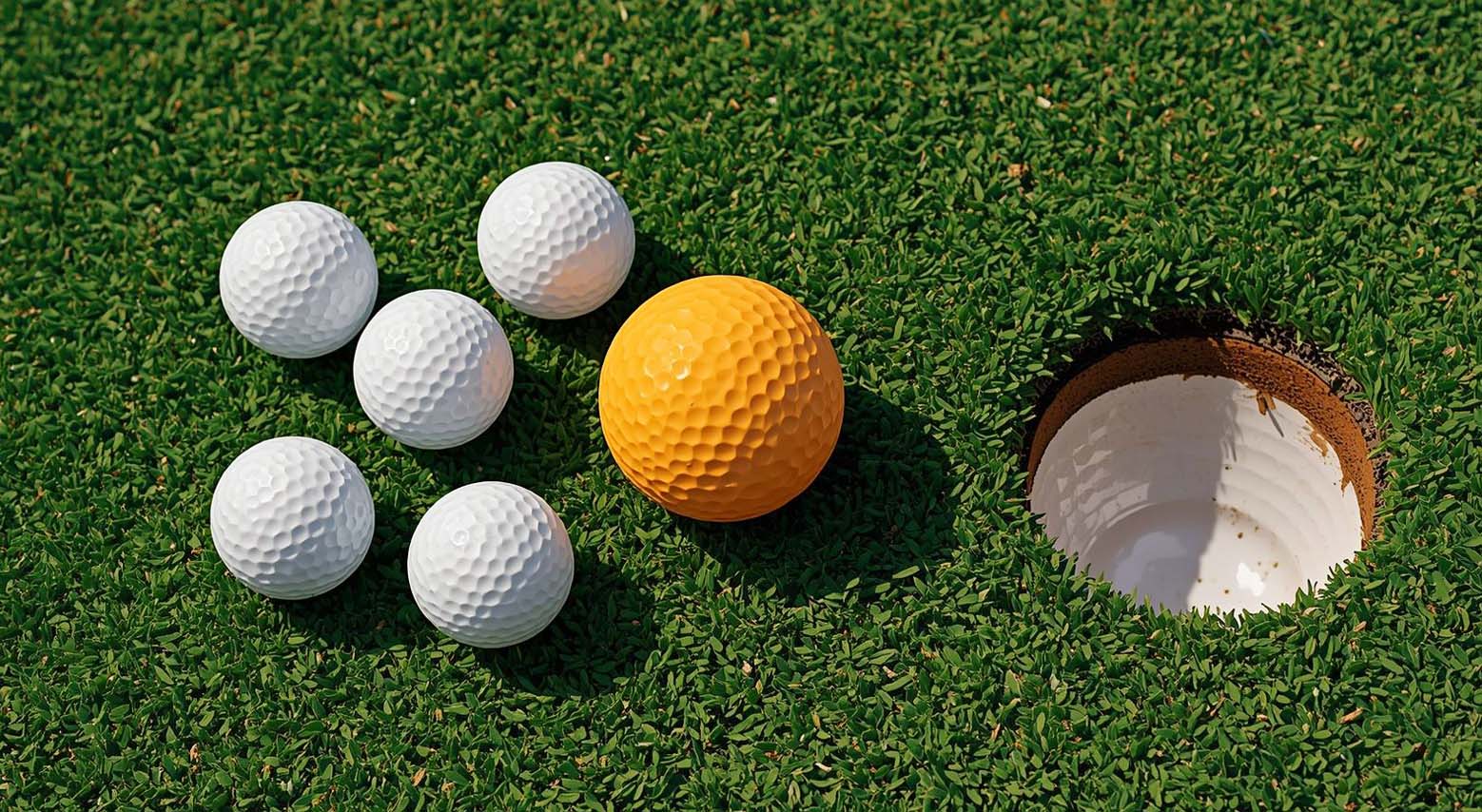
The easiest golf ball color to see in most playing conditions is high-optic or neon yellow. It provides the strongest visual contrast against green grass and blue or gray skies, making it easier to track in flight and locate on the ground than traditional white golf balls. Bright orange is the most effective alternative in specific environments such as fall foliage or low-light conditions.
Why Golf Ball Visibility Matters More Than Distance?
Most golfers obsess over distance, compression, and spin, yet overlook one factor that quietly affects every round: visibility. If you lose sight of the ball in the air or spend extra time searching after it lands, your score, rhythm, and confidence suffer. Poor visibility also slows the pace of play and increases lost balls, which is why ball color deserves more attention than it gets.
Traditional white golf balls dominate the market mainly due to history, not performance. Modern visibility-focused colors exist because golfers needed better contrast in real playing environments—not because of marketing trends.
How the Human Eye Sees a Golf Ball? (The Science Most Articles Ignore)
The human eye does not perceive all colors equally. Under daylight conditions, vision is most sensitive in the yellow-green wavelength range, which explains why neon yellow and lime-based colors appear brighter and sharper than other shades on the course.
Fluorescent pigments amplify this effect by absorbing ultraviolet light and re-emitting it as visible light, making the ball appear to “glow” in natural sunlight.
Tracking a golf ball also involves two separate visual tasks: following it in flight and finding it once it stops. A ball that is easy to see moving through the air may disappear once it lands if it lacks contrast with the ground. This is why contrast, not raw brightness—is the real determining factor in visibility.
The Easiest Golf Ball Color to See Overall
High-optic or neon yellow consistently ranks as the most visible golf ball color across testing and real-world play. It contrasts cleanly with fairways, rough, sand, and sky, and it remains visible in both sunny and overcast conditions. Golfers with aging eyesight or reduced contrast sensitivity often notice an immediate improvement after switching.
Neon yellow also performs well during early morning and late afternoon rounds, when glare or fading light causes white balls to wash out visually.
Best Alternative Golf Ball Colors and When They Work Better
Bright orange is the strongest alternative to neon yellow and, in some situations, surpasses it. During fall golf, when leaves cover the ground and yellow tones dominate the landscape, orange provides a cleaner separation from the background. It also stands out well in shaded areas and on cloudy days.
Lime green sits close to the eye’s peak sensitivity range and can perform exceptionally well on dry or dormant courses where yellow may blend slightly. Hot pink, while unconventional, benefits from rarity—your brain detects it faster because it does not naturally occur on golf courses, making it easier to identify quickly.
Golf Ball Visibility by Season
Seasonal changes dramatically alter course backgrounds, which is why a single ball color may not be ideal year-round. In spring and summer, neon yellow offers the best balance against lush fairways and blue skies. In the fall, orange and red shades outperform yellow because of heavy leaf cover.
In winter or frosty conditions, any color that contrasts sharply with white—particularly bright orange—becomes easier to see.
Many golfers blame lost balls on poor shots, when the real issue is choosing a color that blends into the seasonal surroundings.
Choosing the Right Ball Color for Your Course Type
On parkland courses with tree cover and shadowed fairways, high-visibility colors dramatically reduce search time. Links courses, with their brown turf and tall fescue, favor orange and neon green. Desert courses present unique challenges because sand and beige backgrounds neutralize white balls, making brighter colors far more practical.
The best choice is not universal—it depends on what your course looks like most of the year.
Visibility Myths That Still Mislead Golfers
One of the most common myths is that colored golf balls perform differently from white ones. Color does not affect spin, distance, or aerodynamics. The core construction, the cover material, and the dimple design determine those characteristics.
Another misconception is that professional golfers avoid colored balls. In reality, many tour players use optic yellow during practice rounds and testing because it improves ball tracking without compromising performance.
Who Benefits Most From High-Visibility Golf Balls?
Golfers who should strongly consider switching include players with slower golf swing speeds, seniors experiencing natural vision changes, and anyone who frequently loses track of the ball in flight. High handicappers also benefit significantly because visibility reduces lost balls and keeps attention on shot execution rather than searching.
If you are still playing an old golf ball with scuffs or fading paint, visibility drops even further. Fresh, high-contrast balls are easier to see and quicker to find, regardless of color.
How to Find the Best Color for Your Eyes?
The simplest way to choose the right color is to test two or three options in the range under the same lighting conditions. Hit identical shots and note which ball stays visible longest in the air and is easiest to spot after landing. Repeat this test later in the day when light conditions change.
This method removes guesswork and reveals which color your eyes naturally track best.
Frequently Asked Questions (FAQ)
What is the easiest golf ball color to see?
The easiest golf ball color to see is high-optic or neon yellow. It provides the strongest contrast against green grass and blue or gray skies, making it easier to track in flight and to locate on the ground than white or darker colors.
Is a yellow golf ball easier to see than a white golf ball?
Yes, a yellow golf ball is easier to see than a white golf ball in most conditions. White balls often blend into bright skies, clouds, or sun glare, while neon yellow maintains visibility due to higher contrast and human eye sensitivity.
What color golf ball is easiest to see in the air?
Neon yellow is the easiest golf ball color to see in the air. The human eye detects yellow-green wavelengths more efficiently during daylight, which helps golfers track the ball’s full flight path more clearly than white or darker colors.
What is the best golf ball color for fall conditions?
Bright orange is the best golf ball color for fall golf. It contrasts sharply against yellow and brown leaves, rough, and shaded fairways, making it easier to find than yellow or white balls during autumn rounds.
What color golf ball is best for older golfers?
Neon yellow is the best golf ball color for older golfers. As contrast sensitivity declines with age, high-visibility colors help reduce eye strain and make the ball easier to track and locate.
Do colored golf balls affect distance or spin?
No, colored golf balls do not affect distance, spin, or performance. Ball performance depends on core construction, cover material, and dimple design—not color. Modern colored balls perform the same as white balls.
What golf ball color is easiest to find in the rough?
Neon yellow and bright orange are the easiest golf ball colors to find in the rough. They stand out against dark grass, shadows, and uneven terrain better than white or green balls.
Are colored golf balls legal in tournaments?
Yes, colored golf balls are legal in tournaments. Any golf ball color is allowed as long as the ball meets USGA and R&A size, weight, and symmetry rules.
Does golf swing speed affect which ball color is easiest to see?
Golf swing speed does not directly affect visibility. Still, players with slower swing speeds often benefit more from high-visibility colors because the ball stays lower and is harder to track without strong contrast.
Should I stop using an old golf ball if visibility is poor?
Yes, an old golf ball with faded paint or scuff marks is harder to see. Even high-visibility colors lose effectiveness as they wear, so replacing worn balls immediately improves visibility.
Conclusion
Visibility is not a preference—it’s a performance advantage. Science, real-world play, and course conditions all point to one clear takeaway: high-optic neon yellow is the most reliable choice for most golfers, while orange shines in fall and low light.
Choosing the right color reduces lost balls, speeds up play, and keeps your focus where it belongs—on the shot. If you’ve ever wondered what color golf ball is the easiest to see, the answer depends on contrast, season, and your eyes, not tradition.