
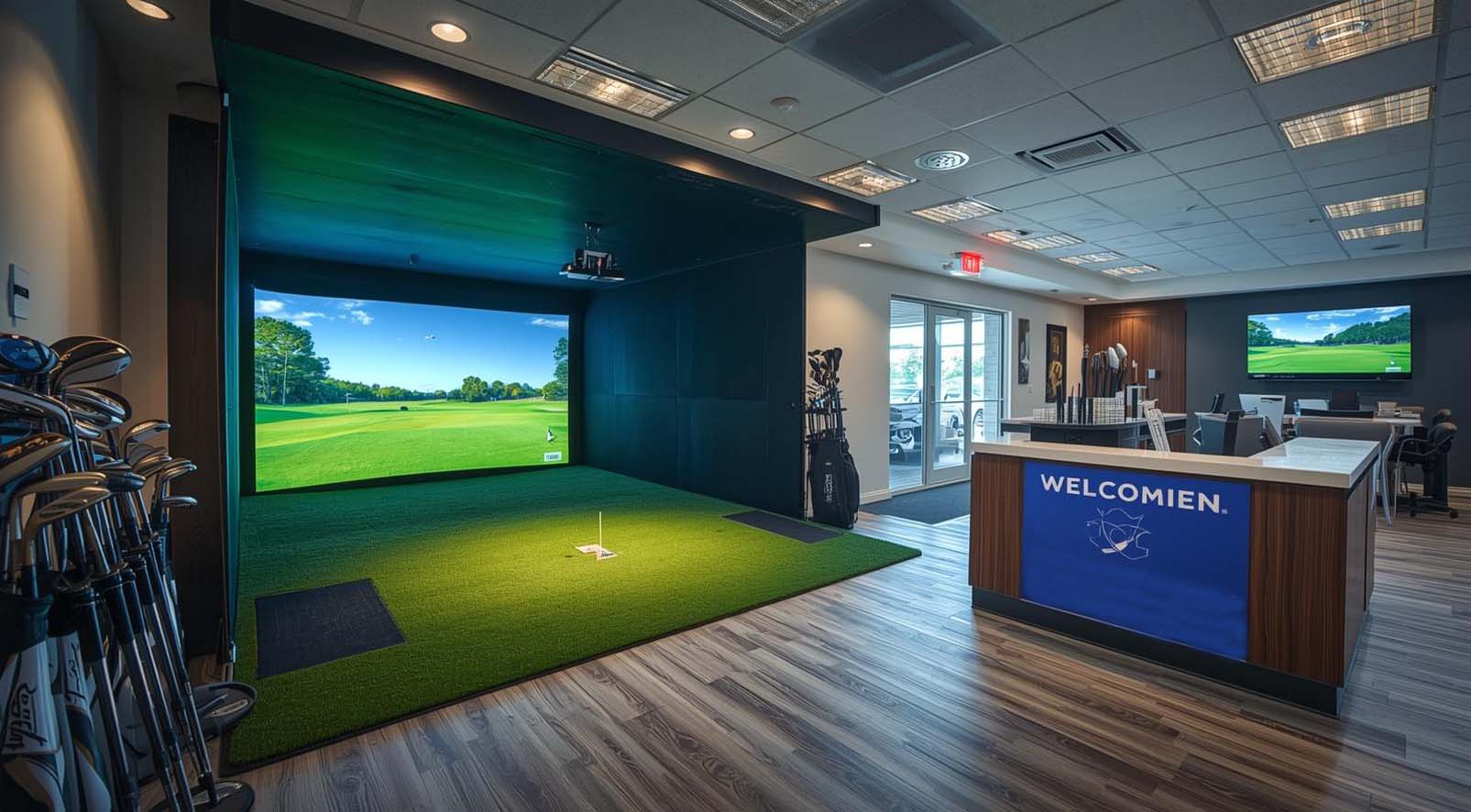
That said, a simulator and a spare room are only part of the picture. To make the business work, you need the right model, the right location, the right equipment, and a clear plan for how the business will actually make money. In short, success comes from building a great golf experience and a solid business behind it.
This guide breaks the process down step by step. Along the way, you’ll see what it costs, what equipment you need, how much space to plan for, how to market the business, and how to set it up so customers keep coming back.
What Is a Golf Simulator Business?
A golf simulator business is a company that gives customers a place to play virtual golf using simulator technology. Depending on the setup, it might be a simple indoor practice space, a coaching studio, a social golf lounge, or a full entertainment venue with food, drinks, and events.
At its core, the business earns money by offering access to simulator bays, lessons, leagues, tournaments, memberships, and group events. Some businesses are built for serious golfers who want to improve, while others lean more toward casual players looking for a fun night out. Plenty of successful operators do both.
Why Start a Golf Simulator Business Now?
There are a few reasons this model is getting so much attention. First, indoor golf works in every season, which means customers can play when courses are closed, crowded, wet, or cold. That makes it especially appealing in places with long winters or unpredictable weather.
Second, golf simulators attract more than just traditional golfers. Beginners, casual players, corporate groups, and social outings all help broaden the audience. As a result, the business can draw traffic from both golfers and non-golfers.
Finally, golf simulator venues can make money in several different ways. Hourly rentals, lessons, memberships, parties, leagues, and food and drink sales can all work together to support a healthier business.
Choose the Right Golf Simulator Business Model
Before you buy equipment or sign a lease, you need to decide what kind of business you want to build. This is one of the biggest decisions you’ll make, because the model affects your startup cost, space needs, staffing, and revenue potential.
Indoor Fixed-Location Golf Simulator Business
This is the most common setup. Customers book simulator bays by the hour, or they come in for practice, coaching, leagues, and events. It usually works best when you want repeat traffic and a steady local customer base.
It does require a lease, more build-out, and more planning, but it also gives you a permanent spot where customers know exactly where to find you.
Golf Entertainment Venue
This model focuses on the social side of golf. In many cases, it includes food, drinks, events, music, and lounge-style seating. It works well if you want to attract groups, date nights, birthdays, and corporate outings.
Because the experience is the main draw, this model can often support higher pricing. On the other hand, it usually needs more staff and a larger upfront investment.
Coaching and Performance Studio
If you want to focus on instruction, club fitting, or player development, this is a strong option. It is especially useful for teaching pros who want a year-round training space for lessons and swing analysis.
It may not need the same entertainment extras as a lounge, but it does need accurate technology and a clean, professional setup.
Mobile Golf Simulator Business
A mobile golf simulator business brings the experience directly to the customer. That could mean corporate events, weddings, trade shows, private parties, and promotional events. Instead of relying on a fixed storefront, you earn revenue by going where the demand is.
This can be a good lower-risk way to get started, but it still requires transport planning, setup time, and dependable equipment.
Portable Golf Simulator Business
A portable golf simulator business is similar to a mobile setup in that it offers flexibility, but it is usually designed for easy setup in different spaces. It can work well for pop-ups, temporary events, or smaller locations where a permanent build-out doesn’t make sense.
The tradeoff is that a portable setup may not create the same premium feel as a full venue, so it’s important to match the model to your goals.
How Much Money Do You Need to Start a Golf Simulator Business?
One of the first questions most people ask is how much money it takes to get started. The honest answer is that it depends on the model, the number of bays, the quality of the equipment, and how much work the space needs before opening.
A lean setup may cost far less than a premium entertainment venue, while a mobile business may save on rent and build-out but still need strong equipment and enough working capital to stay afloat. Either way, it’s smart to plan for both startup costs and ongoing expenses.
Common Startup Cost Categories
When you build your budget, include the simulator hardware, launch monitor, projector, screen, enclosure, hitting mat, computer, turf, and software. After that, add the cost of the space itself, such as lease deposits, flooring, lighting, sound control, seating, and signage.
You should also set aside money for insurance, permits, licenses, business registration, marketing, point-of-sale tools, booking software, and a small cash reserve for the first few months of operations.
Hidden Costs to Watch For
Some expenses don’t stand out at first, but they can have a real impact. HVAC upgrades, soundproofing, electrical work, cleaning supplies, payment processing fees, and maintenance can all affect your monthly numbers.
Because of that, it’s better to plan a little conservatively than to assume the build will be simple. That way, you’re less likely to run out of cash right after opening.
Sample Budget Levels
A one-bay studio will usually cost much less than a multi-bay lounge, but it can still work well if the location and pricing are right. A small practice studio may keep startup costs lower, while a premium entertainment venue with food and drinks will naturally need more capital.
Mobile and portable models may reduce lease and build-out costs, but you still need to invest in quality equipment, transport, and event-ready operations. In other words, the cheapest path is not always the smartest one.
How to Set Up a Golf Simulator Business Step by Step
If you want to do this the right way, it helps to follow a clear order. Each step builds on the one before it, and skipping ahead can lead to expensive mistakes later.
Step 1: Validate Local Demand
Start by looking at your local market. Ask yourself who would actually use the business. Are there enough golfers nearby? Are there enough corporate groups, social players, or event customers to support the model? Is your area a good fit for indoor entertainment year-round?
You should also look at the competition. If nearby venues already offer similar services, think about how your business can stand out. That might mean better technology, stronger pricing, better food and drinks, or a more appealing lesson program.
Step 2: Pick Your Business Model
Once you understand demand, decide which type of business fits best. A coaching studio, for example, has a very different setup from a golf lounge built around leagues and parties. Likewise, a mobile golf simulator business is very different from a fixed indoor venue.
The clearer your model is from the start, the easier it becomes to make smart decisions about location, staffing, and technology.
Step 3: Write a Business Plan
A business plan gives you a roadmap. It should explain your concept, your target customer, your pricing, your startup costs, your monthly expenses, and your revenue goals. It should also show how you expect the business to grow over time.
Even if you’re not looking for outside funding, this step still matters because it forces you to think through the business before you spend money.
Step 4: Find the Right Location
The location can make or break the business. Look for a place that fits your target market and gives customers easy access. Visibility, parking, and convenience matter a lot, especially for group bookings and repeat visits.
You also need to think about ceiling height, square footage, zoning, and lease terms. A space may look affordable on paper, but if it doesn’t fit the simulator layout, it can turn into a headache very quickly.
Step 5: Choose Your Simulator Technology
Your simulator setup is the heart of the business. You’ll need to choose a launch monitor, software, projector, screen, enclosure, and hitting mat that fit your goals and budget. If your business is more entertainment-focused, the experience needs to feel easy and fun. If it’s more coaching-focused, accuracy and data matter even more.
It also helps to look at vendor support, warranties, and software updates. Good technology matters, but reliable support is just as valuable once you’re open.
Step 6: Build the Space
Once the location is secured, plan the layout carefully. Make sure customers have enough room to swing safely, move around comfortably, and enjoy the space without feeling cramped. A clean floor plan can improve both the golf experience and the atmosphere.
In addition to the bays, think about lighting, seating, storage, acoustics, and the front desk area. If the business includes food, drinks, or events, you may also need lounge space or extra customer areas.
Step 7: Handle Legal and Financial Setup
Before opening, register the business and take care of all required permits, licenses, and insurance. You should also set up accounting, payment processing, waivers, and any customer policies needed for safe operation.
This step may not feel exciting, but it protects the business and helps you avoid problems later.
Step 8: Hire and Train Staff
Even a small golf simulator business can benefit from good staff. You may need people to help with check-in, customer service, coaching, maintenance, cleaning, or events. If you run leagues or parties, you’ll also want staff who can keep things organized and friendly.
Training matters because customers expect a smooth experience. The better the service, the more likely they are to return.
Step 9: Launch Marketing
Start marketing before you open. Build a website, claim your Google Business Profile, and get active on social media. Local SEO is especially important because many customers will search for a place to play nearby.
You can also use pre-opening deals, memberships, partnerships, and launch events to build early awareness. The goal is simple: give people a reason to visit right away.
Step 10: Track and Improve
After opening, keep track of bookings, customer feedback, popular time slots, and revenue sources. This will show you what’s working and what needs to change. Over time, small adjustments in pricing, scheduling, and service can make a big difference.
That’s why the work doesn’t end on opening day. In many ways, that’s where it really begins.
How Much Space Do You Need for a Golf Simulator Business?

Space is one of the most important planning issues because it affects both safety and comfort. A golf simulator needs enough room for a full swing, proper screen placement, and a layout that feels comfortable for customers.
For a single bay, you need to think about width, depth, and ceiling height. If you want multiple bays, you also need to plan for customer flow, seating, storage, and staff movement. A space that feels too tight can hurt the experience quickly.
It’s also smart to think about future growth. If the location allows it, you may want enough room to expand later instead of having to move too soon.
What Equipment Do You Need?
The equipment you choose will shape the quality of the experience, so this section deserves careful attention. At a minimum, you’ll need the core technology that lets customers hit, see, and play their shots accurately.
Essential Equipment
Most businesses need a launch monitor, impact screen, enclosure, projector, computer, simulator software, and a durable hitting mat. You’ll also need turf, netting or padding where needed, and the basic items required to keep the bay safe and functional.
Helpful Add-Ons
Depending on your model, cameras, lesson tools, club fitting tools, seating, a sound system, retail displays, and a beverage station can all add value. These items are not always necessary at the start, but they can improve the customer experience and increase revenue over time.
How to Choose the Right Equipment
It helps to choose equipment based on how people will actually use the business. If you are focused on entertainment, ease of use and a fun feel matter a lot. If you are focused on instruction, accuracy and data quality matter more.
Durability matters too, because commercial use is harder on equipment than home use. So choose gear that can handle regular traffic and still deliver a smooth experience.
How to Make Money with a Golf Simulator Business
A strong golf simulator business usually doesn’t depend on just one source of income. Instead, it combines several revenue streams so the business can stay busy through the week and across different seasons.
a) Hourly Simulator Rentals
This is the most common model. Customers rent a bay for a set period of time, usually by the hour. It’s simple, easy to understand, and works well for both casual players and regular golfers.
b) Memberships
Memberships can help create recurring revenue. They are especially useful if you want to build loyalty and give frequent players a reason to keep coming back.
c) Lessons and Coaching
Lessons are a strong fit for coaching studios and serious practice spaces. They can also work well inside a larger entertainment venue if you want to offer improvement-focused services.
d) Leagues and Tournaments
Leagues and tournaments keep people coming back on a regular schedule. They also help build a community around your business, which is one of the best ways to increase repeat visits.
e) Private Parties and Corporate Events
Birthdays, bachelor or bachelorette parties, retirements, and corporate gatherings can all bring in larger bookings. These events often have a higher value than standard hourly rentals, especially when guests order food, drinks, or add-on services.
f) Food, Drinks, and Retail
If your business includes food or drinks, that can become an important profit driver. Even simple snacks or beverages can raise the average ticket size. Retail items, gift cards, and accessories can also help round out your revenue.
How to Price Your Golf Simulator Business?
Pricing should be based on your market, your costs, and the value you provide. If you price too low, you may struggle to cover expenses. If you price too high without enough value, customers may not come back.
A good pricing strategy often includes hourly rates, membership options, off-peak discounts, peak-time pricing, package deals, and special event pricing. That gives you flexibility while also making the business easier for customers to understand.
What Are the Legal and Licensing Requirements?
Legal setup matters more than many new owners expect. At a minimum, you should register the business, confirm zoning, secure any required permits, and carry the right insurance. If you plan to serve food or alcohol, you may need additional licenses too.
You should also think about waivers, employee rules, and customer data handling. The exact requirements will vary by location, so it’s always wise to check local rules before you sign a lease or open your doors.
How to Market a Golf Simulator Business?
Even a great business needs people to know it exists. That’s why marketing should begin early and continue after opening. The good news is that golf simulator businesses work especially well for local marketing, because people often search for nearby indoor entertainment options.
Use Local SEO
Start with a strong website and a well-optimized Google Business Profile. That helps nearby customers find you when they search for indoor golf, golf simulator rentals, lessons, or event space.
Stay Active on Social Media
Short videos, customer reactions, league nights, event photos, and swing clips can all help build interest. Social media works especially well when it shows the business as both fun and welcoming.
Build Partnerships
Local golf coaches, courses, businesses, event planners, and sports groups can all become valuable partners. These relationships can bring in new customers and create repeat bookings over time.
Run Promotions That Work
Grand opening deals, referral offers, intro packages, memberships, and off-peak discounts can all help bring people in early. Once customers try the business, the experience itself should do a lot of the heavy lifting.
How to Run Operations Smoothly?
Once the business opens, operations become just as important as marketing. A smooth booking process, fast check-in, clean bays, and friendly staff all help create a professional feel.
It also helps to have simple systems for maintenance, cleaning, waivers, customer support, and scheduling. The more organized the operation is, the easier it becomes to handle busy days and large events.
Common Mistakes to Avoid
Many golf simulator businesses run into the same issues early on. One common mistake is underestimating startup costs. Another is choosing the wrong location or failing to check the ceiling height before signing a lease.
Other mistakes include buying the wrong technology, forgetting about insurance, pricing too low, ignoring maintenance, and not marketing the business properly. The good news is that most of these problems can be avoided with careful planning.
Is a Golf Simulator Business Profitable?
It can be, but profitability depends on how well the business is set up and managed. Revenue usually improves when the business has multiple income streams, strong customer retention, and a location that fits local demand.
Margins can be helped by memberships, lessons, leagues, and events, while costs are shaped by rent, staffing, software, utilities, maintenance, and equipment payments. So the goal is not just to open the business, but to build a model that stays busy and efficient.
How to Start a Golf Simulator Business in Canada
If you’re in Canada, the indoor golf model can work especially well in colder markets where year-round play is appealing. The overall process is similar, but you still need to check local registration, tax rules, zoning, and insurance requirements before moving forward.
As always, it’s smart to confirm the details with local professionals, since rules can vary by province and city.
How to Start a Golf Simulator Business in the UK
If you’re in the UK, indoor golf can also be a strong fit because weather and seasonality often make year-round play attractive. The setup process still comes down to location, business structure, equipment, and compliance, but local rules should always be reviewed before launch.
It’s also important to check lease terms, licensing needs, and tax details so the business starts on solid ground.
How to Start a Mobile Golf Simulator Business
A mobile golf simulator business can be a smart way to start if you want flexibility and lower fixed overhead. Instead of depending on a storefront, you travel to events and set up in different locations.
This model works well for corporate events, private parties, trade shows, weddings, and promotional activations. However, you need to plan carefully for transport, setup time, and equipment protection so the experience stays professional every time.
How to Start a Portable Golf Simulator Business
A portable golf simulator business is useful when you want a setup that can move easily between spaces. It can be a good option for smaller operators, pop-up events, or temporary installations.
The biggest advantage is flexibility. The main limitation is that it may not offer the same premium feel as a dedicated indoor venue, so it’s important to match the setup to your target customer.
Golf Simulator Business Plan Sections You Should Include
If you’re writing a business plan, make sure it includes your concept, target market, services, pricing, startup budget, operating costs, marketing approach, and financial projections. It should also explain how you plan to manage risk and grow the business over time.
Even a simple plan is better than none, because it gives you a clearer path from idea to opening day.
Golf Simulator Business Launch Checklist
Before opening, make sure you have validated demand, chosen your model, written a plan, secured a location, selected equipment, handled legal setup, and built your marketing foundation. After that, set up booking tools, pricing, waivers, and customer service procedures.
Then launch with a clear offer that gives people a reason to try the business right away. A strong first impression can go a long way.
Frequently Asked Questions
How much money do you need to start a golf simulator business?
The amount can vary a lot based on the model, location, and equipment. A simple setup will cost less than a premium entertainment venue, but every version should include room for equipment, build-out, insurance, marketing, and working capital.
How much space do you need for a golf simulator business?
You need enough room for safe swinging, comfortable customer movement, and proper simulator placement. The exact amount depends on whether you are opening one bay, multiple bays, or a larger entertainment venue.
Is a golf simulator business profitable?
It can be profitable if the business has solid demand, smart pricing, good operations, and more than one revenue stream. Like any business, profitability comes down to execution.
Should I start an indoor, mobile, or portable golf simulator business?
That depends on your budget, your market, and your goals. If you want a steady local base, an indoor location may be best. If you want flexibility and events, mobile or portable may be a better fit.
What is the best way to attract customers?
Local SEO, social media, partnerships, events, and good word of mouth are all powerful. Above all, the customer experience should make people want to return.
Final Thoughts
Starting a golf simulator business can be a smart and exciting move, but it works best when the plan is clear from the beginning. The strongest businesses don’t just buy equipment and open the doors. They choose the right model, plan the space carefully, understand the numbers, and build an experience people want to come back to.
If you start with demand, budget carefully, and focus on customer experience, you give the business a much better chance to grow. And that, in the end, is what turns a good idea into a real business.