
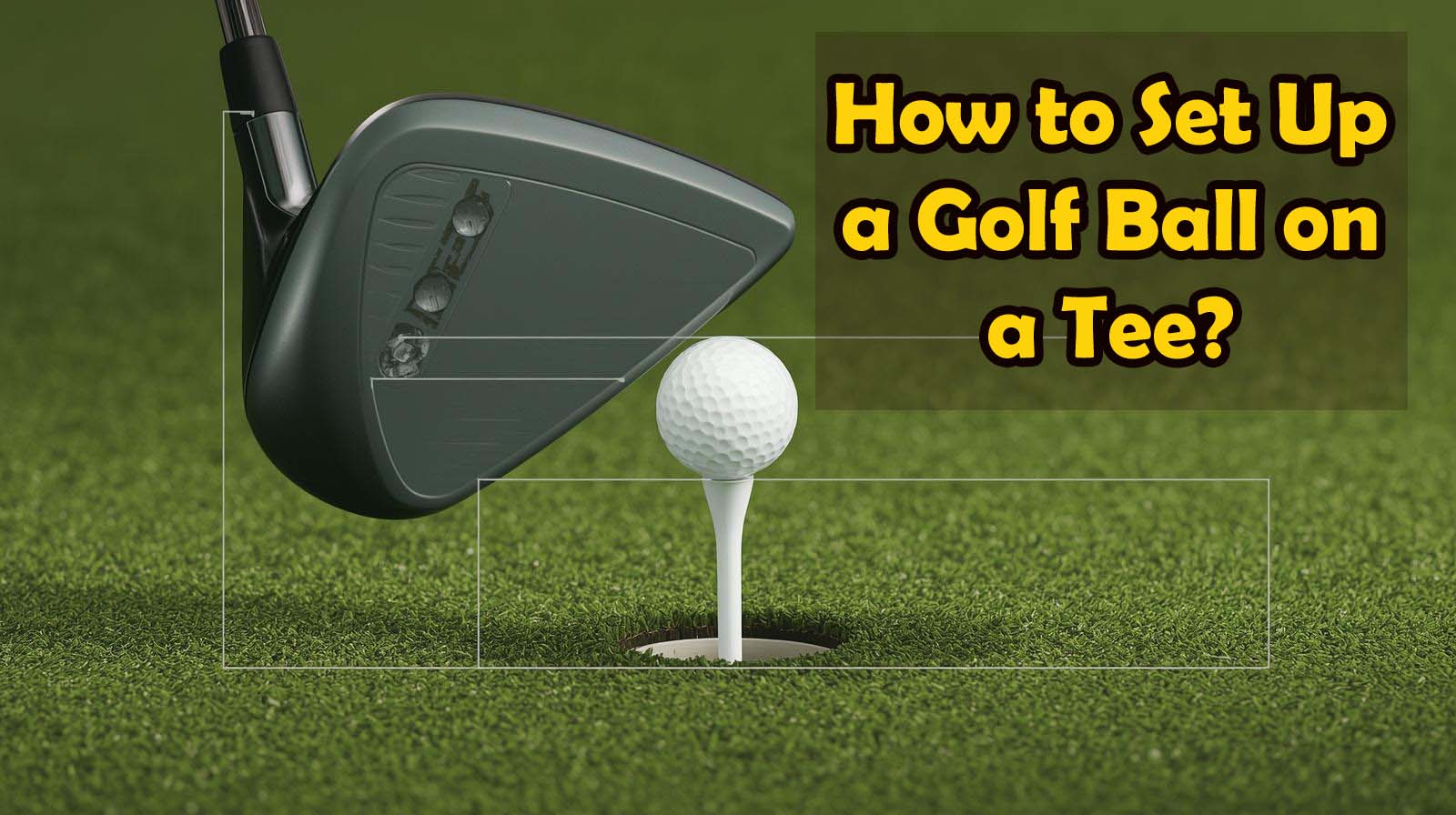
I have spent years watching golfers struggle with the same few problems: topping the ball, skying it off the crown, or watching it roll off the tee before they even swing. Most of the time, the issue is not their swing. It is how they set up the ball on the tee. Once you understand the two variables – height and position – you can fix most mishits in seconds.
For a driver, you want about half the ball above the top of the clubface, and the ball inside your front heel. For irons, the tee sits much lower. That is the short answer. But let me walk you through each part so you never have to guess again.
How to Set Up a Golf Ball on a Tee? Step-by-Step Process
Before you worry about heights and positions, you have to actually get the ball on the tee in a way that stays put. Here is the physical process I use and teach.
1. Choose the right tee for the club
Wooden tees work fine for most shots. Plastic tees last longer and often have a flared top that holds the ball more securely. For a driver, use a standard 2.75-inch or longer tee. For irons and fairway woods, use a shorter tee – around 1.5 inches. Using a long tee for an iron makes the ball unstable and harder to control.
2. Push the tee into the ground at a slight angle
Do not push the tee straight down. Tilt it slightly toward the target (about 10 degrees). This does two things: it makes the ball more stable because the tee resists the wind, and it reduces the chance of the tee snapping when you drive it. Press it deep enough that the ball sits at your intended height without wobbling.
For a driver, about half an inch of the tee should remain above the ground. For an iron, press it almost flush so only a quarter inch is visible.
3. Place the ball on the tee
Set the ball gently on the tee cup. If you use a plastic tee with a flared top, line the ball so it sits centered. Give it a small tap with your club or hand to settle it. Do not press the ball down hard – that can crack a wooden tee or create an uneven surface. A stable ball is a ball you can trust.
Recommended Tee Heights for Each Club
This is where most golfers get confused. The right height changes with every club. Here is a simple table based on what I have tested over hundreds of rounds.
| Club | Tee height (inches above ground) | Visual reference |
|---|---|---|
| Driver | 1.5 to 2.0 | Half the ball above the top of the clubface |
| Fairway wood (3-wood, 5-wood) | 0.5 to 1.0 | Ball just above the ground, no more than a quarter ball above the top of the face |
| Hybrid | 0.25 to 0.5 | Ball barely off the turf, flush with the top of the face when grounded |
| Long iron (3-iron, 4-iron) | 0.25 to 0.5 | Similar to a hybrid – almost touching the ground |
| Mid iron (5-iron to 7-iron) | 0.2 to 0.3 | The ball sits just above the grass line, the tee barely visible |
| Short iron (8-iron to 9-iron) | 0.1 to 0.2 | Ball nearly flush with the ground |
| Wedge (pitching, gap, sand) | 0.1 or less | Tee is almost entirely in the ground, only the cup shows |
A common mistake is teeing a 5-iron as high as a driver. That forces you to hit down too steeply or catch the ball on the upswing, both of which create thin or fat shots. For irons, you want the ball to sit low so you can strike it with a descending blow.
How to Position the Ball in the Tee Box?
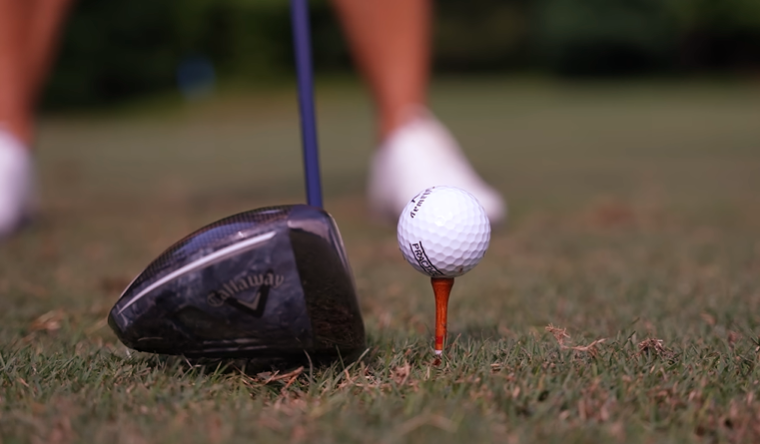
Height is only half the equation. Where you place the ball relative to your stance and the tee markers, matters just as much.
Forward-back position in your stance
For the driver, position the ball opposite your left heel (for right-handed golfers). This lets you catch the ball slightly on the upswing, which launches it higher with less spin. For a 3-wood or hybrid, move the ball one ball width back from your left heel – still forward of center but not as much.
For irons, place the ball in the center of your stance. For a wedge, move it just behind the center. If you play the ball too far back with an iron, you will hit down too steeply and dig a divot before the ball. If you play it too far forward, you will scoop the ball and lose distance.
Lateral position in the tee box
Always tee the ball on the side of the tee box that gives you the best angle to the fairway. On a dogleg left, tee on the left side so you can aim down the right side and let the ball draw back. On a dogleg right, tee on the right side. Do not stand outside the tee markers – that is a penalty in competition.
Also, check that the ground is level. If there is a low spot, move to a flat area even if it means teeing a few steps left or right of your ideal line. A flat lie is more important than the perfect angle.
Adjusting Tee Height for Wind and Shot Shape
Conditions change, and so should your setup. Here is how I adjust when the wind blows, or I need a specific shape.
Into the wind
Tee the ball lower – about half a ball lower than normal. For the driver, that means only a quarter of the ball above the clubface.
This lowers your launch angle and reduces spin, keeping the ball from ballooning into the wind. For irons, push the tee even deeper so the ball is almost resting on the ground. A low, piercing ball flight holds its line better against a headwind.
Downwind
Tee it slightly higher than normal. A higher launch catches the wind and adds carry distance. Just do not go so high that you risk hitting the crown or a pop-up. For a driver, I go about an extra quarter inch above the normal half-ball rule.
Fade vs. draw
If you want to hit a fade (ball curves left to right), tee the ball a little higher and slightly forward in your stance. This encourages a more upward attack and an open clubface through impact.
For a draw (ball curves right to left), tee it a little lower and play it a fraction back in your stance. This promotes a more inside-out path. Adjust the height by about one ball width for these changes.
Sloping tee box
On a downhill lie, tee the ball a little higher and move it slightly forward. On an uphill lie, tee it lower and move it slightly back. The goal is to help your swing match the slope so you can strike the ball cleanly.
Common Mistakes When Setting Up a Golf Ball on a Tee
Even after you learn the right way, certain habits creep in. Here are the most frequent mistakes I see and how to fix them.
Teeing too high for the driver
If you see a lot of sky marks – scratches on the top of your driver head – you are teeing too high or standing too close. Lower the tee so only half the ball sits above the face. If you still get sky marks, check your swing path. A steep downswing will catch the crown even with correct height. Lower the tee a little more until the marks stop.
Teeing too low for the driver
Topping the ball with a driver usually means the tee is too low. The bottom of the clubface hits the ball on the equator or below, sending a low line drive. Raise the tee until half the ball is above the face. Also, check that you are not leaning forward too much at the address.
Using the same tee height for every club
I see beginners grab one tee length and stick with it. That forces them to adapt their swing to the ball instead of letting the setup do the work. Keep a mix of short and long tees in your bag. Switch to a short tee when you pull out an iron or hybrid. It takes two seconds and saves you strokes.
Placing the ball too far forward with irons
This makes you scoop the ball, leading to thin shots or a loss of compression. Keep the ball centered in your stance for mid irons. If you notice you are hitting the ball high but with no distance, move it back a little.
Ignoring the wind and conditions
A stiff breeze can turn a perfect drive into a duck hook if you tee it too high. Get in the habit of checking the wind direction before you tee up. Adjust the height before you address the ball, not after.
Frequently Asked Questions
Can I use the same tee height for all my hybrids?
No. Hybrids vary in loft just like irons. A 3-hybrid (around 18 degrees) can be teed slightly higher – about half an inch above ground – to help launch. A 5-hybrid (around 25 degrees) needs a lower tee, closer to an iron height. When in doubt, tee it low enough that only the cup is visible.
Should I tee the ball higher for a draw or lower for a fade?
I tee it slightly higher for a fade and slightly lower for a draw. A higher tee helps you catch the ball on the upswing, which makes the fade easier to control. A lower tee encourages a more descending blow, which promotes a draw. Adjust by about a quarter inch in either direction.
How do I set the tee on a downhill or uphill lie in the tee box?
On a downhill lie, I push the tee in a little deeper than normal so the ball sits lower. This helps me stay balanced and avoid hitting the ground before the ball. On an uphill lie, I raise the tee slightly so I can still catch the ball cleanly on the upswing. Always adjust the height to match the slope, not the targeted golf club.
What is the best way to keep the ball from falling off when using a broken tee?
If a tee is cracked or split, do not use it. The ball will wobble and fall off. If you only have a broken tee, press it deeper into the ground so the split is below the surface. Sometimes you can balance the ball by resting it in the crack, but that is unreliable. Keep a handful of new tees in your pocket so you never have to suffer a bad tee when it matters.
Do professional golfers use different tee heights for different shots on the same hole?
Yes. Pros adjust tee height based on the shot they want to hit. On a par 3 with a 6-iron into the wind, they will tee it very low, almost flush. On a short par 4 where they want a high draw with a driver, they might tee it a little higher than normal. They also change tee height based on the lie of the tee box. It is a small adjustment that makes a big difference.
Setting up the ball on a tee correctly is the simplest way to lower your scores without changing your swing. Pick the right height for the club, place the ball in the right spot in your stance, and adjust for conditions. Do that consistently, and you will see fewer topped shots, fewer sky marks, and more fairways hit.
Next time you step onto the tee box, take a second to think about the two variables – height and position – and you will know exactly how to set up a golf ball on a tee for the shot you need.