
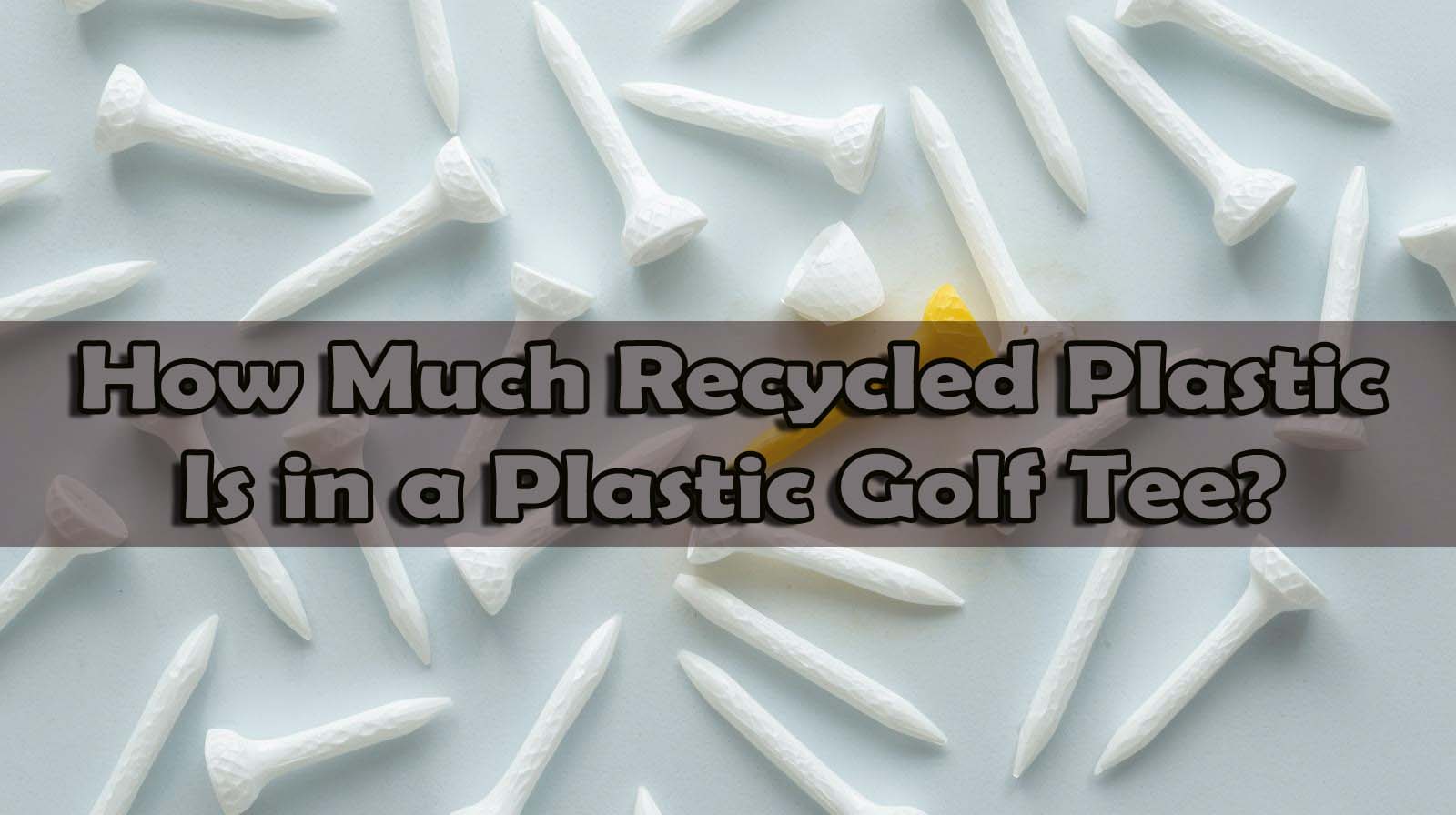
How much recycled plastic is in a plastic golf tee? If you search for the answer to this question, you probably expect a single number. Maybe 50%. Maybe 100%. The truth is that there is no universal percentage. The recycled plastic content in a plastic golf tee depends entirely on the brand, the manufacturing process, and the specific product you buy.
Some tees contain zero recycled material. Others contain a small amount. A few specialty tees are made from 100% recycled plastic. This article breaks down why the range exists, how to decode the claims on the package, and what the differences mean for you and the environment.
Why Recycled Content Varies So Much?
Plastic golf tees fall into two broad categories.
The first category is the mass-market tee. These are the tees you find in bulk bins at the pro shop or in big boxes at the driving range. They are almost always made from virgin plastic. Virgin plastic is cheaper and easier to mold consistently. Manufacturers use it because they prioritize low cost and high volume. You will find 0% recycled content in these tees.
The second category is the eco-focused tee. These are sold by brands that market themselves as sustainable. They use recycled plastic as a key selling point. The recycled content in these tees can range from 10% to 100%.
Why can’t all Tees Be 100% Recycled?
There are real manufacturing constraints. Recycled plastic, especially post-consumer plastic, can have impurities. It might have a slightly different melting point or color. For a brand to guarantee a consistent product across thousands of tees, they often have to mix recycled material with virgin plastic.
Also, color matters. Green, white, and yellow tees are the most common. If a company uses recycled plastic from mixed sources, the color might not be uniform. That is why many high-recycled-content tees are sold in natural or dark colors. Lighter colors are harder to achieve without adding virgin material.
Pre-Consumer vs. Post-Consumer: A Big Difference
This is where most articles get vague. They say “recycled plastic” without telling you what that actually means. There are two kinds.
Pre-consumer recycled plastic comes from manufacturing waste. Think of factory scraps, trimmings, or rejected parts. This material never reached a consumer. It is often clean and easy to process. Many companies use it because it is cheaper and more predictable than post-consumer waste. But it does not keep plastic out of your trash can or the ocean.
Post-consumer recycled plastic comes from products that were used and then collected for recycling. This includes bottles, containers, and industrial packaging. This is the material that actually diverts waste from landfills. It is harder to process and more expensive.
When a brand says “100% recycled plastic,” ask yourself: is it pre-consumer or post-consumer? If they do not specify, it is likely pre-consumer. The environmental benefit is still real, but it is much smaller than using post-consumer material.
Real-World Examples and Their Actual Recycled Content
Let us look at a few examples to make this concrete.
The Dow GLBI Tee: This is the most famous example. The Dow Great Lakes Bay Invitational produced 20,000 tees from plastic mesh fencing that was used at a previous tournament. The mesh was recycled into plastic pellets, and the tees were made entirely from those pellets. In this case, the recycled content is effectively 100%. But this was a one-time promotional project, not a mass-market product.
Eco-Golf Tees: Several brands sell tees under this name. Their websites typically state the recycled content as a percentage. You will find tees with 50%, 75%, or even 100% recycled plastic. The exact number depends on the specific product. Always check the fine print.
Generic “Eco” Tees on Amazon: This is the tricky category. Many sellers use the word “eco” or “green” in the title. But the product description often says nothing about recycled content. When you dive into the details, you might find that “eco” refers to the color of the tee, not the material. Assume these tees have 0% recycled plastic unless the manufacturer clearly states otherwise.
How to Check a Brand’s Claim
If you want to verify the claim, look for one of two things. First, a third-party certification. The most common one is the Global Recycled Standard (GRS). Another is SCS Recycled Content certification. If the product has one of these, you can trust the percentage.
Second, ask the company directly. Any brand that uses recycled plastic should be willing to tell you the percentage and the type (pre-consumer or post-consumer). If they cannot or will not answer, that is a red flag.
Myths vs. Facts About Recycled Plastic Golf Tees
Let me clear up some common misunderstandings.
Myth: A recycled plastic tee is always better for the environment.
Fact: It depends. A tee made from 100% post-consumer recycled plastic is genuinely better. A tee made from 30% pre-consumer recycled plastic is a small step forward, but not a big one. And if that tee is shipped from the other side of the world, the carbon footprint of shipping might cancel out the benefit.
Myth: Recycled plastic tees break more easily.
Fact: Modern recycled polymers can be just as strong as virgin plastic. But it depends on the blend. Cheap recycled tees might use lower-quality material. If you want durability, look for a brand that specifically tests its tees for breakage. If you are worried, do a simple bend test before you use it on the course.
Myth: A recycled plastic tee is also biodegradable.
Fact: No. Recycled plastic is still plastic. It does not biodegrade. It will sit in a landfill for hundreds of years just like virgin plastic. If you care about end-of-life, look for tees made from bamboo or cornstarch, not recycled plastic.
Myth: You can put a recycled plastic tee in your home recycling bin.
Fact: Usually not. Most golf tees are too small to be sorted by recycling equipment. They fall through the screens. Also, many tees are made from a type of plastic that your local facility does not accept. Only tees with a clear recycling code (like a #5 or #7 symbol) that matches your local guidelines can be recycled.
Frequently Asked Questions
How much does a typical recycled plastic golf tee weigh compared to a virgin plastic tee?
The weight is about the same. Both types weigh between 1 and 3 grams. The recycled content does not change the weight in a noticeable way.
Can I safely use recycled plastic tees in a golf simulator?
Yes, as long as they are the same size and hardness as standard tees. The recycled content does not affect the compatibility with a simulator. The key factor is the height and shape, not the material source.
Do professional golfers use recycled plastic tees?
Rarely. Most professionals use tees provided by their sponsors, which are usually made from virgin plastic or wood. Performance and sponsorship agreements come first.
Are recycled plastic tees more expensive?
Yes. They typically cost 20% to 50% more than standard plastic tees. For example, a pack of 10 recycled tees might cost $5, while a pack of 50 standard plastic tees costs $3. The price difference reflects the higher cost of recycled plastic and smaller production runs.
How can I verify a brand’s recycled content claim?
Look for a third-party certification like the Global Recycled Standard (GRS) or SCS Recycled Content. If the brand does not have a certification, ask them for a material safety data sheet (MSDS) that specifies the percentage of post-consumer recycled material. If they cannot provide one, assume the claim is marketing, not fact.
Final Take
There is no single answer to how much recycled plastic is in a plastic golf tee. The number ranges from 0% to 100%. The key is to know what you are buying.
If you want the real environmental benefit, seek out tees that clearly state they are made from post-consumer recycled plastic and preferably show a third-party certification. If you are just buying a pack of tees from a store, you can safely assume they contain zero recycled material.
Understanding this difference puts you in control. You can make a choice that matches your values, whether that is cost, performance, or sustainability.