
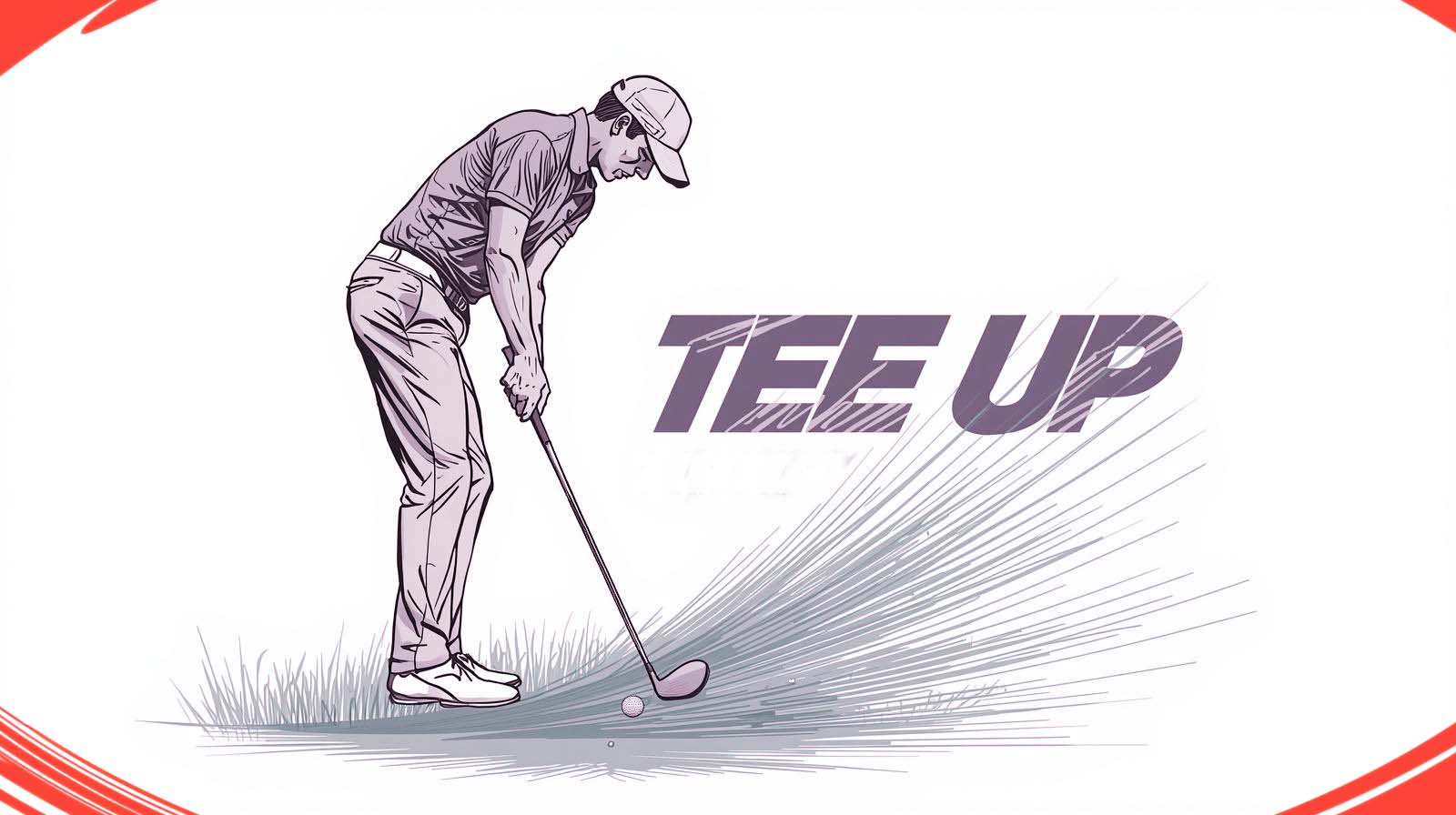
If you have ever watched a pro and tried to copy their tee height, you know it doesn’t always work. The reason is simple: your swing is different from theirs. The right way to tee up a golf ball for a driver is not about copying someone else. It is about finding the height that works with your swing to create the best launch angle and spin rate.
I have spent years working on my own swing and helping others fix theirs. The biggest mistake I see is people teeing the ball too high or too low and then never changing it. They blame the club or their swing, but the fix is often just a small adjustment to the tee.
This guide will walk you through a simple process to find your ideal tee height. We will start with the mechanical setup, then move into the dynamic adjustment based on the shots you actually hit.
The Mechanical Setup: A Neutral Starting Point
Before you can diagnose anything, you need a consistent way to put the ball on the tee. Do not just stick it in the ground randomly.
The Friction Point
Push the tee into the ground until you feel a little resistance. This is the “friction point.” It means the tee is stable. If you push it in too deep, the tee can wobble. If it is too shallow, the ball can fall off. A stable tee means your height is the only variable.
The Half-Ball Rule
The standard starting point for most golfers is to have the center of the ball (the equator) line up with the top edge of the driver face. Here is how to see that:
1. Place the driver head on the ground behind the ball.
2. Look at the ball from the side of the clubface.
3. Adjust the tee so that the top half of the ball sits above the top line of the driver.
This is your neutral starting point. It gives you a good chance of catching the ball on the center of the face (the sweet spot) if you hit up on it properly.
The Dynamic Adjustment: Reading Your Ball Flight
The neutral starting point is only the beginning. The real answer to how to tee up a golf ball for a driver comes from watching what the ball does after you hit it. Your ball flight tells you exactly if your tee height is wrong.
Problem: The Pop-Up
You hit the ball, and it goes very high but has no distance. It feels like a weak shot, and you might even see a mark on the top of your driver.
Root Cause: This happens when you hit the ball. A negative angle of attack catches the ball on the top of the clubface. The high tee makes this worse because the ball is already in a position to be scooped up.
The Fix: Lower the tee so that only a small portion of the ball is above the driver crown. This forces you to hit the ball more horizontally, reducing that “pop-up” effect. You also need to work on your angle of attack, but the tee adjustment gives you instant relief.
Problem: The Low Burner
The ball comes out low and hot. It runs along the ground and has almost no carry distance. You might hit a few good ones, but they won’t go anywhere.
Root Cause: This is the opposite problem. You are hitting up on the ball, but the tee is too low. The clubface strikes the ball below its equator, creating excessive backspin and a low launch angle.
The Fix: Raise the tee. Go to the high tee setting where the equator of the ball is at the top of the driver crown. This allows your positive angle of attack to launch the ball higher with less spin.
Problem: The Thin Shot
You hit the ball, but the impact feels solid, yet the ball flies low and short. It just doesn’t feel “flushed.”
Root Cause: The tee is too low for the design of your driver sole. Many modern drivers have a sole that sits farther off the ground. If the ball is too low, the sole of the club hits the ground before the face hits the ball, or the ball hits the top of the face.
The Fix: Raise the tee by one full notch on the peg. This gives the clubface a chance to meet the ball first.
The Balance: Accuracy vs. Distance
People often ask me: “Should I give up distance for accuracy?” The answer is not that simple. It is a trade-off, and you need to know your swing speed to decide.
High Swing Speed (Over 100 mph)
If you swing fast, you already have enough power to get the ball in the air. Your problem is usually spinning. A high tee promotes a lower spin rate, which helps the ball travel farther through the air.
The Trade-Off: A high tee exposes the “gear effect” more. If you hit the ball off-center, the gear effect curve (the curve on mishits) is more pronounced. You might lose a little accuracy on bad hits, but you gain a lot of distance on good ones.
Low Swing Speed (Under 85 mph)
If you swing slower, your main problem is carry distance. The ball needs to get in the air and stay there.
The Trade-Off: A high tee is critical here. You want to launch the ball as high as possible to maximize carry. The accuracy trade-off is less important because you need every yard you can get. Tee it high and let it fly.
Environmental and Equipment Variables
The rules change when the weather or your equipment changes.
Windy Conditions
Do not tee it high in the wind. A high launch will balloon the ball into the wind, costing you serious distance. Lower the tee so the ball comes out lower and pierces through the wind. The “half-ball” rule becomes a “quarter-ball” rule: only the top quarter of the ball is above the crown.
Wet Fairways
The grass is soft. The ball will not roll out much when it lands. In this case, you want maximum carry distance. Tee it high so you get that high launch and low spin carry.
Driver Loft
Your driver loft changes the equation. A 12-degree driver launches the ball higher naturally. You can afford to tee it a little lower to control the launch angle. A 9.5-degree driver needs a high tee to help it get airborne.
The Clubface Contact Test
Here is a practical test that will tell you exactly where your tee height should be. You do not need a launch monitor for this.
What You Need: A dry-erase marker or some impact tape (most golf shops have a roll for cheap).
How to Do It:
1. Draw a vertical line from the top to the bottom of your driver’s face with the marker.
2. Hit three shots using your normal tee height.
3. Look at the impact mark on the face.
What It Tells You:
| Impact Mark Location | What It Means |
|---|---|
| Above center (near the crown) | Your tee is too high. Lower it one notch. |
| Below center (near the sole) | Your tee is too low. Raise it one notch. |
| Low and near the heel | The ball is too far forward in your stance. Move it back slightly. |
| Low and near the toe | The ball is too far back in your stance. Move it forward slightly. |
Perform this test on the range. It will give you a tee height that is specific to your swing.
Frequently Asked Questions
Should I tee the ball higher for a draw or lower for a fade?
Not really. Tee height influences launch angle and spin, not the shape of the curve. A draw or fade is controlled by your clubface and path, not the tee. Keep your tee height consistent for your swing type and work on your swing shape separately.
How does a teed-up ball differ from a ball on the fairway for an iron shot?
A teed ball for a driver is meant to be hit on the upswing. An iron shot off the fairway is hit on the downswing. You cannot hit a teed driver ball effectively. That is why you need a high tee for a driver and a low tee (or no tee) for an iron.
Does the material of the tee (wooden vs. plastic) affect performance?
For most golfers, no. The material does not affect the ball flight. The only difference is durability. Plastic tees break less often. Wooden tees are cheaper. Use what you like. The height is what matters.
What if my driver has a massive head like 460cc?
A 460cc driver has a taller face. This means you can use a slightly higher tee than an older, smaller driver. The “half-ball” rule still applies, but the actual measurement is a bit higher because the face itself is taller.
Is it legal to tee the ball above the crown of the driver’s face?
Yes. The Rules of Golf (Rule 6.1) do not restrict how high you can tee the ball. You can tee it as high as you want. But physics will punish you if you go too high. The ball will either pop up or you will miss the sweet spot entirely.
Once you find your ideal tee height, stick with it. The only time to change is when the wind picks up or the ground is wet. A consistent setup leads to a consistent swing.
Conclusion
Mastering how to tee up a golf ball for a driver can help you achieve straighter and longer drives on the golf course. A properly teed ball allows the driver to strike the ball at the ideal angle, increasing both distance and control.
By focusing on your tee height, stance, and alignment, you can build a more reliable setup before every shot. Even small improvements in your setup routine can make a noticeable difference in your overall game and help you play with greater consistency and confidence.