
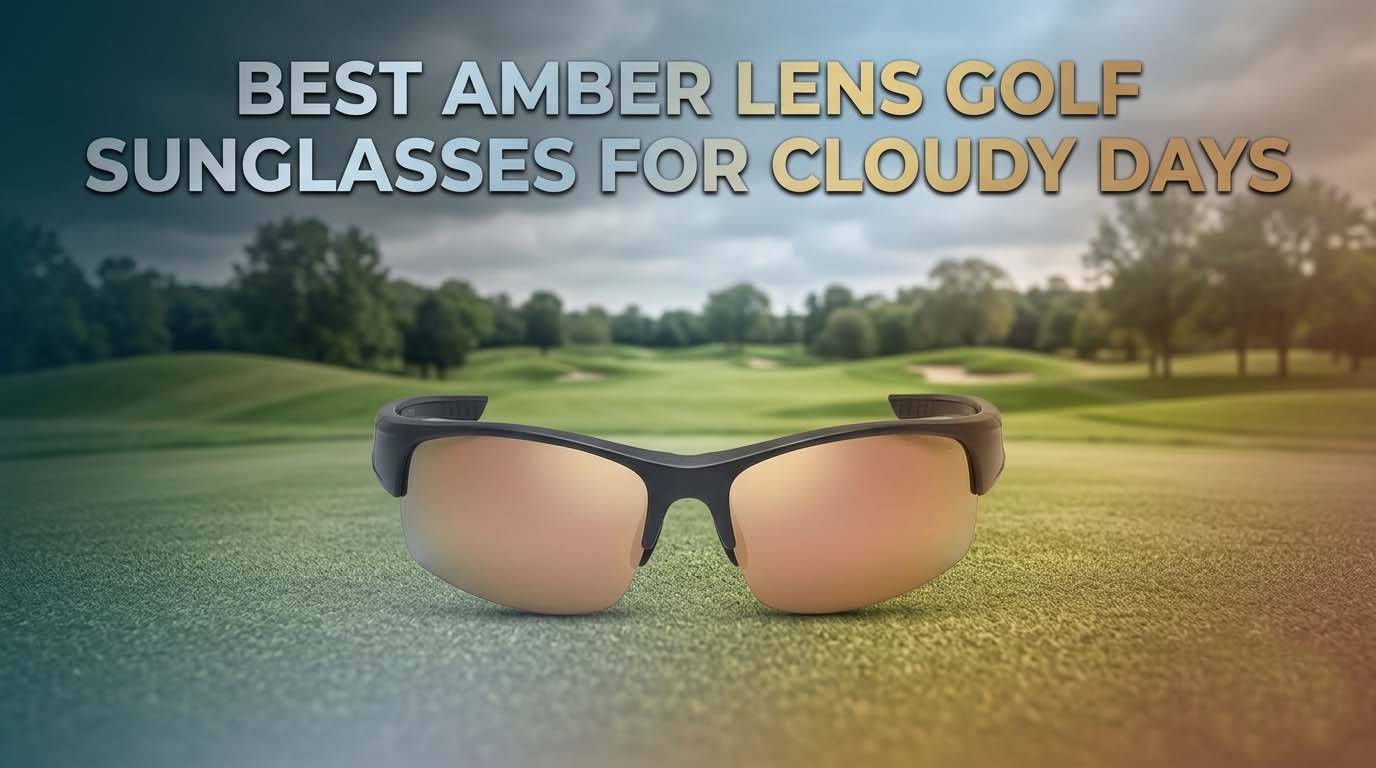
The Ambiguity of Overcast Light
Overcast light messes with your depth perception in ways that bright sun never does. The sky turns into a soft white dome, the greens look a little washed out, and the white ball? It disappears. I remember one round specifically—a late afternoon in early spring—where I literally lost sight of my drive ten feet off the tee. Not sliced into the woods. Just … gone. Blended into the gray.
That’s the problem with standard sunglasses on a cloudy day. They cut the light down further, making everything look dim and flat. But going without glasses leaves you squinting at glare coming off every wet blade of grass. The fix isn’t more darkness. It’s smarter color.
Amber lenses work by filtering out the blue light that dominates an overcast sky. Blue light scatters easily in cloud cover, which dulls contrast. Cut that blue light, and suddenly the green fairways pop, the white ball floats against the background, and the red pin flags look like beacons. I’ve been testing glasses specifically for this for a while now, and the difference between a standard dark lens and a good amber lens on a gray day is night and day.
I’m ranking these based on light transmission, contrast boosting, and how they feel over five hours of damp, cloudy golf. Here are the four I trust most for the best amber lens golf sunglasses for cloudy days.


Why Amber Lenses Are the Secret Weapon for Overcast Golf
It’s not just marketing hype. There’s a real visual reason amber works. Cloudy days flood your eyes with blue light because the water vapor in the air scatters shorter wavelengths. That blue haze washes out reds and greens—the two colors you need most on a golf course.
How It Works on the Course
Amber and rose lenses block that scattered blue light. What’s left is a higher contrast image. The green grass looks richer, the white ball looks brighter, and the subtle breaks in the putting surface become readable again. I noticed this most dramatically on a par-3 over water. Without glasses, the green looked flat and distant. With the amber lenses, it had dimension.
The key spec here is Visible Light Transmission (VLT). For a cloudy day, you want a VLT between 20% and 45%. A typical dark lens lets in 10-15% of light. That’s too dark for overcast conditions. It robs you of depth perception. The lenses I’m recommending here stay in that 20%+ sweet spot so your eyes get enough light to work with.
Top Picks: Amber and Contrast Boosting Lenses for Gray Skies
I’ve tested these four pairs extensively in low-light, overcast, and twilight conditions. Here is how they stack up.
1. Oakley Bisphaera – The Premium Overcast Specialist
- Lens: Prizm Dark Golf (22% VLT)
- Frame: O Matter
- Grip: Unobtanium nosepads and earsocks
- Weight: 4.8 oz
The Prizm Dark Golf lens is the single best lens I have used for flat light. Oakley tuned it specifically to amplify reds and greens while cutting through the blue haze. On a cloudy day, the ball doesn’t just appear—it looks like it’s sitting on a pedestal of green. The 22% VLT is ideal. It keeps your vision sharp without dimming the world around you.
The Unobtanium nose pads are not a gimmick. I wore these on a humid, drizzly day and they actually gripped tighter as I sweat. My old glasses slipped down my nose on every swing. These stayed planted. The frame is O Matter, which is light enough for long rounds but tough enough to survive being tossed in the bag.
The only real downside is the price. Oakley charges a premium, and you’re paying for that Prizm technology. But if you play fifty-plus rounds a year and deal with overcast conditions regularly, the cost per round becomes negligible. This is a tool, not an accessory.
Best For: The serious golfer who plays in all weather and demands uncompromised optics.
2. Tifosi Optics Centus – The Lightest and Most Comfortable Budget Choice
- Lens: Brown polycarbonate (scratch resistant)
- Frame: Grilamid TR-90
- Weight: 27 grams
- Grip: Hydrophilic nose pads (increase grip with sweat)
At 27 grams, you forget you’re wearing the Centus. That matters on a long, gloomy round when every little annoyance gets magnified. The brown lens is a classic choice for variable light. It’s not as dramatically tuned as the Oakley Prizm, but it does a solid job of cutting glare and boosting contrast on overcast days. It won’t make the ball magically pop, but it will take the fatigue out of reading the course.
Tifosi uses hydrophilic nose pads that get stickier as you sweat. That might sound counterintuitive, but on a damp day, it means the glasses aren’t sliding down your face during your downswing. The Grilamid TR-90 frame is flexible and durable without being heavy. I’ve accidentally sat on these and they didn’t snap.
The honest trade-off here is that the lens technology is standard. You’re getting a good brown tint, not a custom golf spectrum. But for the weight and the price, this is hard to beat.
Best For: The value-conscious golfer who prioritizes lightweight comfort and solid performance over premium lens tuning.
3. maivnz HD Rose Gold – The Ball Finder for Flat Light
- Lens: Rose gold mirror over green base
- Frame: Lightweight with adjustable silicone nose pads
- Weight: 0.71 oz
- Protection: UV400
This pair solves one specific problem: losing the ball in the air. The rose gold mirror coating combined with the green base lens is designed to make the white ball stand out against a gray sky. I tested these on a particularly flat, overcast afternoon and I was able to track my ball farther than my playing partner who wasn’t wearing them. The difference was noticeable.
The adjustable silicone nose pads are a nice touch for fit. I have a narrow nose bridge and many sunglasses slip. These stayed put. The lens is impact-resistant polycarbonate, which is essential for golf. A stray ball to the face is rare, but if it happens, you want polycarbonate, not glass.
On the downside, the rose gold coating is cosmetic. It works well when it’s clean, but if you scratch it, the contrast boost diminishes. The case they include is fine for basic storage. These aren’t going to outlast the Oakleys in a five-year durability test, but at this price, they’re a very functional specialist tool.
Best For: Golfers who struggle specifically with tracking the ball in the air on gray days.
4. Maxx Domain TR90 – The No-Regrets Backup Pair
- Lens: Amber polycarbonate (100% UV protection)
- Frame: TR90 half-frame
- Weight: 0.63 oz
- Warranty: Lifetime against frame breakage
These are the pair I keep in my ball pocket. Not because they’re the best, but because they do exactly what they need to do and I’m not worried about losing them. The amber lens is classic for overcast conditions. It warms up the color palette and cuts through some of that blue haze. It’s not tuned specifically for golf like the Oakley, but it’s a solid step up from a generic gray lens.
The half-frame design is smart for cloudy golf. It allows air to flow over the top of the lens, which reduces fogging on humid, damp days. That’s a real problem with full-frame glasses when you’re walking and sweating in cool weather. The TR90 frame is lightweight and flexible. At 0.63 ounces, you barely feel them.
Here’s the honest truth: they won’t give you the same contrast boost as the Prizm lens. The ball won’t glow. But they offer full UV protection, they’re shatterproof, and they come with a lifetime warranty against frame breakage. For the price, that’s incredible value.
Best For: High-handicappers or casual players who need reliable eye protection without the stress of losing expensive gear.
Which Amber Lens Suits Your Cloudy Day?
Here’s a quick comparison table that strips away the fluff and tells you which one to grab based on your priorities.
| Product | Lens Tech | Overcast Performance | Weight | Best For |
|---|---|---|---|---|
| Oakley Bisphaera | Prizm Dark Golf | Elite (22% VLT) | Heavy (4.8 oz) | All-weather serious golfer |
| Tifosi Centus | Brown Lens | Great (Lightweight comfort) | Ultra-Light (27g) | Value + comfort |
| maivnz HD Rose Gold | Rose Gold/Green Base | Good (Ball tracking) | Light (0.71 oz) | Ball spotters |
| Maxx Domain TR90 | Classic Amber | Adequate (Basic) | Standard (0.63 oz) | Budget backups |
How to Avoid Buying the Wrong Lenses for Overcast Golf
I made these mistakes so you don’t have to. Here are the two biggest traps when shopping for cloudy-day golf sunglasses.
The Polarization Trap
Polarization is great for cutting glare off water. But on a cloudy day, it often reduces the VLT too much. I once wore a pair of dark polarized lenses on a gray afternoon and felt like I was playing at dusk by the 12th hole. The glare was gone, but so was all the light I needed to see the breaks in the green. For overcast conditions, look for lenses that prioritize light transmission over polarization. If you need polarization, make sure the VLT is still above 20%.
The Yellow Lens Myth
Yellow lenses are for very dark conditions like dusk or deep shade. For a standard overcast day, yellow can actually make everything look unnaturally bright and washed out. Brown, copper, or rose lenses are better. They enhance contrast without sacrificing depth perception. The brown lens in the Tifosi and the Prizm lens in the Oakley both fall into this sweet spot.
The Final Putt
A gray sky doesn’t have to ruin your round. The right lens changes how you see the course, and it’s not about making the world darker. It’s about making the important details pop. You don’t need a sunny day dark lens. You need a contrast booster that works with the available light.
If you have the budget and you play in all weather, the Oakley Bisphaera is the gold standard for overcast golf. If you want the best bang for your buck and you hate heavy frames, Tifosi Centus is the smart play. If you constantly lose sight of the ball in the air, maivnz Rose Gold gives you a dedicated tool for that job. And if you just need a solid, worry-free pair to toss in the bag, Maxx Domain TR90 has you covered.
Check the current price on Amazon for the pair that fits your game. Don’t let a gray sky be the excuse for a bad round.
Frequently Asked Questions
What exactly does an amber lens do for golf on a cloudy day?
Amber lenses filter out blue light, which is scattered heavily by cloud cover. By removing that blue haze, the lens increases contrast between the green grass, the white ball, and the sky. This makes reading the course and tracking your ball much easier in flat lighting conditions.
Can I wear amber lenses for sunny golf rounds too?
You can, but they might not be ideal. Amber lenses let in more light than dark gray or green lenses. On a bright, sunny day, they can make things look overly warm and your eyes may fatigue faster. A darker lens with 10-15% VLT is generally better for full sun. Amber excels specifically in overcast, twilight, or variable light.
Do I need polarized amber lenses for overcast golf?
Not necessarily. Polarization cuts glare, which is helpful on wet fairways, but it also reduces the total light reaching your eyes. On a cloudy day, you want to preserve as much usable light as possible while enhancing contrast. Non-polarized amber or brown lenses often perform better in these conditions because they maintain a higher VLT.
How do I keep my golf sunglasses from fogging up on humid cloudy days?
Fogging happens when warm moist air hits a cool lens. A half-frame design, like the Maxx Domain TR90, helps by allowing air to circulate over the top of the lens. You can also use an anti-fog spray or wipe the lenses with a tiny drop of dish soap. Avoid touching the inside of the lens with oily fingers during your round.