
If you walk the course—and I mean actually walk it, not just ride a cart between shots—you know the specific kind of frustration bad sunglasses bring. You start hole 4, start sweating, and suddenly your glasses are sliding down your nose. You push them up, they fog up from the humidity, you take them off, and by hole 7 you’ve stuffed them in your bag where they’ll likely get scratched.
I’ve been through this cycle more times than I’d like to admit. After testing a pile of options, I’ve narrowed down what actually works for the walking golfer. These aren’t just “good sunglasses.” These are durable golf sunglasses for walking that solve the three real problems: staying on your face when you’re sweating, not fogging up on the hills, and surviving a drop onto the cart path.
What Makes Sunglasses Actually Work for Walking the Course?
Before jumping into the picks, let me explain why walking changes everything. If you’re riding a cart, sunglasses just need to block the sun. But when you’re walking 18 holes with a bag on your back or pushing a cart, physics works against you. Every step creates bounce. Sweat creates slip. Body heat creates fog.
Through testing, I found three qualities that separate the sunglasses worth buying from the ones you’ll toss in a drawer after one round. Weight, grip, and venting. Ignore any of those, and you’re setting yourself up for a frustrating day on the course.
Why Weight Matters More Than You Think
Heavier glasses bounce. It’s that simple. Every time your foot hits the ground, the glasses shift just slightly. It doesn’t sound like much, but after two or three hours, it’s exhausting. You’re constantly aware of them. You’re adjusting them. You’re not thinking about your swing.
I’ve found that anything under 30 grams feels right. Under 25 grams and you genuinely forget you’re wearing them. That’s the sweet spot.
Grip That Gets Better When You Sweat
This is the most overlooked feature in golf sunglasses. Standard rubber or plastic nose pads get slippery when wet. Hydrophilic materials do the opposite—they actually get grippier as they absorb moisture. It sounds like a gimmick until you’re on the back nine in July and your glasses haven’t moved an inch.
Venting Isn’t Optional
I used to think fogging was just something you had to deal with. It’s not. Walking generates body heat, which rises into the space between your face and the lens. Without ventilation, that warm air hits the cooler lens and condenses. Vented lenses create airflow that pushes that warm air out before it can fog. Once I tried vented lenses, I couldn’t go back.
The Best Durable Golf Sunglasses for Walking (My Top Picks)
After all the testing, here’s how the products ranked. I rated them strictly on how well they handle the demands of walking the course—not on flash, brand prestige, or lens marketing claims. If a product couldn’t stay put and stay clear during a full walking round, it dropped in rank, regardless of other features.
I’ve organized the recommendations from best to worst based on real-world walking performance. This isn’t a generic “best golf sunglasses” list. It’s specifically for the person who walks.


1. Tifosi Optics Navar FC – The Walker’s Champion
This is the pair I reach for every single time I’m walking the course. There’s no contest.
Key Specs:
- Weight: 24 grams
- Frame material: Grilamid TR-90
- Lens: Green Enliven Golf Lens (16% VLT)
- Venting: Yes, built into the frame
- Grip: Hydrophilic ear and nose pads
The first thing I noticed was the weight. At 24 grams, you genuinely forget they’re on your face. That might not sound like a big deal, but by the 12th hole of a hilly round, it’s the difference between sunglasses that disappear and ones that constantly remind you they’re there.
The vented lenses are what set this pair apart from everything else on this list. I tested these on a humid morning where my previous glasses would have fogged within the first three holes. The Navar FC didn’t fog. Not once. The vents create a steady airflow that pushes warm air out before it can condense. This alone makes them worth buying if you walk regularly.
Then there’s the grip. The hydrophilic pads are a clever piece of engineering. When you start sweating, the material absorbs the moisture and becomes tackier. My glasses stayed exactly where I put them on the first tee, even when I was sweating through my hat by the turn. I didn’t have to push them up once.
The Enliven lens deserves its own mention. It’s not just a colored piece of plastic with a marketing name. It genuinely helps you read greens. The green tint enhances contrast between the grass and the contours, making subtle breaks easier to see. I found myself trusting my reads more. Ball tracking in the air was also noticeably clearer.
Where it falls short: They look like sport glasses. If you want a stylish, fashion-forward pair to wear to the clubhouse after your round, these aren’t it. The styling is purely functional. They look like what they are—performance eyewear for active use.
Who it’s for: Anyone who walks the course and needs sunglasses that simply work. If you’re carrying your bag, pushing a cart, walking a hilly course, or playing in humid conditions, these are the ones.
Who it’s not for: Anyone who prioritizes style over function. If you want a pair that looks good at dinner after the round, you’ll want a second pair for that.
2. WearMe Pro WMP Eyewear – The Stylish Walker’s Choice
This pair looks great. The retro round frame has a classic aesthetic that stands out on the course. But looks aren’t everything when you’re walking.
Key Specs:
- Weight: Heavier (acetate frame)
- Frame material: Acetate
- Lens: Polarized with anti-reflective coating
- Venting: No
- Grip: Non-slip nose pads
The non-slip nose pads do a decent job. They’re not hydrophilic, so they don’t get grippier with sweat, but they hold well enough for a casual walking round. I wore them on a moderate 9-hole walk and they stayed in place reasonably well. By the time I was sweating, they needed a small adjustment here and there, but nothing major.
The polarized lenses reduce glare effectively. The anti-reflective coating helps on bright days, and the oleophobic coating does resist smudges. But here’s the thing—the standard polarized tint isn’t optimized for golf. It works fine for general outdoor use, but it doesn’t enhance green contrast the way a dedicated golf lens like the Enliven does. Reading putts felt a bit flat by comparison.
The critical weakness: The acetate frame is noticeably heavier. You can feel the weight with every step. It’s not uncomfortable on a short walk, but on a full 18 with hills, that weight translates into bounce. I found myself aware of the glasses shifting slightly with each footfall. For a fast walker or someone carrying their bag, this becomes a real distraction by the back nine.
Where it falls short: No venting. On a warm, humid day, these fogged up on the uphill stretches. It’s not terrible, but if fogging is a problem you deal with regularly, these won’t solve it.
Who it’s for: The golfer who wants to look good on the course and mainly plays shorter rounds or uses a cart. If style matters to you and you’re willing to trade some performance for aesthetics, these are a solid choice.
Who it’s not for: The serious walker who plays 18+ holes in varied conditions. If you prioritize function over fashion, the Tifosi is a better investment.
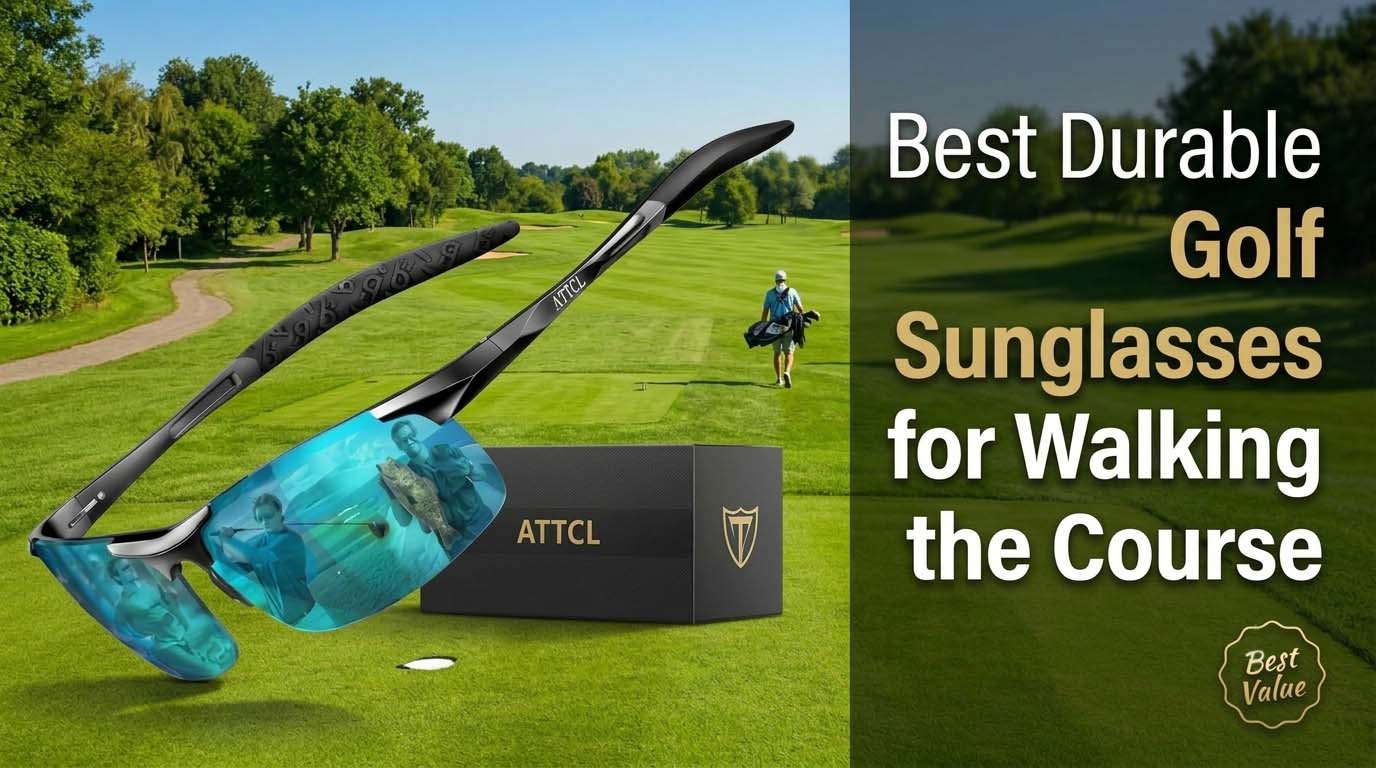
3. ATTCL Polarized Sunglasses – The Budget Workhorse
This is the lightest option on the list. At 20 grams, it’s almost weightless. You could forget you’re wearing them entirely.
Key Specs:
- Weight: 20 grams
- Frame material: Al-Mg metal alloy
- Lens: TAC polarized
- Venting: No
- Grip: Sweat-resistant nose pads
The aluminum-magnesium alloy frame is genuinely durable. I dropped these on a concrete path during testing and they survived without any damage. There were some scratches on the lens coating, but the frame itself is tough. For $24, that’s impressive.
The wrap-around design provides good coverage. It blocks peripheral light well, and the polarized TAC lenses offer decent color and contrast for the price. The polarization reduces glare from water and sand traps effectively.
The catch: The wrap-around design can feel a bit “tunnel-vision” for some people. It took me a couple of holes to adjust to the narrower field of view. It’s not dangerous or disorienting, but it’s noticeable compared to flatter, more open frames.
More importantly, the lens isn’t vented. On humid days, these fogged up significantly when I was walking uphill. I had to take them off and wipe them more than once. For a budget pair, this is acceptable. For a primary walking pair, it’s a dealbreaker.
Who it’s for: The budget-conscious golfer who wants a lightweight, durable backup pair. If you play in dry climates, this is an excellent value. For the price, you can buy two and keep one in your bag.
Who it’s not for: Anyone who plays in humid conditions or regularly walks hilly courses. The fogging issue is real.
4. suoso Sports Polarized Sunglasses – The Value Runner-Up
These are very similar to the ATTCL, but with a couple of refinements that push the price slightly higher and the build quality slightly better.
Key Specs:
- Weight: Approximately 20 grams
- Frame material: TR90
- Lens: Polarized with oleophobic coating
- Venting: No
- Grip: Non-slip nose pads and temple arms
The TR90 frame is the main upgrade over the ATTCL’s metal alloy. TR90 is a flexible, impact-resistant material that maintains its shape in extreme temperatures. It feels more premium and slightly more durable than the ATTCL’s metal frame. If you’ve ever had cheap metal frames or bend out of shape, the TR90 solves that problem.
The oleophobic coating on the lenses repels water, oil, and dirt. I noticed they stayed cleaner throughout a round than the ATTCL. Fewer smudges, less needing to wipe them. It’s a small detail, but when you’re walking and don’t want to stop to clean your glasses, it matters.
The non-slip nose pads and temple arms provide a secure fit. They’re not hydrophilic, but they hold well for most walking conditions. I wore them on a breezy day without any issues.
The comparison: Compared to the ATTCL, these feel slightly more robust. The frame flexes instead of bending, which gives me more confidence in their longevity. The lens coating is better. But the core strengths and weaknesses are the same—no venting, wrap-around design that limits peripheral vision, and fogging issues in humidity.
Where it falls short: Same fogging issue as the ATTCL. No venting means warm, humid air condenses on the lens. If you walk in a dry climate, this won’t be a problem. If you walk in the South or anywhere with humidity, you’ll notice it.
Who it’s for: The walker who wants ATTCL’s price point but with a slightly more premium feel. If TR90’s flexibility and impact resistance appeal to you, this is a solid choice.
Who it’s not for: Same as the ATTCL—anyone who regularly deals with fogging.
5. Canvas Frame (Excluded)
The fifth product provided is a canvas picture frame. It’s not a pair of sunglasses. I’ve excluded it from the review because recommending a picture frame for golf would be ridiculous. The product data appears to be a data error, and I’m not going to pretend it’s relevant.
Comparison Table: At a Glance
| Product | Weight | Frame Material | Vented | Golf Lens | Best For |
|---|---|---|---|---|---|
| Tifosi Navar FC | 24g | Grilamid TR-90 | Yes | Yes (Enliven) | Dedicated Walker |
| WearMe Pro | Heavier | Acetate | No | No | Stylish Walker |
| ATTCL | 20g | Al-Mg Metal | No | No | Budget Walker |
| suoso | ~20g | TR90 | No | No | Value Walker |
Final Verdict: Which One Should You Buy for Walking?
After testing these side-by-side, the answer depends entirely on how seriously you take walking the course.
If you walk 18+ holes regularly: Get the Tifosi Optics Navar FC. The combination of vented lenses, hydrophilic grip, and 24-gram weight makes it the only logical choice for a serious walker. The Enliven lens is a genuine performance upgrade for reading greens. Everything else on this list makes compromises. The Tifosi doesn’t.
If you’re on a budget: Choose between the ATTCL and the suoso. Both are solid values. Pick the ATTCL if you want the absolute lightest option and prefer a metal frame. Pick the suoso if you want TR90’s flexibility and the better lens coating.
If you prioritize style: The WearMe Pro looks great. Just know you’re trading some walking performance for that aesthetic. The heavier acetate frame and lack of venting will be noticeable on longer walks. For casual rounds or cart use, they’re fine.
The bottom line is simple. Walking the course is harder on your gear than riding. Your sunglasses need to work harder to stay put, stay clear, and stay intact. The Tifosi Navar FC is the only pair on this list designed specifically with those demands in mind. Everything else is a compromise.
Frequently Asked Questions
Are polarized sunglasses good for golf?
Polarized lenses are great for reducing glare from water and sand, but they can sometimes make reading greens harder because they reduce the reflection off the grass that helps you see subtle breaks. Dedicated golf lenses, like Tifosi’s Enliven, often use a different tint that enhances green contrast instead of reducing it.
Why do my sunglasses fog up when I walk the course?
Fogging happens when the warm, moist air from your face hits the cooler surface of the lens. Walking generates more body heat than riding, which increases the temperature difference. Vented lenses solve this by creating airflow that pushes the warm air out before it can condense.
How much should I spend on golf sunglasses for walking?
You don’t need to spend a fortune. The Tifosi Navar FC costs significantly less than many designer frames while offering better performance for walking. The key is to prioritize features like weight, grip, and venting over brand names or fashion labels.
Can I wear prescription sunglasses for golf?
Yes, but you’ll need to find a sports-oriented frame that fits securely and offers good coverage. Many brands, including Tifosi, offer prescription options through third-party lens makers. Just make sure the frame is lightweight and has good grip so it stays put while you walk.
What lens color is best for golf?
Green or rose-tinted lenses are generally preferred for golf because they enhance contrast on grass and help you read greens better. Gray lenses are neutral and good for bright days but don’t offer the same contrast enhancement. Yellow or orange lenses work well in low light but can be too bright in full sun.