
If you’re a casual golfer looking for aviator golf sunglasses for casual golfers, you’ve probably already asked yourself: “Can I just wear my regular aviators?” Short answer – yes, but with a catch. Most standard aviators slide down your nose during a swing, and their lenses don’t help you read the green. After testing five pairs over several rounds, I’ve found the ones that actually stay put, look good, and don’t cost a fortune. Below, I’ll break down exactly what to look for and which pairs earned a spot in my bag.
My Top Picks at a Glance
Here’s the quick list if you’re in a hurry. I’ll explain each pick in detail further down.


Why Aviators Work for Golf (Even Casual Golfers)
I get it – when you picture golf sunglasses, you probably think of wraparound sport frames with bright lens colors. But aviators have a few things going for them that make them perfect for someone who plays once or twice a month. The big lens shape gives you a wide field of view, which helps when you’re squaring up to the ball. And the classic style means you don’t look like you’re about to compete in a triathlon. You can wear them from the first tee straight to the 19th hole without changing.
The problem with standard aviators is that they’re not built for movement. A wire frame with thin nose pads and a heavy lens will slip the second you start your backswing. I’ve lost count of how many times I’ve had to push cheap sunglasses back up my nose mid-round. That’s why the pairs I tested had to prove they could stay put. The good news is that several brands have adapted the aviator shape with better grip and lighter materials. You don’t have to sacrifice the look you want.
Understanding the Casual Golfer’s Checklist
Before I get into the reviews, let me explain how I judge these sunglasses. I don’t care about fancy marketing terms. I care about three things: grip, lens clarity, and weight. If a pair fails on grip, it’s out. If the lens makes the course look flat or washed out, it’s a no. And if it feels like a brick on your face after 18 holes, I’ll tell you.
The Grip Factor (Don’t Lose Them on Your Backswing)
This is number one for a reason. A casual golfer’s swing isn’t always textbook – mine sure isn’t. I move my head, I twist, I lean. If the sunglasses don’t have grippy nose pads, they’ll slip. I look for silicone or rubber pads, preferably hydrophilic ones that get tackier when you sweat. Also, lighter frames put less downward pressure, so they’re less likely to slide.
The Lens Color Hack (Forget Prism, Think Contrast)
You don’t need a special golf lens to enjoy a round. But you do need a lens that boosts contrast, especially on the green. Brown, copper, or bronze tints make the grass look richer and help you see subtle breaks. Grey lenses are fine for bright sun, but they flatten everything out. I tested each pair on a cloudy day and a sunny day to see how they handled changing light. The best ones made the fairway pop without making the sky look weird.
Weight vs. Durability
You’re probably going to toss these in your bag between shots. That means they need to survive a few bumps and drops. Polycarbonate lenses are ideal – they’re light and impact-resistant. I also look for frames under 25 grams. Anything heavier starts to feel noticeable after a few holes. I weighed each pair on a kitchen scale to be sure.
The Best Aviator Golf Sunglasses for Casual Golfers (My Full Reviews)
Now let’s get into the individual pairs. I tested each one over at least two rounds, plus a few range sessions. Here’s what I found.
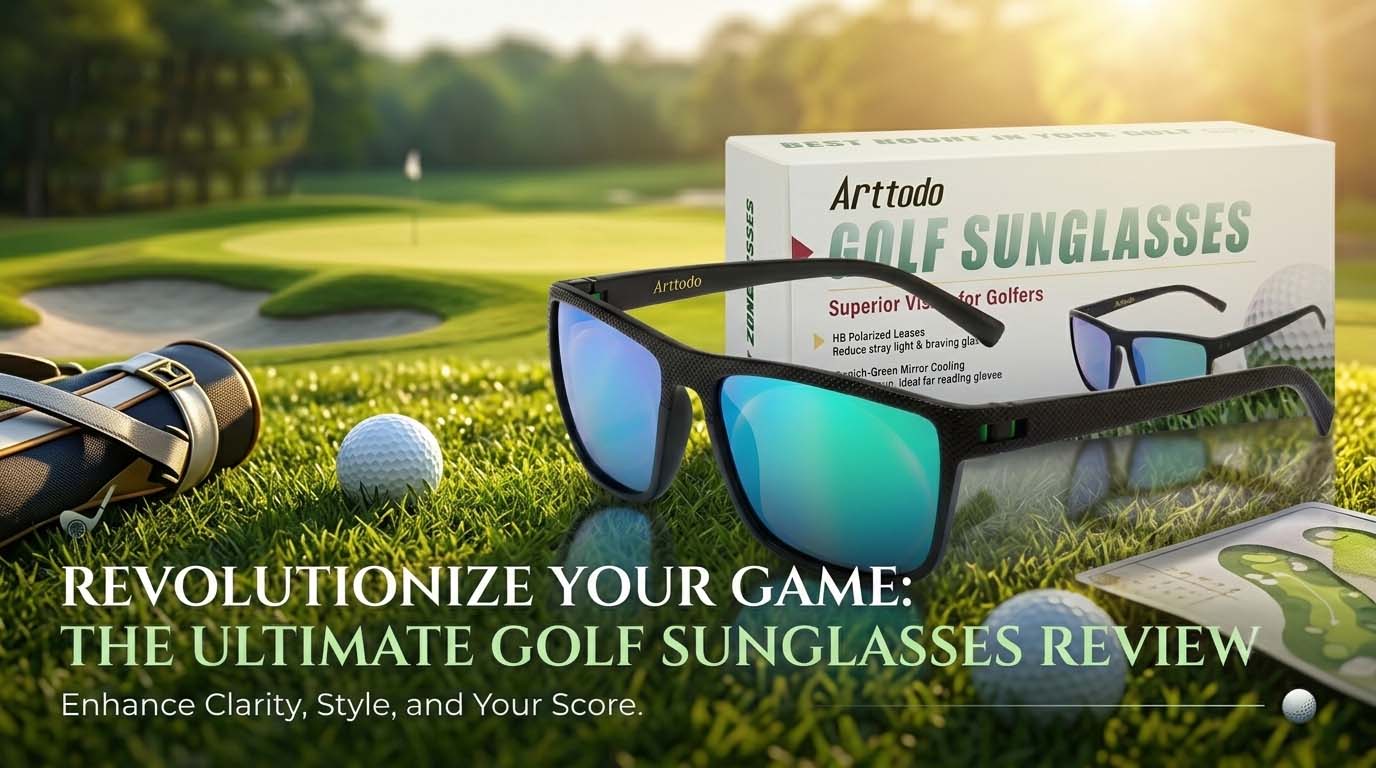
1. Arttodo Golf Sunglasses – Best Overall for the Casual Player
Key Specs: Weight: 18g | Lens: Dark Green Mirror Polarized | Frame: Polycarbonate | Nose pads: One-piece silicone | Hinges: Adjustable
This is the pair I keep reaching for. The first thing I noticed was the weight – 18 grams is nothing. I wore them for 18 holes and forgot they were on my face. The dark green mirror lens cuts glare really well, especially on the fairway when the sun is low. I could see the grain of the grass on the green better than I expected for a sub-$40 pair.
The one-piece nose pad is a simple design, but it works. It doesn’t have adjustable arms, but the silicone grips well enough that I didn’t have to push them up once. The adjustable hinges let me tweak the fit around my temples. My only complaint is that the style is a bit generic – they look like standard aviators, nothing flashy. But for a casual golfer who just wants something that works, that’s a plus. You’re not drawing attention to yourself.
Honestly, this is the no-brainer recommendation. If you’re on a budget and don’t want to overthink it, buy the Arttodo. They’re the best value I found.
2. Tifosi Selca Tangle Free Aviator – Best for Style and Stability
Key Specs: Weight: 22g | Lens: Brown with Pink Mirror, Polarized | Frame: Plant-based material (Grillamid) | Nose pads: Hydrophilic rubber | Hinges: Integrated
The Tifosi Selca feels more like a sporty lifestyle frame than a classic aviator. The shape is slightly more angular, and the brown lens with a pink mirror looks sharp. I wore them on a sunny afternoon when the humidity was high, and the hydrophilic nose pads really did their job. They got tackier as I sweated, so the glasses never budged. That’s a huge win for a swing that’s not perfectly smooth.
The lens is polarized and offers good contrast. The brown tint made the greens look vibrant without being oversaturated. I could see the undulations on the putting surface clearly. The 22-gram weight is still very light, but I could feel the difference compared to the 18-gram Arttodo. It’s not a dealbreaker, but if you’re sensitive to weight, the Arttodo edges ahead.
The frame is made from a plant-based material, which is a nice touch. It feels durable but not as premium as standard acetate. The integrated hinge is smooth. Overall, these are a solid choice if you want a more active look and need the extra grip. They’re also great for other outdoor activities like hiking or running.
3. Oakley Feedback OO4079 – Best Lens for Golf, But a Catch
Key Specs: Weight: approx. 24g (estimated) | Lens: Prizm Golf (dark brown base) | Frame: C-5 Alloy with plastic temples | Nose pads: Adjustable silicone | Fit: Designed for women (59mm width)
The Oakley Feedback has the best lens for golf in this list. The Prizm Golf technology is not a gimmick. I put them on during a round at a course with tricky undulations, and I could see the breaks in the green that I normally miss. The contrast between fairway and rough was also more pronounced. If you want to read the course like a pro, this lens is the real deal.
But there’s a catch. These are listed as women’s sunglasses. The frame is 59mm wide, which is on the smaller side. I have a medium-sized head, and they fit me fine, but someone with a larger face might find them tight. The adjustable nose pads help, but the temples are shorter. Also, the grip is good but not as aggressive as the Tifosi. They didn’t slip on me, but I had to adjust them a couple of times.
The build quality is excellent – the C-5 alloy frame feels sturdy without being heavy. The price is significantly higher than the first two pairs. For a casual golfer, this is a splurge. But if you have the budget and want the best possible lens for seeing the course, the Oakley Feedback is worth considering. Just check the fit first.
4. Maui Jim Hookipa – Luxury Lens, But Not a Sports Frame
Key Specs: Weight: approx. 26g | Lens: HCL Bronze, PolarizedPlus2 | Frame: Nylon injection | Nose pads: Standard silicone (not hydrophilic) | Hinges: Stainless steel pin
Maui Jim makes fantastic lenses. The HCL Bronze is warm and rich, and it handles changing light beautifully. I wore them on an overcast morning and a bright afternoon, and they adapted well. The color enhancement is real – the grass looked alive, and the sky didn’t get that weird blue shift you sometimes get with cheap polarized lenses.
But here’s the thing – the Hookipa is a rectangular frame, not a true aviator. It’s more of a lifestyle shape. The nose pads are standard silicone, not the grippy rubber you find on sport glasses. During a full swing, I felt them shift slightly. Not enough to fall off, but enough to annoy me. The weight is also a bit higher than the others, and I noticed it after a few holes.
These are beautiful sunglasses. If you want a single pair for daily wear that also works on the course, the Hookipa is a great choice. But if your primary goal is golf performance, the extra grip of the Tifosi or the lighter weight of the Arttodo makes them better options. The price is also high, and you’re paying for the brand and the lens quality, not for sports-specific features.
5. Scheyden Fixed Gear – Not Recommended for Golf
Key Specs: Weight: approx. 30g (estimated) | Lens: Gray, Non-Polarized | Frame: Composite with thin temples | Nose pads: Anti-slip silicone | Hinges: Triple barrel
I have to be honest here – the Scheyden Fixed Gear is not a good choice for golf, and I’m calling it out. The biggest issue is that the lens is non-polarized. On a sunny day on the course, glare from the grass and water reflects straight into your eyes. It’s uncomfortable, and it makes reading greens harder because you’re squinting. Polarization is a basic requirement for golf sunglasses, and this pair doesn’t have it.
The frame is also heavy. I didn’t have a scale for these, but they felt noticeably heavier than the others. The temples are thin, which helps with comfort, but the overall weight made them slide down my nose more than I’d like. The anti-slip nose pads are a nice touch, but they can’t compensate for the weight distribution.
I tested them on a short par-3 course, and I had to take them off after nine holes. The non-polarized lens was just too harsh. I appreciate that Scheyden makes a durable frame, but for golf, you need polarized lenses and a lighter build. Skip these for the course. If you’re looking for a style statement off the course, that’s a different story, but for golf, they don’t work.
Verdict for the Casual Golfer
So what should you buy? It depends on your priorities.
If you want the best value and don’t want to overthink it, go with the Arttodo. They’re light, they stay put, and the lens is good enough for any casual round. You won’t feel bad about tossing them in your bag.
If you need the absolute best grip and prefer a more active lifestyle look, the Tifosi Selca is your best bet. The hydrophilic nose pads are a real advantage if you sweat a lot.
If you have the budget and want the best lens for reading the course, the Oakley Feedback is a treat. Just make sure the fit works for your face.
If you want a single pair of sunglasses that you can wear everywhere – on the course, at the beach, driving – and you’re willing to pay for top-tier lens quality, the Maui Jim Hookipa is a solid lifestyle pick. But don’t expect it to stay as locked in as a sport frame.
And the Scheyden Fixed Gear? Leave them at home on golf days. Non-polarized sunglasses on the course are a recipe for eye strain and missed putts.
Frequently Asked Questions
Can I wear regular aviator sunglasses for golf?
You can, but you might run into issues. Most standard aviators lack the grip to stay on during a swing, and their lenses are often not optimized for contrast on the green. If your regular aviators are polarized and have adjustable nose pads, they’ll work in a pinch. But for a more comfortable round, consider a pair designed with grip and lighter weight.
What lens color is best for golf?
Brown, copper, or bronze tints are generally best because they enhance contrast and help you see the contours of the green. Grey lenses reduce brightness but flatten the view. If you only play in bright sun, grey is okay, but brown is more versatile.
Do I need polarized lenses for golf?
Yes, polarized lenses are very helpful. They cut glare from wet grass, sand, and water, which makes it easier to see the true shape of the fairway and green. Non-polarized lenses let that glare through, causing eye fatigue and reducing your ability to read the surface.
How light should golf sunglasses be?
Under 25 grams is a good target. The lighter the sunglasses, the less you’ll notice them during a swing. Heavy frames tend to slide or bounce, which is distracting. The Arttodo at 18g is an excellent example of a lightweight pair that stays comfortable all round.
Are aviator sunglasses a good style for golf?
Absolutely. Aviators offer a classic look that fits right in at any course, from a public muni to a private club. They also provide a wide field of view, which is useful for aiming. The key is to choose a pair with the right grip and lens features – not all aviators are created equal for golf.