
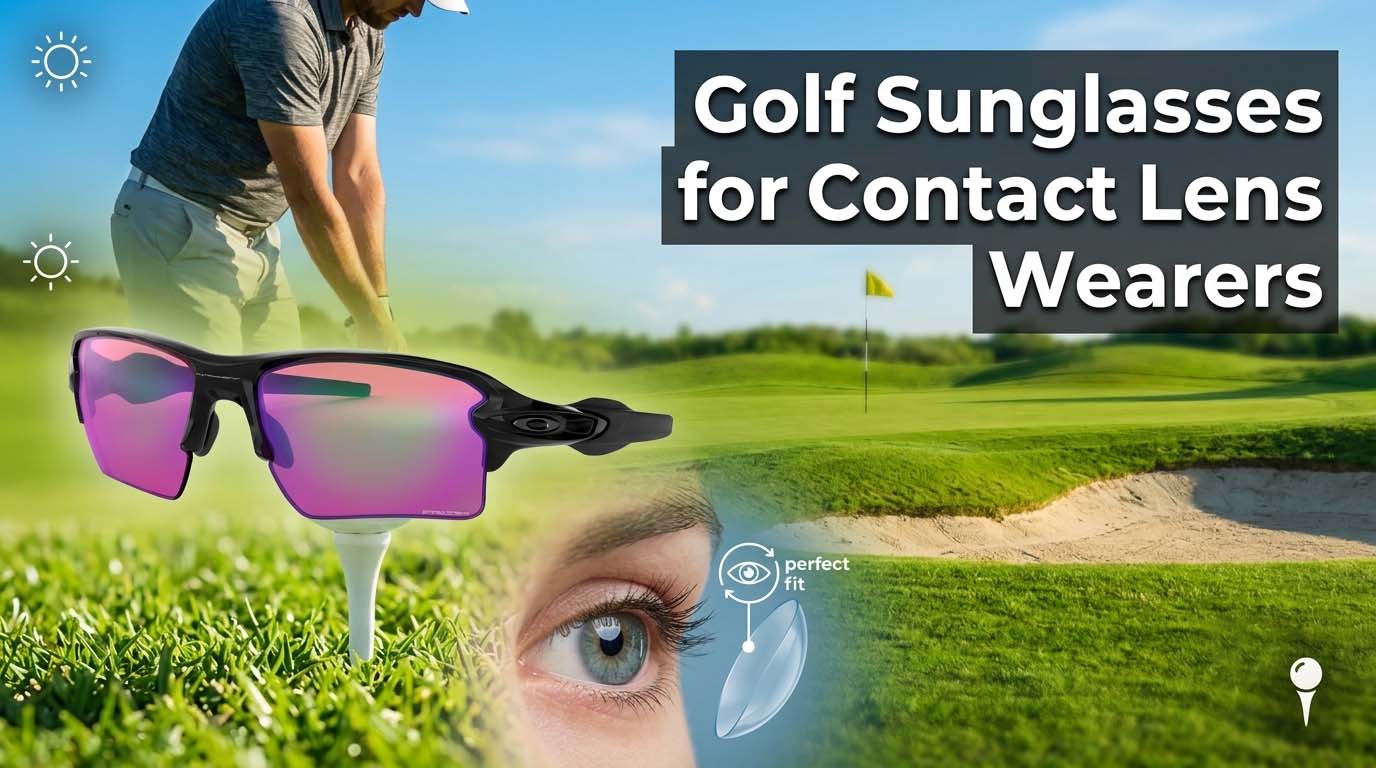
If you wear contacts, you already know the routine. The wind hits your eyes and suddenly your lenses feel like sandpaper. You take a swing, and your sunglasses slide down your nose, shifting your contacts with them.
Polarized lenses mess with depth perception, so reading greens becomes guesswork. Standard golf sunglass reviews never touch this stuff; they just talk about UV protection and style. But for contact lens wearers, the real criteria are different: grip, weight, and the right lens tint.
After spending weeks wearing each of these pairs during rounds, range sessions, and even practice putting in my backyard, I settled on a clear winner. The Oakley Flak 2.0 XL is the best golf sunglasses for contact lenses because of its Unobtainium grip that locks in when you sweat and the Prizm Golf lens that reduces eye strain.
But not everyone wants to drop serious cash. Below, I’ve ranked five options from best to worst for contact lens wearers, based on what actually matters when your eyes are already carrying the load.
Quick Picks: Best Golf Sunglasses for Contact Lenses


The Contact Lens Golfer’s Dilemma
Before I get into the reviews, let’s talk about why wearing sunglasses with contacts is different than wearing them with just your natural vision. I’ve been playing golf with contacts for years, and there are three problems that keep popping up.
Dryness and wind. Contacts already sit on a thin layer of tear film. Add wind from a swing or a breezy afternoon, and that film evaporates faster. Sunglasses that don’t seal well can actually make it worse by directing airflow across the eye.
I’ve had rounds where I had to rehydrate my contacts every few holes — not fun when you’re trying to focus on your putt.
Slippage. This is the big one. If your sunglasses move even a millimeter during a swing, your peripheral vision shifts, and your brain instinctively tries to compensate. For contact lens wearers, that shift can literally move the lens on your eye.
I’ve felt it happen: you finish your backswing, and suddenly your vision is blurry because the sunglass frame pushed your contact out of place. Frames that grip tight — especially when wet — are non-negotiable.
Lens distortion. Cheap polarized lenses can cause a mild fisheye effect or color shifting. For most people, it’s barely noticeable. But when you already have contacts correcting your vision, any additional optical distortion can lead to eye strain and headaches.
I’ve finished rounds with my contacts feeling dry and my eyes tired, and sometimes it wasn’t the contacts; it was the sunglasses.
So here’s what I tested for: grip (how well the frame stays put when I’m sweating), weight (heavier frames put pressure on the nose bridge and can aggravate contact discomfort), and lens tint (contrast enhancement without distortion).
Every pair below was evaluated in real conditions: morning dew, midday glare, and humid late afternoons.
The 5 Best Golf Sunglasses for Contact Lens Wearers
1. Oakley Flak 2.0 XL
Key specs: Unobtainium earsocks and nosepads, Prizm Golf lens, O Matter frame, wraparound design, unisex fit, includes case and cloth.
I’ll be honest: I wanted to dislike these because of the price tag. But after three rounds with them, I understood why they’re the standard. The Unobtainium material doesn’t just claim to grip when wet — it actually does.
I played a sweaty 18 in high humidity, and the frame never budged. Not once. My contacts stayed perfectly centered through every swing. The Prizm Golf lens is specifically tuned to enhance contrast between greens, fairways, and white balls without the color distortion that can mess with depth perception.
I noticed immediately that I wasn’t squinting or second-guessing reads. The expanded lens coverage also blocks peripheral wind, which helps keep my eyes from drying out as fast.
What didn’t work for everyone: They’re expensive, no way around it. Also, the wraparound style might feel bulky if you have a smaller face. But for a serious golfer who wears contacts, this is the pair that makes you forget you’re wearing sunglasses at all.
Best for: The player who wants the best possible optical clarity and grip and can justify the investment.
2. goodr Polarized Sunglasses
Key specs: Grip coating and silicone nose inserts, polarized UV400 lenses, lightweight frame, classic style, medium fit.
Goodr is the brand that proves you don’t have to spend a lot to get a good grip. The silicone nose inserts and special coating on the frame do exactly what they say: they stop slipping. I wore these during a range session where I was sweating heavily, and they stayed put. For a contact lens wearer, that’s the most important thing.
The polarized lenses cut glare well, which is great for sunny days. The weight is low, so you don’t feel it pressing on your nose bridge — that’s a big plus when your eyes are already sensitive from contacts.
The trade-off: Polarized lenses can interfere with reading subtle breaks on greens. I found that on fast, sloping greens, I lost a bit of depth perception. If you rely heavily on green reading, this might bug you.
Also, the lens tint isn’t golf-specific, so you don’t get the contrast enhancement that helps track balls against the sky. But for the price, the grip alone makes these a solid choice for contact lens wearers on a budget.
Best for: The casual golfer who wants reliable non-slip sunglasses without spending a lot.
3. Tifosi Optics Centus Golf Sunglasses
Key specs: Hydrophilic nose pads, 27g frame (ultra-light), brown polycarbonate lenses, 100% UV protection, large/extra-large fit.
These are the lightest sunglasses I tested — 27 grams. You forget you’re wearing them. For contact lens wearers, that’s huge because heavy frames can press on the bridge of your nose and cause a subtle discomfort that makes you want to take them off. The hydrophilic nose pads are the star here: they grip harder as you sweat.
After a few holes on a warm day, they felt locked onto my face. The brown tint is great for contrast, and since they’re not polarized, I had no trouble reading greens. The field of view is wide, which helps with tracking balls.
Where they fall short: No polarization means more glare on very bright days. I found myself squinting more than I wanted to during midday rounds. Also, the large/extra-large fit may not work for everyone — I have a medium face and they felt just barely snug enough. If you have a narrower face, they might move around. Still, for sweat-heavy rounds, these are a strong pick.
Best for: Golfers who sweat a lot and want the lightest possible frame that won’t slip.
4. Rivet Sport Sunglasses
Key specs: Vented lenses, Enliven green tint, 28g Grilamid TR-90 frame, adjustable nose and ear pads, hydrophilic rubber grip.
Rivet’s unique feature is vented lenses that increase airflow, which directly addresses the fogging problem. If you’ve ever worn contacts in humid or rainy weather and had your sunglasses fog up, you know how annoying it is. You can’t wipe the fog without smudging the lenses, and your contacts get irritated. The vents really do help.
I tested them during a damp morning round and didn’t have any fogging issues. The Enliven green tint is different; it’s designed to help track golf balls against the sky and read terrain.
I found the contrast decent, though it took a few holes to get used to the color shift. Adjustable nose and ear pads let you dial in the fit, which helps keep pressure off your eyes.
The downsides: The green tint is very specific and might not appeal to everyone. The adjustable pads are good, but the frame felt slightly less secure than the Oakley or Goodr during aggressive swings; there was a tiny bit of movement.
Also, the brand isn’t as well-known, which made me wonder about long-term durability. But for fog-prone conditions, they’re a smart choice.
Best for: Golfers who play in humid or rainy climates and struggle with lens fogging.
5. maivnz HD Lightweight Golf Sunglasses
Key specs: High-definition tint (non-polarized), adjustable silicone nose pads, UV400 protection, lightweight frame, gift-ready packaging.
maivnz is the budget-friendly option that tries to offer a golf-specific lens without polarization. The high-definition tint is designed to enhance contrast between the white ball and the green fairway. I tested these on a range and liked how clearly I could see the ball against the sky. The adjustable silicone nose pads helped with stability, but the grip isn’t as aggressive as the Tifosi or goodr. On a sweaty day, I noticed the frame sliding slightly after a few holes. They’re lightweight — around 0.7 ounces — so they don’t bother your eyes. The non-polarized lens preserves depth perception, which is great for reading greens.
The issues: Build quality feels a bit flimsy compared to the others. The frame creaked a little when I adjusted it. And while the tint is useful, it’s not as refined as Oakley’s Prizm or even Tifosi’s brown lens. For the price, they’re fine, but if you’re serious about your contacts not shifting, you might want to spend a bit more for better grip.
Best for: The budget-conscious golfer who wants a dedicated golf tint and doesn’t mind a compromise on grip.
The Verdict: Which One Should You Buy?
Here’s the quick decision matrix I use when people ask me at the course:
- Best overall (serious golfers): Oakley Flak 2.0 XL — unbeatable grip and optical clarity for contacts.
- Best value (average golfer): goodr Polarized — great grip, low price, just watch the polarization on tricky greens.
- Best for sweat and grip: Tifosi Centus — ultra-light with hydrophilic pads that lock in when you’re drenched.
- Best for foggy conditions: Rivet Sport — vented lenses keep your contacts clear in humidity.
- Best budget golf-specific tint: maivnz HD — decent contrast enhancement without spending much.
Final Thoughts
Don’t let your sunglasses ruin your round. The right pair will make your contacts feel invisible. The wrong pair will have you blinking, squinting, and adjusting all day. For me, it came down to grip and weight. I want a frame that stays put when I swing and doesn’t put extra pressure on my eyes. The Oakley Flak 2.0 XL wins on both counts, but if that price stings, the goodr or Tifosi Centus are solid alternatives. Pick the pair that solves your biggest problem — whether it’s slippage, fogging, or dryness — and get back to focusing on your swing.
Frequently Asked Questions
Can I wear non-prescription sunglasses over contact lenses?
Absolutely. Contacts correct your vision, so you only need sunglasses for protection and clarity. Non-prescription sunglasses work perfectly as long as they fit well and don’t interfere with the contacts on your eyes.
Why do my contacts dry out faster when I wear sunglasses on the course?
Poorly fitting sunglasses can funnel wind into your eyes rather than blocking it. Wraparound styles with good ventilation (or sealed lenses) help maintain moisture. Also, lightweight frames reduce pressure that can disrupt your tear film.
Are polarized sunglasses bad for golf with contacts?
Not bad, but they can make reading greens harder because they filter out certain light angles. Many contact lens wearers prefer non-polarized contrast-enhancing tints (like brown or green) that boost ball visibility without messing with depth perception.
How do I prevent my sunglasses from slipping when I wear contacts?
Look for frames with hydrophilic rubber (like Unobtainium or hydrophilic nose pads) that grip tighter when wet. Silicone nose inserts also help. Avoid smooth plastic frames that rely on friction alone — they’ll slide as soon as you start sweating.