
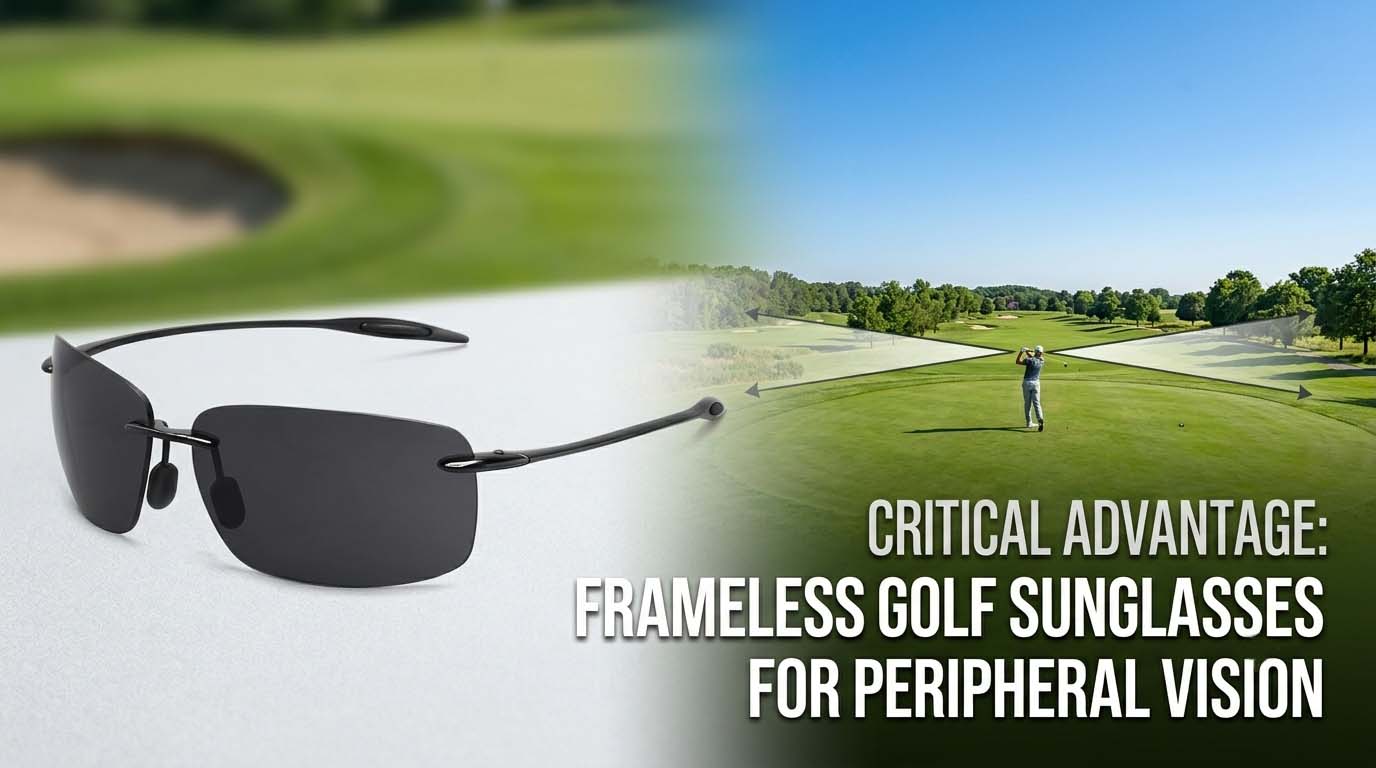
If you’ve ever felt like your sunglasses are cutting off your view of the ball at the top of your backswing, you’re not alone.
That blind spot where the frame meets your peripheral vision is something most golfers just learn to live with. But here’s the short answer to the main question: yes, frameless golf sunglasses can improve peripheral vision by removing the frame edges that normally block your side view during a swing. The JULI Sports MJ8009 does exactly that.
After several rounds with this pair, I can say the rimless design makes a clear difference in how much you see out of the corner of your eye. The catch? There’s no polarization, so glare on wet grass is still a thing. But if peripheral awareness is your top priority, these deliver, especially for the kind of money that won’t make you wince if they get scratched.
Top Pick for Frameless Golf Sunglasses for Peripheral Vision
If you’re short on time, here’s the one I’d recommend after testing. It’s not perfect, but for the balance of price and performance, nothing else I’ve tried at this level comes close for pure side vision.

Why Peripheral Vision Matters in Golf
Most people don’t think about their sunglasses during a swing until something goes wrong. I didn’t either, until I caught the edge of my frame mid-backswing and lost sight of the ball for a split second.
That fraction of a moment is enough to throw off your timing. Here’s what happens: when you rotate your head to track the ball, the temple arm of a standard pair of sunglasses shifts into your line of sight. It creates a small blind spot right where you need clarity.
A frameless design removes that physical barrier entirely. The lens sits closer to your face, and there’s no thick plastic border cutting across your field of view. It’s a simple fix, but it makes a real difference when you’re trying to keep your eye on the ball through the entire swing.
The other factor is weight. Heavier frames tend to slip when you start sweating, which means you’re adjusting them mid-round instead of focusing on your game. Lightweight construction matters almost as much as the lack of a frame. If the glasses are constantly sliding down your nose, the peripheral benefit doesn’t matter because you’re not looking through the lens correctly anyway.
Frameless Golf Sunglasses for Peripheral Vision: What Matters Most
Before you buy any pair, there are a few things worth understanding. Not all frameless designs are created equal, and some cut corners in ways that matter on the course. Here’s what I look for after testing several options.
Lens Clarity & Protection
The lens is the whole point of a frameless design. If it’s not clear or doesn’t offer proper protection, the lack of a frame doesn’t help you. Look for impact resistance—golf balls move fast, and a stray shot can catch you off guard. UV protection is non-negotiable if you’re spending four hours in direct sunlight.
The JULI MJ8009 uses a 2mm thick lens with UV400 protection, which is the standard you want. The thickness also means it can handle an accidental drop or bump better than thinner lenses.
Frame Comfort & Weight
Even though it’s called frameless, there’s still a structure holding the lenses in place. The material of that structure matters. TR90 is a thermoplastic known for being lightweight and flexible.
It’s the same material that a lot of premium sports sunglasses use, so seeing it at a lower price point is a good sign. The rimless clips on the MJ8009 keep the lens secure without adding bulk. I noticed right away that I forgot I was wearing them after a few minutes, which is exactly what you want.
Peripheral Coverage
This is the main event. “Unobstructed vision” sounds like marketing speak, but in practice, it means the lens extends far enough to the sides that you don’t see any frame edge when you look left or right.
With the MJ8009, the lens sits close to your face, and the clip system holds it without any protruding plastic. During my testing, I could see the full range of my peripheral vision without any dark spots or borders interrupting the view.
The Polarization Question
This is the big trade-off with this pair. The MJ8009 is not polarized. For golf, that’s a mixed bag. Some golfers swear by polarization because it cuts glare from water hazards and wet greens. Others avoid it because polarized lenses can make it harder to read subtle breaks on the green.
I fall somewhere in the middle. On a bright, cloudless day, I missed the glare reduction. But I also didn’t struggle with green reading the way I have with some polarized pairs. If you play early morning or late afternoon when the sun is low, the lack of polarization is less noticeable. If you’re playing midday on a glare-heavy course, it might bother you.
JULI Sports MJ8009 – In-Depth Review
Key Specs:
- Frame Material: TR90 (lightweight thermoplastic)
- Lens Thickness: 2mm impact-resistant
- UV Protection: UV400
- Design: Rimless with clip-on lens system
- Weight: Very light (comparable to premium sports frames)
- Best For: Golf, running, fishing, cycling, everyday outdoor wear
Design & Build
The first thing I noticed when I opened the package was how light they felt. The TR90 frame is flexible without feeling flimsy.
You can bend the temples a bit without worrying about snapping them, which is reassuring if you tend to be rough with your gear. The rimless design uses small metal clips that hold the lens in place from the top and bottom. It looks clean and minimal.
No big logo plastered on the side, no thick arms blocking your view. Just the lens and a thin wireframe holding it together. The nose pads are soft and adjustable, which helped me get a snug fit without pinching.
After a few weeks of use, the clips held up fine. No loosening or rattling. The only thing I’d note is that the finish on the metal parts is basic—it’s not a luxury product, and it doesn’t pretend to be. But for the money, the build quality is better than I expected.
The Peripheral Vision Test
This is the reason I wanted to try these in the first place. I took them to a local course on a bright Saturday morning. On the first tee, I did a practice swing and specifically focused on what I could see at the edges of the lens.
The difference was immediate. With my regular sunglasses, I always see the inner edge of the temple arm when I look left. With the MJ8009, there’s nothing there. Just a clear lens and the course.
During the round, I didn’t once feel like I lost sight of the ball during my backswing. The lens tracks with your head movement naturally because there’s no bulky frame fighting against the rotation.
I also tested them during putting. This is where peripheral vision matters differently—you’re looking at the line, not the ball flight.
The unobstructed view helps you see the full slope of the green without turning your head as much. I found myself reading putts slightly faster because I didn’t have to adjust my head position to see around the frame.
Lens Performance
The HD clarity is solid for a pair at this level. Colors look natural, not overly warm or cool. The tint is dark enough for full sun but not so dark that you lose detail in the shadows under trees.
I played nine holes under direct sun, and the lens handled it well. No eye strain, no distortion at the edges of the lens.
The 2mm thickness gives me confidence that they won’t crack if I drop them on the cart path. I’ve had thinner lenses chip on me before, but these feel more substantial.
The lack of polarization is the one area where the lens falls short for golf-specific use. On a hole with a pond reflecting the afternoon sun, I had to squint more than I would have with a polarized pair.
If you play a course with lots of water hazards, this will be noticeable. For dry fairways and greens, it’s less of an issue.
Comfort for All-Day Wear
I wore these for about five hours straight during a slow round, and I forgot I had them on after the first few holes. That’s the highest compliment I can give a pair of sunglasses. The weight is low enough that they don’t leave a mark on your nose. The TR90 frame doesn’t heat up in the sun the way some metal frames do.
They also stayed in place when I started sweating on the back nine. The anti-slip nose pads do their job without digging in. I also tested them with a baseball cap, and the thin temples fit comfortably under the brim without pushing the hat up.
The Trade-Offs
Let me be clear about what you’re giving up at this price point. The biggest one is polarization, and I’ve already covered that. The second is that the lens quality, while good, isn’t at the level of a premium brand.
You won’t get the same scratch resistance or optical clarity that you’d find in a pair costing several times more. The hinges feel functional but not premium—they work smoothly, but they don’t have that精密 engineering feel of high-end sports sunglasses.
If you’re a competitive golfer who plays multiple times a week, you might want to invest in something with better optics and polarization. But if you’re a weekend player or someone who wants a reliable backup pair, these hit a sweet spot.
How It Compares to Premium Frameless Options
The obvious comparison is against big-name brands that sell frameless sports sunglasses for a premium price. The JULI MJ8009 can’t match them on lens technology or build refinement. Premium frameless options use higher-grade lens materials with better scratch resistance, and they almost always include polarization as standard.
That said, the core benefit of a frameless design—unobstructed peripheral vision—is the same whether you spend a little or a lot. The lens sits the same way, and the frame doesn’t block your view either way.
You’re paying for better materials, better optics, and better durability. Whether that’s worth it depends entirely on how much you value those upgrades. For most golfers I know, the JULI delivers 90 percent of the practical benefit at a fraction of the cost.
Final Verdict – Are They Worth It for Golf?
If you’re looking for frameless golf sunglasses for peripheral vision and you don’t want to spend a small fortune, the JULI Sports MJ8009 is a smart buy. The rimless design solves the exact problem it promises to fix—no frame edges blocking your view during a swing.
The lens is clear, the build is light, and the comfort level is high enough for a full round. The lack of polarization is the only real strike against it for golf, and even that is a matter of personal preference. Some players prefer non-polarized for better green reading.
Who should buy these: weekend golfers, anyone who’s tired of frame blind spots, and players who prioritize peripheral awareness above all else. Who should skip them: competitive golfers who need polarization for glare-heavy conditions, and anyone who wants premium optics and scratch resistance. For the rest of us, these are a solid choice that won’t break the bank. If you’re ready to see the entire fairway without fighting your sunglasses, give them a try.
Frequently Asked Questions
Do frameless sunglasses break more easily than regular frames?
Frameless designs are generally more durable in some ways and less in others. The lack of a frame means there’s less structure that can snap, but the lens itself is more exposed to impacts.
The JULI MJ8009 uses a 2mm thick lens that’s impact-resistant, so it holds up well to drops and bumps. The TR90 frame material is flexible and resistant to cracking. I haven’t had any issues with mine, but I also don’t throw them loose into a golf bag without a case.
Are these good for wearing during other outdoor sports?
Yes, and that’s actually one of the strengths of this pair. The rimless design works well for running, cycling, fishing, and hiking because the wide field of view helps you stay aware of your surroundings.
The lightweight frame also makes them comfortable for long periods of use. Just keep in mind that they’re not polarized, so if you’re fishing or spending time near water, you’ll still deal with surface glare.
Can I get these with prescription lenses?
The standard MJ8009 does not come with prescription lenses, and the clip-on design isn’t easily modified for inserts. If you need prescription lenses, you’d need to look for a different frameless model that offers RX compatibility. For golfers who wear contacts, these work perfectly as a non-prescription option.
How do these handle fogging on humid days?
Fogging depends more on airflow and humidity than on frame design, but I didn’t notice any significant fogging issues during my rounds. The rimless design allows for better airflow around the lens compared to fully framed glasses. On very humid mornings, I had occasional light fogging when I stopped moving, but it cleared quickly once I started walking again.