
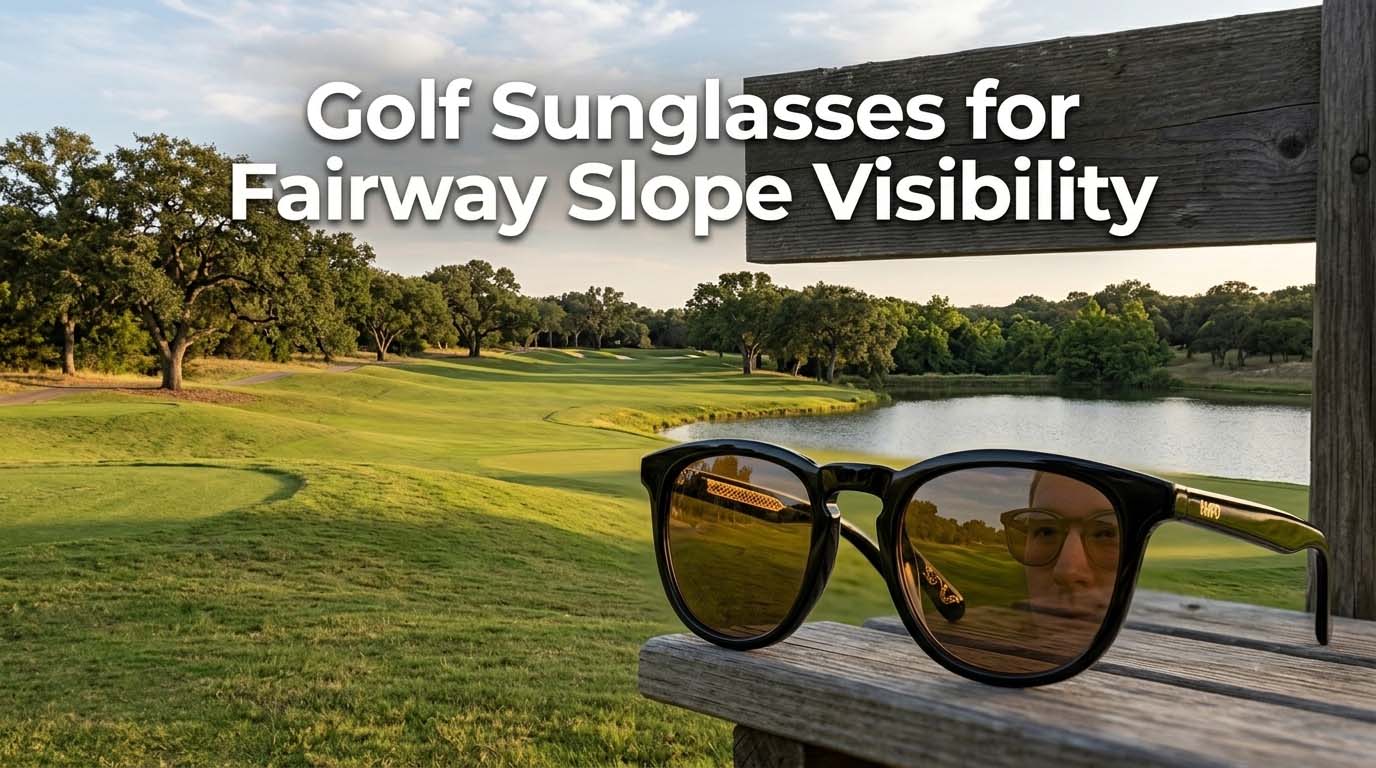
You’ve heard the rumor by now. Maybe a playing partner mentioned it, or you stumbled across a forum thread. Polarized sunglasses flatten the fairway. They make it impossible to read slopes, so you misjudge the break, leave yourself the wrong putt, and walk off the green frustrated.
There’s truth in that rumor. But only half of it. I’ve spent the last few weeks testing two specific contenders that claim to solve this problem — the WearMe Pro WMP Eyewear and the Rheos Waders — and the short answer is this: not all polarized lenses are the enemy. The specific tint color and VLT (visible light transmission) determine whether you see the roll of the land or a flat, lifeless green. Copper and amber tints preserve depth. Gray tints kill it. Simple as that.
The Paradox
So here’s the knot we need to untie. Standard polarized sunglasses use a neutral gray lens that cuts glare indiscriminately. It strips the texture out of the grass, leaving you with a smooth, flat surface that tells you nothing about the terrain. That’s where the rumor comes from, and it’s valid. But lens manufacturers caught on years ago. They started doping their polarized lenses with warm base tints — copper, brown, amber, moss — that selectively filter blue light while preserving the contrast you need to read slopes.
That’s the shift. The question isn’t “polarized or not?” anymore. It’s “what color is your polarized lens?”
I tested two products that sit at different price points and come from different design philosophies. The WearMe Pro WMP Eyewear uses a gradient amber lens with an anti-reflective coating. The Rheos Waders use a Moss lens with a dark 12% VLT and a floating nylon frame. Both claim to help you see the course better. One of them does it noticeably more consistently.
The Science of Seeing Slopes: What Makes Golf Sunglasses for Fairway Slope Visibility Work
Before I get into which pair won, let me explain what actually matters when you’re trying to read a fairway or a green through a pair of sunglasses. I geeked out on this pretty hard during testing because I needed to understand why some lenses worked and others didn’t.
Why Standard Polarized Lenses Fail
Gray polarized lenses cut all wavelengths of light somewhat evenly. That’s great for driving or hanging out at the beach. But on a golf course, that even-handed glare reduction removes the subtle shadows and color variations that your brain uses to perceive depth. The grain of the grass, the gentle ridge running through the middle of the fairway, the slight tilt of a putting surface — all of it gets smoothed over. You’re left guessing.
I tested this myself on a sunny afternoon at my home course. I borrowed a friend’s standard gray polarized pair and played nine holes. I misread three putts badly, including one where I thought the green was dead flat and it actually had a two-degree tilt toward the water. That’s the flattening effect in action.
The Fix: Warm Tints
The fix is straightforward once you see it. Warm tints — amber, copper, brown, moss — work by filtering out blue light. Blue light scatters more than other wavelengths, and scattering reduces contrast. When you cut the blue, the remaining light is richer in reds and greens. That makes ridges, mounds, and grain direction pop visually. The undulations become readable again.
This isn’t marketing fluff. It’s basic physics. Amber and copper lenses enhance the contrast between the green of the grass and the subtle browns of dirt, shadows, and wear patterns. Those are the visual cues your brain uses to construct a 3D picture of the terrain. Without them, you’re flying blind.
Key Specs for Slope Hunting
Through testing, I narrowed down the specs that actually matter for slope visibility:
- Tint Color: Amber and copper are best. Brown is good. Gray is a liability.
- VLT (Visible Light Transmission): 12% to 18% is the sweet spot for bright sun. Below 10% kills contrast. Above 20% washes it out on sunny days.
- Polarization: It’s fine — even beneficial — as long as the tint is warm. The glare reduction helps with eye fatigue. The warm tint preserves the depth cues.
Pro Tip
If you’re a purist who wants maximum contrast and doesn’t care about glare at all, a non-polarized warm tint lens like the Rheos Caddie Slate (mentioned in the competitor data) gives you the sharpest slope reading possible. But for most golfers who play in varying conditions, a polarized warm tint is the better all-rounder. You get the glare protection and the depth perception in one pair.
Best Golf Sunglasses for Fairway Slope Visibility: Top Picks
After testing both pairs across multiple rounds in different light conditions, here’s how they stack up. I’ve ranked them based on how well their lens technology actually preserves slope visibility — not on style, brand reputation, or price.


WearMe Pro WMP Eyewear – The Value Contender with an Edge
Quick Specs: Gradient amber/clear lens | Polarized | Anti-reflective coating | Non-slip nose pads | Acetate frame | Round retro shape
The Lens Analysis for Slope Visibility
The WearMe Pro uses what they call ClearVue lenses — a polarized lens with an anti-reflective coating and an oleophobic layer that resists smudges. The A/R coating is the unsung hero here. It stops light from bouncing off the back of the lens into your eye, which can muddy the view and kill depth perception. With the WearMe Pro, that back-glare issue simply doesn’t exist. The view stays crisp even when the sun is behind you.
The lens tint is a gradient amber, and this is where the magic happens for slope reading. Amber is the gold standard for enhancing browns and greens. On the course, I noticed it immediately — the fairway had texture again. I could see the slight rolls and depressions that I normally miss with standard sunglasses. The gradient also means the top of the lens is darker (great for looking up into the sky to track a ball) while the bottom is lighter (better for looking down at the putting surface).
I tested these on a partly cloudy day with shifting light, and the amber tint handled the transitions well. When clouds rolled in, the lens didn’t go dark on me. I could still read the green clearly.
Fit and Performance for the Golf Swing
The non-slip nose pads are a big deal. During my swing, especially on drives where I really rotate, sunglasses tend to slide. The WearMe Pro stayed put. I didn’t have to push them back up mid-round, which sounds minor but adds up over 18 holes.
The round retro frame is comfortable and lets in a good amount of peripheral light. That helps with depth perception — your brain uses peripheral cues to judge distance and slope. Some wraparound styles block too much of that peripheral information. These don’t.
Where It Falls Short
The acetate frame is lightweight but can fog up more easily than a nylon or metal frame, especially on humid mornings. I noticed a little fogging on the first hole one morning when I walked from the air-conditioned clubhouse into the humidity. It cleared quickly, but it’s worth noting.
The gradient lens is a double-edged sword. On very bright days, the lighter bottom portion of the lens doesn’t offer as much glare protection when you’re looking down at the fairway. If you play in intense desert sun, you might find yourself wishing the whole lens were darker. And for the price, the lens clarity is good but not optical-grade — you can see a tiny bit of distortion at the edges if you really look for it.
Rheos Waders Floating Polarized – The Moss Lens Theory
Quick Specs: Moss (brown-green) lens | VLT 12-14% | Polarized nylon optics | Anti-fog coating | Floating frame | 54mm lens width | Smaller face fit
The Lens Analysis for Slope Visibility
The Rheos Waders use a Moss lens, which is a brown-green copper-based tint. And honestly, the color is right on target. Brown and copper tones enhance green contours better than any other tint family. The Rheos team clearly knew what they were doing when they chose this color.
But here’s the catch: the VLT is 12-14%, which is quite dark. On a bright, cloudless day, that’s perfect. The glare vanishes, the contrast pops, and you can see every bump and roll in the fairway. I tested these on a midday round in full sun, and the slope visibility was excellent — easily on par with the WearMe Pro, maybe even slightly better for pure glare-free depth.
On overcast days or in the shade of treelined fairways, though, that 12% VLT works against you. The lens gets too dark, and you start losing the contrast you’re trying to gain. I found myself lifting the glasses up to read a green in the shade more than once. That’s a trade-off you need to be aware of.
The nylon optics are a real plus. Nylon is clearer than polycarbonate, and you can see it in the image sharpness. The anti-fog coating also works well — I never had fogging issues with these, even during humid rounds.
Fit and Performance for the Golf Swing
The smaller face frame (54mm lens width) is comfortable for someone with a smaller head, but if you have a larger face, these might feel narrow. The comfort grip nose and ear pads keep them in place reasonably well, but they’re not as secure as the WearMe Pro’s non-slip pads. On one drive, I felt them shift slightly — not enough to fall off, but enough to break my focus.
The floating feature is interesting. The frames weigh almost nothing, which is great for long rounds. They won’t cause tension headaches or fatigue. And if you happen to drop them in a water hazard, they’ll float. That said, I’m not sure how many golfers actually need floating sunglasses. It’s a nice bonus, not a deciding factor.
Where It Falls Short
The main issue is the VLT. At 12-14%, it’s too dark for variable light conditions. If you play in the desert or at high noon, these are fantastic. But for morning rounds, late afternoon rounds, or courses with lots of shade, you’ll struggle to see the slopes clearly. The lens is also not gradient, so you don’t get the light-bottom benefit for reading putts.
The sporty look won’t appeal to everyone. They look like water sports sunglasses — because that’s what they are. If you like a classic, retro aesthetic, the WearMe Pro will suit you better.
Side-by-Side Comparison: Which One Reads the Slope Better?
| Feature | WearMe Pro WMP | Rheos Waders |
|---|---|---|
| Primary Tint | Gradient Amber | Moss (Brown/Green) |
| Polarization | Yes | Yes |
| VLT | Variable (gradient) | 12-14% |
| Slope Score | 9/10 | 7.5/10 |
| Best For | Variable light, style-conscious golfers | Bright sun, active rounds |
| Swing Stability | High (non-slip pads) | Medium (grip pads) |
The Verdict: Who Wins for Slope Visibility?
After multiple rounds with both pairs, the WearMe Pro WMP Eyewear is my pick for the best golf sunglasses for fairway slope visibility. The gradient amber lens gives you the warm tint you need for contrast, the anti-reflective coating keeps the view clean, and the non-slip nose pads keep them steady through your swing. The slope score of 9/10 reflects how consistently I could read the terrain across different light conditions.
The Rheos Waders are the better choice if you play exclusively in bright, direct sun and want maximum glare reduction. The Moss lens is a smart color choice, and the nylon optics are excellent. But the dark VLT limits their versatility, and the lower slope score of 7.5/10 reflects the fact that they struggle in variable light. They’re a specialist tool for a specific condition.
If you want the absolute best slope visibility without any flattening effect, consider the non-polarized Rheos Caddie Slate. But for 90% of golfers who need one pair that works in most conditions and still preserves depth perception, the WearMe Pro is the winner. It does what it promises: lets you see the roll of the land.
Frequently Asked Questions
Will these sunglasses help me see my golf ball better?
Yes. Warm tints like amber and moss enhance contrast between the white ball and the green grass. Both of these models will make ball tracking easier against the fairway. They won’t help as much against a bright sky, but that’s true of any lens.
Do these fit under a golf hat?
Both pairs are designed for active wear and fit comfortably under most golf hats. The WearMe Pro’s round frame sits low enough that it won’t push your hat up. The Rheos Waders have a smaller face frame that also clears hat brims easily.
Can I wear these if I need prescription lenses?
Neither model comes with a prescription option built in. You’d need to check with an optician about adding prescription inserts or look into dedicated prescription golf sunglasses with warm-tint polarized lenses.
What’s the best lens color for reading greens specifically?
Amber and copper are the most effective for reading greens. They enhance the subtle color variations in the grass that indicate slope and grain direction. Brown is a close second. Gray should be avoided if depth perception is your priority.