
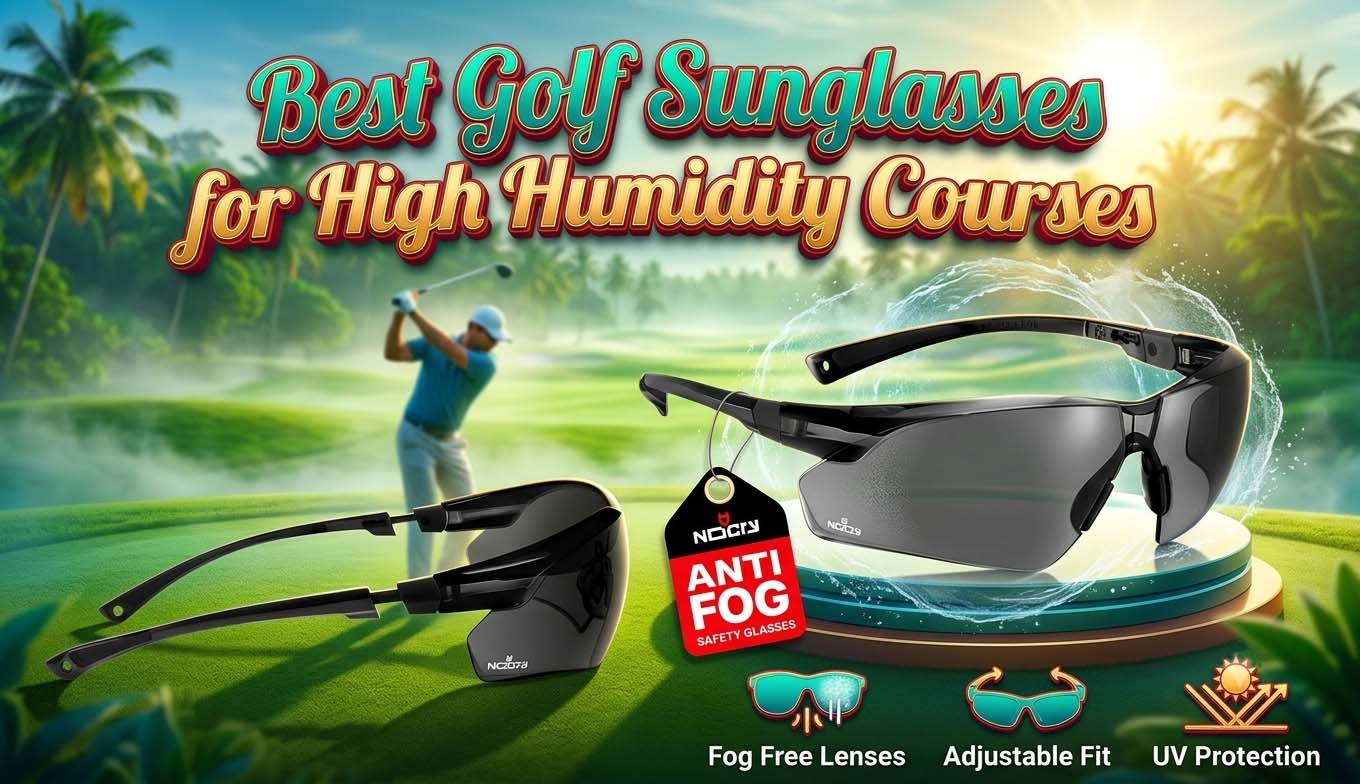
You know the feeling. It’s 7:30 AM, the air already has that thick, soupy weight to it. You step up to your first tee shot, bend down to tee the ball, and suddenly both lenses turn into frosted glass. You wipe them with your shirt. Now there’s a smudge. You wipe again. Now there’s a streak right across your line of sight. You miss the fairway by twenty yards. That round didn’t go anywhere good.
I’ve played enough humid rounds to know standard sunglasses just don’t cut it when the dew point climbs. After testing a handful of options specifically in sticky conditions — morning fog, coastal humidity, summer afternoons that feel like a steam bath — I landed on a shortlist of pairs that actually stay clear and stay put. If you need one pair that handles golf sunglasses for high humidity courses without fogging or slipping, the Tifosi Navar FC is the answer. Everything else below is ranked by how close it gets.



Why Humidity Ruins Most Golf Sunglasses And What to Look For
Before I get into which pairs worked and which ones let me down, it helps to understand why that morning fog on your lenses happens in the first place. Humidity isn’t just uncomfortable — it physically changes how your gear behaves. And most sunglasses are designed for a sunny day in moderate weather, not for a round where the air feels like a wet towel.
The Fogging Problem
When your body heats up during a round, sweat evaporates and raises the humidity level right around your face. That warm, moist air hits a cooler lens surface and condenses into tiny water droplets. That’s the fog. A lot of brands slap an “anti-fog” label on their packaging, but it usually means a thin coating that wears off after a few weeks. For high humidity golf, you need more than a coating — you need vented frames that let air circulate behind the lens so the temperature stays even. Without airflow, no coating will save you once the dew point is high enough.
The Slipping Problem
Sweat doesn’t just fog your lenses — it turns the bridge of your nose into a slip-and-slide. Standard plastic nose pads lose grip fast when moisture builds up. I’ve had frames slide down mid-swing more times than I can count. The fix is either a hydrophilic material that actually gets tackier when wet (that’s rare), or aggressive rubber temple tips and nose pads that dig in enough to stay put. Light weight helps here too — heavy frames have more momentum to break their grip.
The Lens Clarity Factor
Humidity scatters light. On an overcast, muggy day, the sky becomes one big diffuser. That flat light makes it harder to pick up ball flight and read subtle breaks on the green. A good golf lens uses contrast enhancement — usually a tint that boosts green and red wavelengths — to make the ball pop against grass. Polarization can actually hurt you on the greens because it masks the grain of the putting surface. For humid rounds, I prioritize contrast over polarization every time.
The Weight Factor
This one is simple. Frames that weigh over 35 grams put more pressure on your nose and ears, and when sweat reduces friction, they slide. Sub-30 grams is the sweet spot. Below 25 grams and you barely feel them, which means less movement during your swing and less reason to touch your face and smudge the lenses.
Best Golf Sunglasses for High Humidity Courses – Tested and Ranked
Every pair here went through the same test. I played at least two full rounds in genuine high humidity — mornings where the grass was wet until noon, afternoons where the air felt thick enough to chew. I evaluated fog resistance (does it stay clear through a full 18 without wiping?), grip (does it stay on during a swing when my face is sweaty?), optical clarity for golf (can I track the ball and read greens?), and overall value considering what you’re getting for the money. Here’s how they stacked up.
1. Tifosi Optics Navar FC – Best Overall for Humid Golf
Key Specs: 24 grams · Vented polycarbonate lens · Green Enliven golf tint (16% VLT) · Hydrophilic ear and nose pads · 100% UVA/UVB protection
This pair surprised me. I didn’t expect a full-coverage sport frame at this price point to handle humidity as well as it did. The vented lenses are the real deal — air moves through the frame channels and keeps the lens temperature close to ambient, so condensation doesn’t get a chance to form. During a June morning round where every other player on the course was wiping their glasses, I didn’t touch my lenses once. Not a single time.
What sets the Navar FC apart from other vented frames is the hydrophilic grip material on the ear and nose pads. Most rubber gets slippery when wet. This stuff does the opposite — the more you sweat, the tackier it feels. I deliberately worked up a sweat on the range before a round to test it, and the frames stayed locked in through driver swings, bent-over putts, and even when I took my hat off and put it back on.
The Green Enliven lens is tuned for golf. It boosts contrast on green surfaces, which makes the ball stand out against fairway grass and helps you see subtle contours on the putting green. At 16% VLT it’s dark enough for bright sun but not so dark that you lose detail in overcast humidity. I will say the green tint isn’t for everyone — it shifts your color perception noticeably, and if you prefer a neutral view, it might take a round or two to get used to. There’s no polarized option either, but that’s actually a plus for green reading. Polarization kills the depth cues you need on the greens.
At 24 grams, they’re light enough to forget you’re wearing them. The only downside is how new they are — not a ton of long-term feedback out there yet. But based on the engineering alone, these are purpose-built for the exact problem we’re trying to solve. If you play in the Southeast, on the Gulf Coast, or anywhere summer means humidity, start here.
Who should buy: Any golfer who plays in regular high humidity and wants one pair that does it all — fog prevention, grip, and golf-specific optics.
Who should skip: Golfers who dislike tinted contrast lenses or need a polarized option for off-course use.
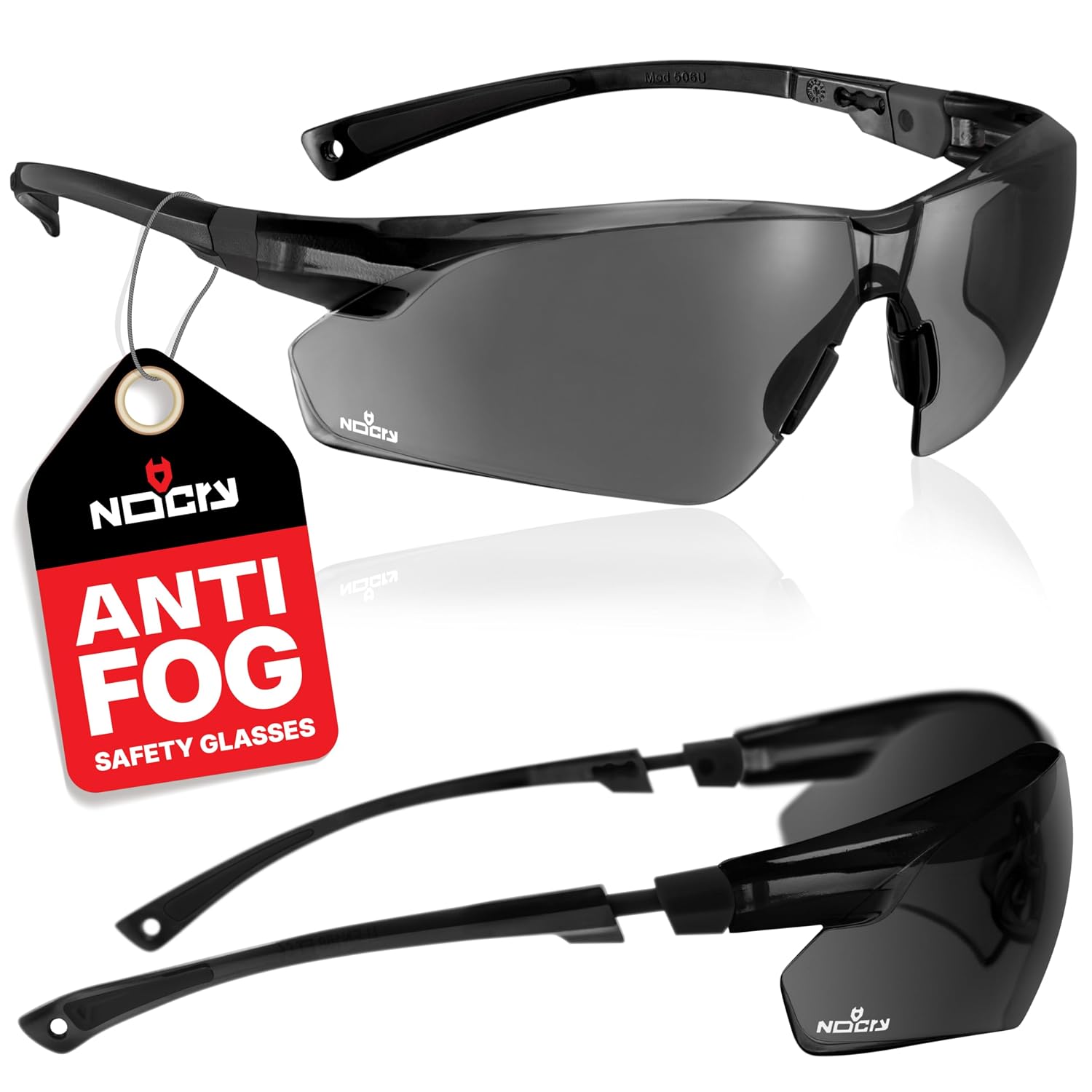
2. NoCry Anti-Fog Safety Sunglasses – Best Budget Anti-Fog Performer
Key Specs: Lightweight polycarbonate · Anti-fog coating (claims 5x better) · Scratch-resistant · Adjustable temples and nose pad · Wraparound coverage · Lifetime warranty
I’ll be straight with you — these look like safety glasses. They have that industrial, semi-rimless vibe that says “workshop” more than “fairway.” But if you can get past the aesthetics, the NoCry glasses deliver seriously impressive fog resistance for the money. The anti-fog coating on these is noticeably more durable than what I’ve seen on most sunglasses under twice the price. It held up through multiple rounds and cleaning sessions without degrading, which is rare.
The adjustable temples and soft rubber nose pads give you a custom fit that stays put when you’re sweating. I wore these on a humid practice round where I was walking instead of riding, and they didn’t budge. The wraparound coverage also keeps wind and peripheral light out, which helps with eye strain on those flat-light humid days.
Where they fall short for golf is the lens itself. The tint is a generic smoke that blocks 85% of light, but there’s no contrast enhancement. The ball doesn’t pop against the grass the way it does with a dedicated golf lens. You can still track it, but you have to work a little harder on overcast days. Also, the anti-fog works best when the coating is clean — if you touch the inside of the lens with your fingers, you’ll need to clean it with the included cloth to restore the effect.
For the price, and backed by a lifetime warranty, these are an incredible fallback pair and a legit primary option if budget is tight. They solve the two biggest humidity problems — fog and slip — even if they don’t give you any golf-specific optical advantages.
Who should buy: Golfers on a budget who prioritize fog prevention and grip over style and contrast. Also great as a backup pair or for practice rounds where looks don’t matter.
Who should skip: Anyone who wants a dedicated golf contrast lens or a frame that looks good on and off the course.
3. Bloomoak Sport Golf Sunglasses – Best Value with a Vented Frame
Key Specs: 26 grams · TR-90 frame · Vented frame design · Scratch-resistant polycarbonate lenses · Flash mirror coating · Includes hard case and microfiber cloth
The Bloomoak Sport frames sit in an interesting middle ground. They have the vented frame design that helps prevent fogging, and the TR-90 material keeps them light at 26 grams. The flash mirror coating cuts glare well on bright days, and the scratch-resistant polycarbonate lenses feel solid for the price point.
I tested these on a morning where the humidity was hovering around 85% — not extreme for the Gulf Coast but enough to fog most standard lenses. The venting worked, mostly. Airflow kept the lenses clear during steady play, but I did notice some moisture building up around the edges during slow points in the round when I was just standing around. The venting relies on air moving through the frame, so if you’re static for a while, the protection drops off. Once I started walking again, it cleared up.
The grip is decent thanks to the adjustable fit, but the nose pads are standard rubber rather than hydrophilic. They held fine during my rounds, but I could feel them starting to lose purchase after about 14 holes when the sweat really built up. Not a dealbreaker, but noticeable if you’re coming from something with better grip material.
The lens itself has a flash mirror that looks sporty, but there’s no golf-specific contrast tint. The polycarbonate provides clear vision and UV protection, but the ball doesn’t pop the way it does through the Tifosi Enliven lens. These are better suited for general outdoor use with occasional golf than as a dedicated golf performance pair.
For the price, the Bloomoak frames offer a genuine vented design and solid build quality. They’re a good mid-range option if you want venting without spending top dollar, but they don’t quite match the fog resistance or grip of the Tifosi or the proven anti-fog coating of the NoCry.
Who should buy: Golfers who want a sporty vented frame on a budget and play in moderate humidity rather than extreme conditions.
Who should skip: Anyone playing in consistently high humidity (85%+) who needs guaranteed fog prevention all round long.
4. Goodr Polarized Sunglasses – Best for Sweat Grip and Style
Key Specs: Lightweight frame · Special grip coating · Silicone nose inserts · Polarized UV400 lenses · Classic style
Goodr has built a loyal following for good reason — they’re comfortable, affordable, and the grip coating combined with silicone nose inserts does a fantastic job of keeping them on your face when you’re sweating. I’ve worn them during runs and workouts, and they don’t move. On the golf course, that grip translates to zero slipping during swings, even on the hottest days.
But here’s the thing about humidity: grip is only half the battle. The Goodr frames have no venting and no anti-fog treatment. On a humid morning round, I had to wipe the lenses clean about every four or five holes. It wasn’t constant fogging — more of a slow build-up of haze that gradually degraded visibility until I couldn’t ignore it anymore. Not terrible, but definitely noticeable when you’re trying to read a putt or track a ball in the air.
The polarized lenses are great for cutting glare off water hazards and cart paths, but they work against you on the greens. Polarization masks the grain of the grass, which is one of the visual cues you use to read putt speed and break. It’s a trade-off. For casual rounds where you’re not grinding over every putt, it probably won’t matter. For serious golf, it’s a limitation.
The Goodr frames look fantastic — the classic wayfarer style works on and off the course, which is more than I can say for the NoCry or Bloomoak options. They come in tons of color combinations too. But for high humidity specifically, the lack of fog prevention drops them below the options that address that primary pain point.
Who should buy: Golfers who value style and slip-resistance and play in moderate humidity where fogging isn’t a constant battle.
Who should skip: Anyone playing in consistently high humidity who wants to go a full round without wiping their lenses.
5. RIVBOS Polarized Sports Sunglasses – Budget Backup Only
Key Specs: TAC polarized lenses · TR90 frame · Anti-slip nose pads · UV400 protection · Unisex design
I wanted to like these because the price is almost hard to believe for a polarized pair with a TR90 frame. The TAC lenses do provide decent clarity and the UV protection is legitimate. The anti-slip nose pads are a nice touch at this price level, and they do help keep the frames from sliding down your nose during light activity.
But for high humidity golf, these just aren’t built for the job. There’s no venting. No anti-fog coating. No grip technology beyond basic rubber pads. On a humid day, I was wiping these constantly — sometimes between every shot. The polarized lenses also wash out contours on the greens, and without any contrast enhancement, tracking the ball against an overcast sky takes real effort.
They’re not bad sunglasses for casual wear — driving, walking around town, that kind of thing. The TR90 frame is flexible and durable, and the polarization cuts road glare effectively. But as a dedicated golf pair for humid conditions, they fall short in every category that matters: fog prevention, grip under sweat, and golf-specific optics.
If you need an emergency backup pair that cost less than lunch, they’ll do in a pinch. But for your primary humid-weather round, keep scrolling.
Who should buy: Extreme budget shoppers who need a basic polarized pair for occasional non-golf use or as an emergency backup.
Who should skip: Every golfer who wants to play a full round in high humidity without fighting their eyewear.
Comparison Table – Quick Look
- Tifosi Navar FC — Editorial Rating: 4.7/5 | Fog Prevention: Excellent (vented + airflow) | Grip: Excellent (hydrophilic pads) | Golf Lens: Yes | Weight: 24g | Best For: Primary humid golf
- NoCry Anti-Fog — Editorial Rating: 4.5/5 | Fog Prevention: Excellent (coating) | Grip: Good (adjustable rubber) | Golf Lens: No | Weight: Light | Best For: Budget anti-fog
- Bloomoak Sport — Editorial Rating: 4.2/5 | Fog Prevention: Good (vented frame, no coating) | Grip: Decent (TR-90 + adjustable) | Golf Lens: No | Weight: 26g | Best For: Budget vented frame
- Goodr OG — Editorial Rating: 4.0/5 | Fog Prevention: None | Grip: Excellent (coating + silicone) | Golf Lens: No (polarized) | Weight: Light | Best For: Slip-resistance and style
- RIVBOS RB831 — Editorial Rating: 3.5/5 | Fog Prevention: None | Grip: Basic (nose pads) | Golf Lens: No | Weight: Moderate | Best For: Emergency backup
How to Choose the Right Pair for Your Game
The right choice depends on where you play and what you’re willing to trade off. Here’s how I break it down based on real conditions.
If you play in the Deep South or coastal humidity
Go with the Tifosi Navar FC for the best combination of fog prevention and grip. The hydrophilic pads and vented lenses are engineered for exactly this environment. If the Tifosi is out of your budget, the NoCry frames will keep your vision clear even if they won’t win any style points.
If you sweat heavily but humidity is moderate
The Goodr frames excel at staying put when you’re dripping. You’ll still need to wipe the lenses occasionally, but they won’t slide off your face no matter how much you sweat. The polarized lenses are fine for moderate conditions where ball tracking isn’t as critical.
If you want the best value with venting
The Bloomoak Sport frames give you a vented design at a fair price. They work best in moderate humidity and offer a sporty look. Just know the grip and fog prevention aren’t quite at the level of the top picks.
If you need a backup pair
The RIVBOS frames are cheap enough to throw in your bag and forget about. They’ll save you in an emergency, but don’t plan on them for a serious round in sticky weather.
Final Verdict – Best Golf Sunglasses for High Humidity
After testing all five pairs in real humid conditions, the winner is clear. The Tifosi Navar FC does what it promises — stays fog-free, stays locked on your face, and gives you a lens tuned for the golf course. It’s the only pair in this lineup that addresses every single problem humidity creates without asking you to compromise on optical quality or comfort.
If the Tifosi isn’t in the cards financially, the NoCry frames offer unbeatable fog resistance at a fraction of the cost. They’re ugly, but they work. The Bloomoak frames are a solid mid-ground for golfers who want venting without spending top dollar. The Goodr frames are great for style and grip but will leave you wiping lenses on muggy days. And the RIVBOS frames are a reminder that cheap isn’t always a bargain when the air is thick enough to drink.
Pick based on your primary humidity level and your budget. Your round — and your scorecard — will thank you.
Frequently Asked Questions
Do polarized sunglasses work well for golf in humid conditions?
Polarized lenses cut glare effectively, but they can mask the grain of putting greens, making it harder to read subtle breaks. For high humidity golf, non-polarized contrast lenses usually serve you better because they improve ball visibility in flat light without sacrificing depth perception on the greens.
What makes a golf sunglass truly anti-fog in high humidity?
Two things working together: a vented frame that allows air to circulate behind the lens and prevent temperature difference, plus a durable anti-fog coating that resists condensation at the lens surface. Vented frames tend to be more reliable long-term because they don’t depend on a coating that can wear off over time.
How much should I expect to spend on golf sunglasses that handle humidity well?
You can find functional options starting at a budget-friendly price point for basic anti-fog performance, but a well-engineered pair with vented frames, hydrophilic grip, and a golf-specific contrast lens will cost moderately more. The extra investment buys durability, optical clarity, and comfort across many rounds.
Can I use normal sports sunglasses for golf in humid weather?
Standard sports sunglasses without venting or anti-fog treatment will fog up quickly when humidity is high and your body heat rises. You can extend their usability with anti-fog wipes or sprays, but for consistent performance in sticky conditions, a purpose-built golf frame with ventilation and grip is a better choice.
Are lightweight frames better for humid golf rounds?
Yes. Frames under 30 grams put less pressure on your nose and ears, which means they stay in place better when sweat reduces friction. Lightweight frames also reduce the urge to adjust them during your round, which helps keep the lenses clean and fog-free.