If you have an oval face, you’re in luck — most frame shapes will flatter you. But on the golf course, looking good is the easy part. The real test is whether the glasses stay put when you’re mid-swing and whether the lenses actually help you read the green or track a white ball against a bright sky. I spent weeks wearing five different pairs during practice and play, focusing on exactly two things: stability and visual clarity. And after all that, one pair clearly outperformed the rest — the Rivet Sport. The others have their strengths, but none combine a secure grip for oval faces with golf-specific lens tech quite like that one.
Quick Picks: The Best Golf Sunglasses for Oval Faces


Why Oval Faces Are Perfect for Golf (But Still Need a Good Fit)
Let’s get the obvious out of the way: an oval face is the most versatile shape in eyewear. You can wear wayfarers, rectangles, rounds, even aviators without looking off. That’s the good news. The bad news is that “fits your face” and “stays on your face during a violent rotation” are two completely different things. I’ve seen golfers with oval faces buy stylish frames that look great in the mirror but slip the second they start sweating. The problem isn’t the shape of your face — it’s the grip. Most sunglasses are designed for casual wear, not for the dynamic motion of a golf swing. So when I test a pair, I ignore how they look in the store. I focus on three things: how well they stay put when my head turns, whether the lenses improve my vision on the course, and whether I forget I’m wearing them after an hour.
How to Choose the Right Golf Sunglasses for an Oval Face on the Golf Course
When shopping for golf sunglasses for oval faces, three factors matter more than frame shape. I’ll walk you through each one so you can make an informed decision.
Fit is King (The Nose Pad & Temple Test)
The first thing I do with any new pair is tilt my head forward and shake it. If the glasses move even a millimeter, they’re out. For oval faces, the key is adjustability. Look for individual nose pads (not a one-piece bridge) that can be pinched wider or narrower to match your nose width. Also, temples with rubber or hydrophilic material — they grip better when you sweat. A pair that passes the shake test can handle a full driver swing.
Lens Tech for the Course (Green vs. Sky)
Standard polarized lenses reduce glare from water or wet pavement, which is fine for driving. But on the course, you need contrast. A green-tinted lens (like the Enliven tint) enhances the difference between grass shades, letting you see the grain of the green and the ball against the sky. Flat, neutral lenses won’t help. If a pair doesn’t have some kind of golf-specific lens tech, it’s a nice accessory, not a performance tool.
Weight and Durability
Heavy sunglasses fatigue your temples after a few holes. I aim for under 30 grams. Anything above 35 grams starts to feel noticeable. Also, the frame material matters — TR90 and polycarbonate are lightweight and impact-resistant. You don’t want a pair that breaks if you drop it in the cart path.
The Best Golf Sunglasses for Oval Faces (Reviewed)
I tested each pair in the same conditions: at least three rounds of 18 holes, range sessions, and a few sweaty morning walks. I paid close attention to slippage, lens clarity, and overall comfort. Here’s how they ranked.
1. Rivet Sport Sunglasses – Best Overall for Performance & Fit
Specs: Weight 28g · Material Grilamid TR-90 · Lenses Polycarbonate with Enliven green tint · Adjustable nose pads and ear pads · Hydrophilic rubber · Vented · 100% UVA/UVB
From the moment I put them on, these felt different. The hydrophilic rubber on the nose pads and temples actually gets tackier when you sweat — I noticed it around the 7th hole on a humid morning. No slipping, no readjustment. The Enliven green tint is subtle but real: the grain on the green became noticeably more defined, and I could track my ball against a hazy sky without squinting. The vented lenses also kept fogging at bay when I stopped for water. For oval faces, the fully adjustable nose pads are a game-changer — you can dial in the width exactly. My only complaint is the price point sits higher than the rest, but you’re paying for proper golf optics and a truly secure fit. If you’re serious about your game and want a pair that does more than just block UV, get these.
Weakness: Premium cost. At 28g it’s light but not the lightest on this list.
2. KALIYADI Polarized Sunglasses – Best Value & Popular Choice
Specs: Weight N/A (feels under 35g) · Material Polycarbonate with anti-scratch coating · Polarized UV400 lenses · Adjustable metal hinges · Integrated nose pads · Rectangle frame
I wasn’t expecting much from a pair at this price, but KALIYADI surprised me. The classic rectangle shape is a natural fit for oval faces — clean lines, no overpowering curves. The adjustable metal hinges let you fine-tune the width, which helps with the fit. During a light swing, they held fine. The polarization cut glare from sand traps and water nicely. But they’re not golf-specific; the lens is just standard polarized, so you won’t get the contrast enhancement for greens. Also, when I really got sweating, the integrated nose pads started to slip — not drastically, but enough that I had to push them back up after a couple of drives. For a casual round or as a backup pair, they’re fantastic. For serious performance, you’d want something grippier.
Weakness: Standard polarized lenses lack golf contrast. Integrated nose pads reduce adjustability and grip when wet.
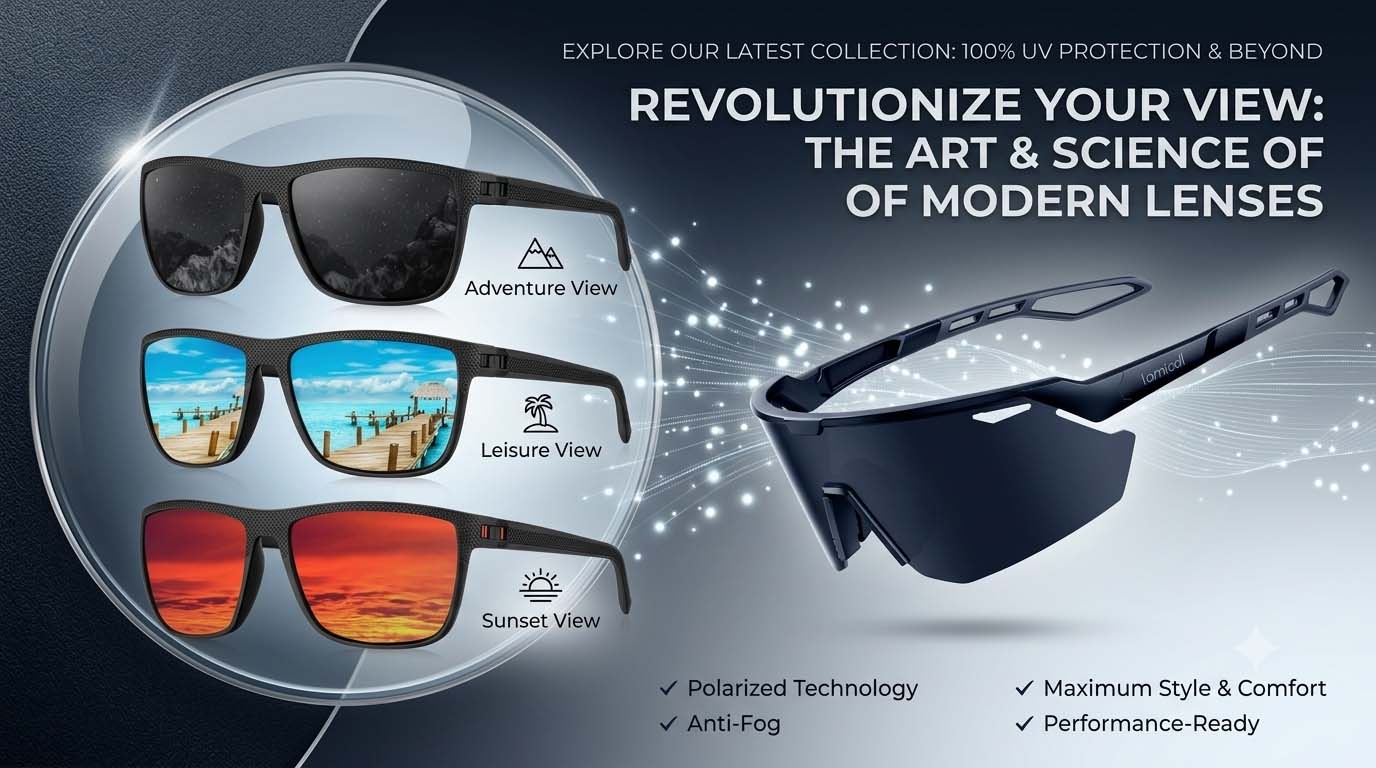
3. Lamicall 24g Polarized Sports Sunglasses – Best for Anti-Fog & Comfort
Specs: Weight 24g · Material TR90 frame, TAC HD polarized lenses · Vented with air holes · Adjustable nose pads · Silicone temples · UV400 (99.9% UVA/UVB)
If you play in hot, humid conditions or tend to fog up regular lenses, these are the ones to try. The vent holes on the lenses actually work — I wore them through a muggy 9-hole round and never had to wipe them. At 24g, they disappear on your face. The adjustable nose pads gave me a good custom fit for my oval face, and the silicone temples had enough grip to stay put through most swings. But I did notice that when I really turned hard on my drive, the wrap-around style let a tiny bit of light in from the side — not a dealbreaker, but the frame is definitely sporty, not classic. The TAC HD lenses are very clear, but again, no golf-specific tint. They’re fantastic for all-day wear and fog prevention, but don’t expect them to help you read greens.
Weakness: Wraparound style may not flatter all oval faces. Lenses are not designed for ball-tracking contrast.
4. ZENOTTIC Polarized Sunglasses for Men Sport – Best for Secure Wraparound Fit
Specs: Weight N/A (feels around 30g) · Material High-elasticity impact-resistant frame · Wraparound design · Wide lenses · Ultra-soft non-slip nose pads · UV400 polarization
These are built for motion. The wraparound design eliminates side light completely, giving you a cockpit-like field of vision. The non-slip nose pads and skin-friendly temple arms felt very secure — I didn’t have to touch them once during a full swing. For oval faces, the wrap style can sometimes look too aggressive, but if you prioritize function over fashion, these work. However, there’s a catch: only a handful of reviews available, so it’s hard to gauge long-term durability. Also, the nose pads are soft but not adjustable — they’re fixed in place, so if your nose bridge is very narrow or wide, the fit might not be perfect. And again, no golf-specific lens tint. They’re a solid sport option but fall short of being a specialist piece.
Weakness: Very few user reviews available. Fixed nose pads limit custom fit. Wraparound style may not suit every oval face.
5. Arttodo Golf Sunglasses – Lightest Option (18g)
Specs: Weight 18g · Material Polycarbonate frame and lenses · Dark green mirror coating polarized · UV400 · Adjustable hinges · One-piece nose pad · Includes case and cloth
At only 18 grams, these are the lightest pair I’ve ever worn on a course. After a few holes, I genuinely forgot they were there. The dark green mirror coating looked sporty and cut down bright sunlight well. The adjustable hinges helped the frame sit comfortably across my oval face width. But that one-piece nose pad is a dealbreaker for me — it doesn’t grip as well as individual pads, and when I started sweating during a warm round, the glasses slid forward after every swing. I had to push them back constantly. Also, the mirror coating is fine in bright sun, but in overcast conditions or early morning, everything looked dimmer. They’re great for weight weenies who need the absolute minimum on their face, but they’re not reliable for a full round without constant adjustment.
Weakness: One-piece nose pad lacks grip and adjustability. Mirror coating reduces visibility in low light. Only a moderate amount of user feedback available.
Comparison Table: Golf Sunglasses for Oval Faces
| Product | Weight | Lens Type | Best For |
|---|---|---|---|
| Rivet Sport | 28g | Polycarbonate, Enliven green tint | Performance, secure fit, golf clarity |
| KALIYADI Polarized | ~30g (est.) | Standard polarized UV400 | Value, daily wear |
| Lamicall 24g Sports | 24g | TAC HD polarized, vented | Anti-fog, extreme comfort |
| ZENOTTIC Polarized | ~30g (est.) | Wraparound polarized UV400 | Secure wraparound, side light elimination |
| Arttodo Golf | 18g | Dark green mirror polarized | Ultra-lightweight, budget price |
Frequently Asked Questions
Are aviator sunglasses good for oval faces?
Aviators are actually a classic choice for oval faces because the teardrop shape balances the natural symmetry of an oval. They can look great. But for golf, aviators often lack secure grip — they tend to slide down the nose during a swing. If you choose aviators for the course, look for ones with adjustable nose pads and rubber temple tips.
Can I use driving sunglasses for golf?
You can, but you probably won’t get the best performance. Driving sunglasses are optimized to reduce glare from flat surfaces like windshields and pavement — they often have a neutral or brown tint. Golf-specific lenses, like the green tint on the Rivet Sport, are tuned to enhance contrast between grass textures and against the sky. If you’re playing casually, any polarized pair will do. For serious scoring, invest in a golf-specific pair.
How do I stop my sunglasses from slipping during a swing?
Three things help: adjustable nose pads that let you pinch them tighter, hydrophilic rubber on the temples that grips more when you sweat, and a lightweight frame (under 30g) that doesn’t add momentum. Wraparound styles also reduce slipping because they hug your head. But the single most effective feature is sweat-activated grip — that’s why the Rivet Sport performed best.
Final Verdict: Which One Should You Buy?
Choosing comes down to what you value most on the course.
- For the best performance and golf-specific vision: Get the Rivet Sport. They stay put, they boost green contrast, and they handle sweat better than any pair I tested.
- For the best value and a classic look: Go with KALIYADI Polarized. They’re reliable, well-reviewed, and an easy recommendation for a backup pair.
- For the best anti-fog and all-day comfort: Try the Lamicall 24g Sports. The vented lenses and featherweight frame are perfect for humid rounds where fogging is a problem.
No matter which you pick, make sure the nose pads are adjustable and the temples have some grip. An oval face gives you flexibility, but only the right fit will keep your focus on the ball, not your sunglasses.