
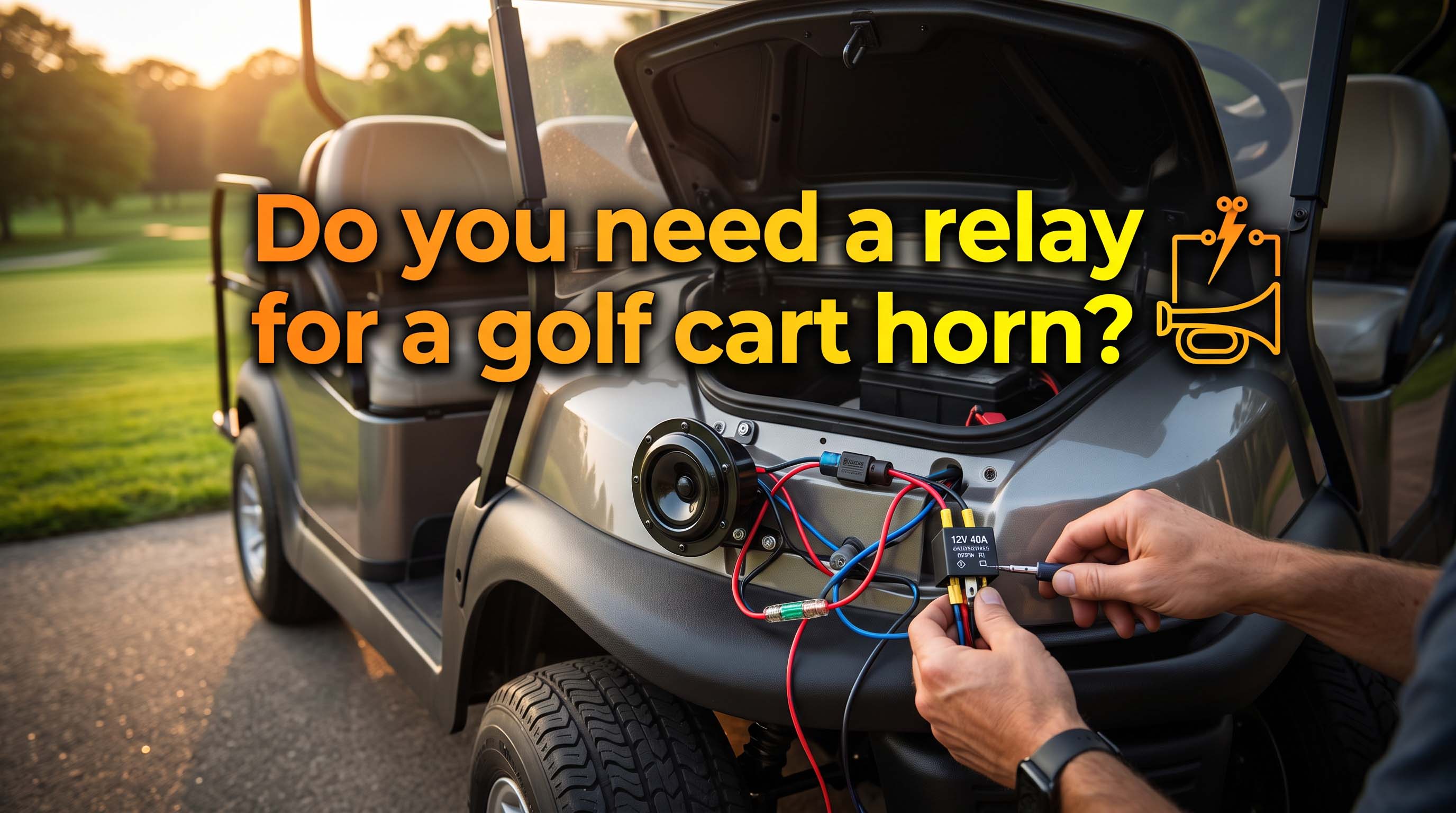
If you are upgrading your golf cart horn or replacing a dead one, you have probably run into the relay question. The short answer is yes, you need a relay in almost every case. Installing a relay is cheap insurance against a fried switch, melted wires, or a horn that sounds like a mosquito.
There is one specific situation where you might get away without one, but even then it is still a good idea to add a relay. Here is how to know for sure what your cart needs.
How much current does your horn actually draw
The main reason you need a relay comes down to amp draw. A basic golf cart horn that came with the vehicle typically pulls 3 to 6 amps. But aftermarket horns, especially dual-tone air horns or louder replacements, can pull 10 to 20 amps. Some big truck-style horns can even go above 20 amps.
Now look at your golf cart switch. Most push-button horn switches or key switches in Club Car, EZ-GO, and Yamaha carts are rated for 5 to 10 amps max. The switch contacts are small. They are not built to handle heavy current continuously.
When you try to push 15 amps through a switch rated for 8 amps, the switch gets hot. Over time, the contacts corrode, the switch fails, or, in the worst case, you get a small fire inside the dash.
To find your switch rating, check your owner’s manual or look for a stamp on the switch body itself. If you cannot find a rating, you can test it with a multimeter by measuring the current draw at the horn when you press the button. If the draw is above 5 amps, you should run a relay.
If you cannot measure it, assume you need one. The cost of a relay is lower than the cost of replacing a whole switch harness.
What goes wrong when you skip the relay
Two big problems happen when you wire a high-current horn directly to your stock switch. The first is switch damage, which I already covered. The second is voltage drop.
Your golf cart has long wire runs from the battery under the seat all the way to the front bumper where the horn sits. Those wires are often 18 AWG or smaller.
At 15 amps over 20 feet of wire, you lose around 2 volts just in the wire. That means a 12-volt horn only sees 10 volts. It sounds quieter and weaker. The horn might still honk, but it will not give you the sound you paid for.
A relay fixes both problems. The relay sits close to the battery. It lets the large current travel only through a short, thick wire from the battery to the relay and then to the horn. The stock switch only has to carry a small control current, less than 1 amp, to trigger the relay. That is all the switch ever feels.
Myth vs reality: Some people think a fuse replaces a relay. A fuse only protects the wire from overheating and melting. It does not reduce the current flowing through the switch. The switch still carries the full horn current.
If the current is too high for the switch, a fuse will not save it. You need both a fuse and a relay. The fuse protects the wire in case of a short, and the relay protects the switch.
The one time you might not need a relay
There is one situation where you could skip the relay. If your horn draws under 5 amps and your switch is rated for at least double that, you are probably safe electrically. But you still face the voltage drop problem on longer wire runs. If your battery is 12 volts and you are losing 1 or 2 volts through thin wires, the horn will still sound weak.
I have seen people on older Yamaha carts with the original low-current buzzer get away without a relay because the stock system was designed for such low power.
But if you are upgrading to any aftermarket horn that claims to be louder, just install the relay. It takes 30 minutes and gives you the full sound you expect.
Even in the low-current case, adding a relay means the stock switch lasts longer because it never has to break a spark or handle any real load. The switch only clicks a relay, which is a much easier job for those small contacts.
How to install a relay on your golf cart
Installing a relay is straightforward. You need a 12-volt relay rated for at least 30 amps. A Bosch-style automotive relay works perfectly. You also need an inline fuse holder with a 15-amp fuse, some 14 or 16 AWG wire, and basic connectors.
Here is the wiring sequence:
- Connect the positive battery terminal to the fuse holder.
- Run a wire from the fuse holder to pin 30 on the relay (the main power input).
- Connect pin 87 on the relay (the output) to the positive terminal of the horn.
- Run a wire from the horn negative terminal back to the battery negative or a good chassis ground.
- Connect the stock horn switch output wire to pin 86 on the relay (the trigger input).
- Connect pin 85 on the relay (the trigger ground) to a clean ground point. If your switch already has a ground path, you can tie into that.
When you press the horn button, current flows through the switch to the relay coil. That closes the relay and sends high current from the battery directly to the horn. Release the button, the relay opens, and the horn stops.
Mount the relay near the battery tray so the heavy power wires are short. Keep the relay away from direct rain if possible, though many automotive relays are splash resistant. Use a small zip tie or screw mount to hold it in place.
A tip for push-button carts: If your cart uses a push button that completes the circuit when pressed, you wire the button to ground the relay trigger. Many Club Car models work this way. You can run the trigger wire from pin 86 to the push button, and the push button connects to ground when pressed. The relay then activates from the battery side. Check your specific cart model wiring diagram to avoid surprises.
Choosing the right relay and fuse for your cart
When you pick a relay, look for a standard 12-volt DC relay rated for 30 or 40 amps. The 30-amp Bosch style relay (often part number 0 332 209 150) is common and inexpensive. It works on 6-volt systems too if you have an older cart, just make sure your voltage matches the relay coil rating.
Waterproof vs standard: If your cart lives outside or you drive in rain, get a waterproof relay or put the relay in a small waterproof box. Standard relays will work but can corrode if they get wet repeatedly.
Wire gauge: Use 14 AWG wire for the main power line from the battery to the relay and then to the horn. For the trigger circuit (switch to relay), 18 AWG is fine because it carries very little current. Never undersize the power wire. If you use a 20-amp horn, go up to 12 AWG.
Fuse sizing: Put a fuse on the power line before the relay. Use a 15-amp fuse for most golf cart horns. If your horn draws more than 15 amps, size the fuse 5 amps above the horn draw. For example, a 20-amp horn gets a 25-amp fuse. The fuse protects the wire, so make sure the wire can handle the fuse rating.
You can buy pre-wired relay harnesses online made for golf carts. These come with the relay, fuse, and wires already cut and labeled. They save time if you are not comfortable crimping your own connectors. Search for “golf cart horn relay kit” and you will find several options that fit Club Car, EZ-GO, and Yamaha models.
Frequently Asked Questions
Can I use a car horn relay on a golf cart?
Yes, any standard 12-volt automotive relay works as long as it handles the amperage. The Bosch 30-amp relay I mentioned is a common car relay. Just make sure your cart voltage matches the relay coil voltage.
My horn works fine without a relay. Does that mean it is safe?
Not necessarily. The switch may handle it for a while but can still fail over time from heat and arcing. The horn may also sound quieter because of voltage drop. Even if it works now, you are risking a switch failure later.
Where can I buy a pre-wired relay harness for a golf cart?
Online stores like Amazon and specialty golf cart shops sell ready-made kits. Look for “golf cart horn relay kit” and you will find options tailored to common cart models. Some come with instructions specific to Club Car or EZ-GO.
Do I need a relay if I am only adding a single beeper?
A small beeper or buzzer that draws under 3 amps probably does not need a relay. But check your switch rating first. If the switch is very old, a relay still adds a layer of protection.
How do I test my stock switch amperage rating?
Look for a small stamp or sticker on the switch body. If you cannot find one, use a clamp meter on the horn wire while pressing the button. The reading tells you the draw. Compare that to the switch rating. If you cannot find the rating, assume 5 to 8 amps and install a relay if your horn draws more.
Will a relay drain my golf cart battery when not in use?
No, a standard relay does not draw power until you press the horn button. The trigger circuit is open when the button is not pressed, so no current flows through the relay coil. There is no battery drain. If you wire it wrong, you could create a constant draw, but a correct installation has zero standby current.
Final word on your golf cart horn relay
You came here wondering if you need a relay for your golf cart horn. The answer is almost always yes. A relay costs less than a new switch harness and gives you a louder, more reliable horn that sounds the way it should.
Your stock switch will last years longer, and you avoid the frustration of a weak honk or a burned-out switch.
Take the extra 30 minutes to wire it right. Your ears and your golf buddies will thank you.