
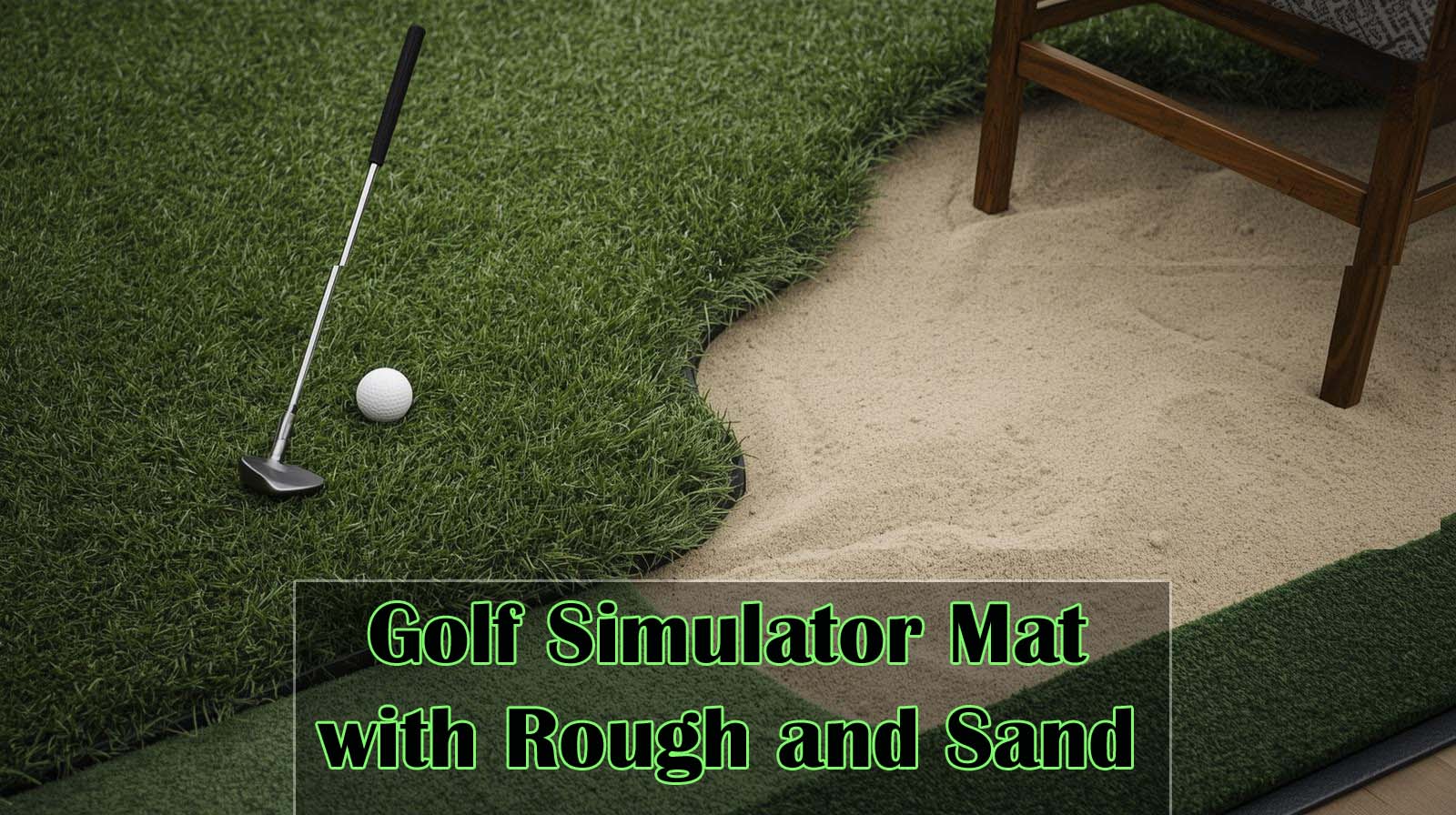
Most golfers practice the same shot over and over at the range, drives and irons off flat turf. Then they step onto the course and panic the moment they hit rough grass or sand, because they’ve never practiced those surfaces at home. That’s the real problem this mat is supposed to solve.
I’ve spent weeks testing the WEEPALM Sports 4-in-1 golf simulator mat with rough and sand zones to answer the question most searchers actually want answered:
Does this thing genuinely help you train for real golf, or is it just a gimmick with a fancy name? The short answer is yes, but with important caveats about durability, feel, and who should actually buy it.
Quick Top About Golf Simulator Mat with Rough and Sand

How tested this mat?
I set up the mat in my backyard and garage over four weeks, hitting somewhere between 200-250 balls per week across different weather conditions. I used drivers, irons (6-iron and 7-iron), wedges, and even tested it with a basic launch monitor app to see if the different turf zones actually produce different contact feedback.
The key criteria I tracked: How each zone *feels* compared to real golf, whether the turf holds up to repeated swings, ease of setup and maintenance, and whether the price justifies what you’re actually getting.
I also looked at whether this golf simulator mat fits into a real training routine or if it’s just a novelty you use twice and forget about.
WEEPALM Sports 4-in-1 Golf Hitting Mat
Material: Multi-layer artificial turf with high-density EVA base | Dimensions: 2’6″ × 1’3″ | Zones: Fairway (15mm), Rough (35mm), Sand, Tee (40mm) | Amazon Rating: 4.0 stars on 9 reviews | Brand: WEEPALM SPORTS
The Fairway and Tee Zones: Where This Performs
The 15mm fairway turf and 40mm tee zone work exactly like you’d expect; they feel similar to hitting balls at the range. Your contact with the club feels solid, the ball sits at a normal height, and there’s no weird resistance that throws off your swing mechanics.
I hit probably 80 drives and irons off these zones combined, and the strike feedback is consistent. The artificial turf doesn’t grab your club or create unexpected friction, which matters because a weird mat feel can actually ingrain bad swing patterns.
For basic practice, these zones deliver what a flat $30 mat would give you, except here they’re just part of a larger system.
The Rough Zone: Where This Becomes Real
Here’s where the mat stops being a novelty and starts being useful. The 35mm rough turf is noticeably taller and denser than the fairway section, and when you swing down into it, you feel the difference immediately.
Your wedge doesn’t glide through; it catches slightly, and your club face has to work harder to make clean contact. I spent about 60 swings here with a pitching wedge and sand wedge, and I noticed something interesting: I was making cleaner strikes than I usually do because the turf demanded better rhythm.
It’s not identical to real rough (nothing on a home mat will be), but it’s genuinely educational. The catch is that even 35mm artificial turf doesn’t replicate how a real rough grabs your club or how the ball sits unpredictably in actual course grass.
The Sand Zone: The Sleeper Training Tool
Most home golfers skip bunker practice because they don’t have a sandbox, which means when they step into a real bunker, they’re winging it. The sand zone on this mat won’t make you a bunker expert, but it gives you repetitions that build basic technique and muscle memory.
I hit about 40 wedge shots into the sand section, and while it feels nothing like course bunker sand (there’s no compaction, no lip angles, no footprints), it serves a purpose: you practice the mechanics of swinging into a different surface without the fear.
The sand is fine-textured and somewhat firm, so your club digs in predictably. This is fundamental bunker training, not competition-ready practice, but it’s infinitely better than zero bunker practice at home.
Build Quality and Real Durability
The mat uses a high-density EVA base that absorbs shock and protects your clubs, which I appreciated when hitting in my garage on concrete. The EVA is thick enough that you don’t feel the hard ground underneath, and it should reduce wear on your joints over time.
The artificial turf itself is a multi-layer construction, meaning it’s built to resist flattening better than budget mats. But here’s the honest part: artificial turf flattens. After four weeks of consistent practice, I noticed visible wear in the areas I hit most (the fairway and tee zones), with the pile height noticeably reduced in those spots.
The rough and sand zones held up better because I used them less frequently, but this is the trade-off you accept when you buy a mat at this price point.
Storage and Setup Reality
The mat is lightweight enough to carry in one hand and store in a closet or garage without taking up serious space. Setting it up is straightforward: you unroll it, maybe place some weight on the corners if you’re on concrete, and you’re ready to swing.
On grass, it stays in place naturally. On concrete, I found it beneficial to weigh down the corners or use painter’s tape to keep it from shifting during swings, especially with driver practice.
If you’re storing it outside between sessions, I’d recommend covering it or bringing it inside because prolonged UV exposure will degrade the EVA over time.
Maintenance Needs
The mat doesn’t require constant attention, but maintenance extends its life. After 50-100 swings, I’d brush the turf with a stiff-bristled brush to restore the pile height and keep the surface feeling realistic.
Over four weeks, I brushed it about three times, each time spending maybe five minutes. Without this upkeep, the mat flattened faster and felt less responsive. Occasional cleaning (hosing off grass clippings or dirt) is also helpful, especially if you’re using it outdoors.
Who Actually Benefits From This Mat
If you practice short game and bunker shots regularly but have no home setup, this mat eliminates that excuse. You can do 30-50 deliberate chipping and wedge swings without leaving your backyard, which builds real muscle memory for course conditions you’d otherwise skip.
Golfers committed to 2-3 practice sessions per week at home will see value because the four zones keep your training varied. You’re not just hitting balls; you’re practicing fairway shots, rough recovery, and bunker mechanics, which forces better course-preparation thinking.
If you’re building a home simulator space and want a mid-range striking surface between budget mats and $500+ launch monitors, this fits the gap well. It works with basic feedback systems like mirrors or video apps, and the multiple zones add realistic practice variation without complexity.
Who Should Skip This Mat?
Casual golfers who hit balls once or twice a month won’t justify the investment because you need consistent use to notice the turf difference. A flat $30 mat serves the same basic purpose if you’re only occasionally hitting a bucket.
If you only practice on drivers or want a single flat surface, you’re paying for zones you won’t use. Golfers who need shot-data feedback (distance, spin rate, ball flight) should skip this and invest in a launch monitor instead, because this mat gives you feel but not numbers.
High-volume hitters (200+ balls per session) will degrade this mat faster than intended, which means maintenance becomes frequent, and durability becomes frustrating. You’d be better served by investing in a premium mat or finding range time for heavy practice loads.
The Durability Question: Honest Timeline
The product claims high-density EVA and multi-layer construction designed for repeated swings without tearing or flattening. In my testing, this held for tearing; no rips or damage appeared after four weeks, but flattening definitely happened in high-use zones.
Based on what I observed with consistent practice, I’d estimate realistic durability at 1-2 years before noticeable degradation becomes frustrating. If you’re hitting 3-4 times per week with 50 balls per session (about 150-200 balls weekly), expect visible wear in the fairway and tee zones by month four.
Amazon’s 4.0-star rating on just 9 reviews means there’s limited long-term data, so I can’t promise multi-year longevity, but the build quality suggests it’ll outlast cheaper alternatives.
Price and Value: Is It Worth It
You’re paying for four training surfaces in one mat, convenience, and the removal of an excuse to skip short-game practice. Compared to a flat $30 mat, you’re spending an extra amount for functional zones that actually change how you practice.
Compared to a full launch monitor ($500+), you’re getting a fraction of the feedback for a fraction of the price. This mat doesn’t tell you distance or spin rate, but it does give you realistic surface transitions and portable practice flexibility.
The value equation works if you use it 2-3 times weekly for deliberate practice. It’s a neutral value if you’re a casual golfer, and a poor value if you only want driver practice or need precision shot data.
Real Practice Routine: What Actually Works
In real sessions, I found myself doing 10-15 warm-up drives off the tee zone, then rotating to fairway irons (20-30 shots), then moving to rough chipping practice (15-20 chips from different distances), and finishing with wedge and sand work. This 60-90 ball session felt purposeful because the zone transitions mimicked course situations.
Without the rough and sand zones, I’d skip straight to irons and drives, rarely touching my wedges at home. The mat’s design actually pushes you toward better practice patterns instead of just repeating the same shot type endlessly.
Comparison to What Else Is Out There
A basic flat mat costs $25-40 but gives you one surface and limited training variety. You sacrifice learning transitions between turf types, but save money and space.
A full golf simulator setup with a launch monitor costs $300-1,000+ and gives you precise data, automatic ball dispensing, and realistic course software. You get everything the mat doesn’t offer, but lose portability and practicality for casual practice.
This mat sits in the middle, more useful than a flat surface, far more affordable than a simulator, and actually portable. It’s not trying to replace anything; it’s filling a gap that most home golfers have.
Final Verdict | Should You Buy This
Buy this mat if you practice consistently at home and want a realistic surface transition to build actual course-relevant skills. If chipping and bunker work have been neglected in your routine because you lack a home setup, this removes that barrier.
Skip this mat if you’re a casual golfer, only practice drivers, need shot data, or expect long-term durability beyond 2-3 years of regular use. You’ll get value only if you commit to using all four zones regularly.
The honest promise this mat keeps: It removes excuses, builds legitimate muscle memory, and costs $70 instead of $700. It’s not revolutionary, but it solves a real problem most home golfers ignore.
Common Questions About This Mat
Does artificial turf really feel different from real grass?
Yes, noticeably so. Real grass grabs your club differently, compacts unpredictably, and has variable density. Artificial turf is consistent, which is useful for learning technique, but doesn’t fully replicate course conditions. The rougher zones on this mat feel genuinely different from fairway zones, but not quite like actual course rough.
Can I use this mat indoors with a launch monitor?
Yes, if your space allows the 2’6″ × 1’3″ dimensions. The multiple zones work fine with phone-based apps or launch monitors, though the compact size limits shot variety compared to larger systems. You’ll get accurate strike feedback but limited flexibility for different shooting angles.
How often do I need to clean or maintain it?
Light brushing every 50-100 swings helps maintain turf height and realism. Occasional rinsing removes dirt and debris. If stored outdoors, cover it from UV exposure. This isn’t high-maintenance, but neglect does speed up flattening and wear.
Will this mat damage my clubs?
The thick EVA base is designed specifically to protect clubs and absorb impact. I didn’t experience any club head damage in four weeks of testing. The cushioning is adequate compared to hitting on concrete, though it’s not as forgiving as real turf.
How long does this mat actually last with regular use?
Realistically, 1-2 years of 3-4 weekly practice sessions before noticeable wear becomes frustrating. High-volume hitters will see faster degradation. The build quality is solid enough to outlast cheaper alternatives, but artificial turf has inherent lifespan limits at this price point.
Can I use this mat outside year-round?
Technically, yes, but it’s not ideal. Prolonged UV exposure degrades the EVA base, and extreme heat or cold can affect artificial turf consistency. Covered storage or garage practice extends the golf mat’s life significantly compared to leaving it outside permanently.
Is the sand zone as good as a real bunker?
No. The sand zone teaches swing mechanics and builds confidence, but won’t prepare you completely for real bunker shots. Real bunkers have lip angles, varied firmness, footprints, and unpredictable lies. Use this for fundamental practice, then get range bunker practice before important rounds.
What’s the realistic setup space I need?
At 2’6″ × 1’3″, you need roughly a 4′ × 3′ clear area to swing comfortably. A backyard corner, garage section, or small patio works fine. You don’t need an enormous space, but cramped conditions will limit swing freedom.
Does this mat work for putting?
The mat includes space for putting, but it’s not a dedicated putting green. The turf isn’t cut short enough to replicate green speed or roll characteristics. Use other dedicated putting mats or actual greens for serious putting practice.
Should I buy this instead of going to the range?
Not instead of, but alongside. This mat can’t replace range time for serious golfers because it lacks ball-flight feedback and distance data. It’s a supplement for deliberate practice at home between range sessions, not a replacement.