
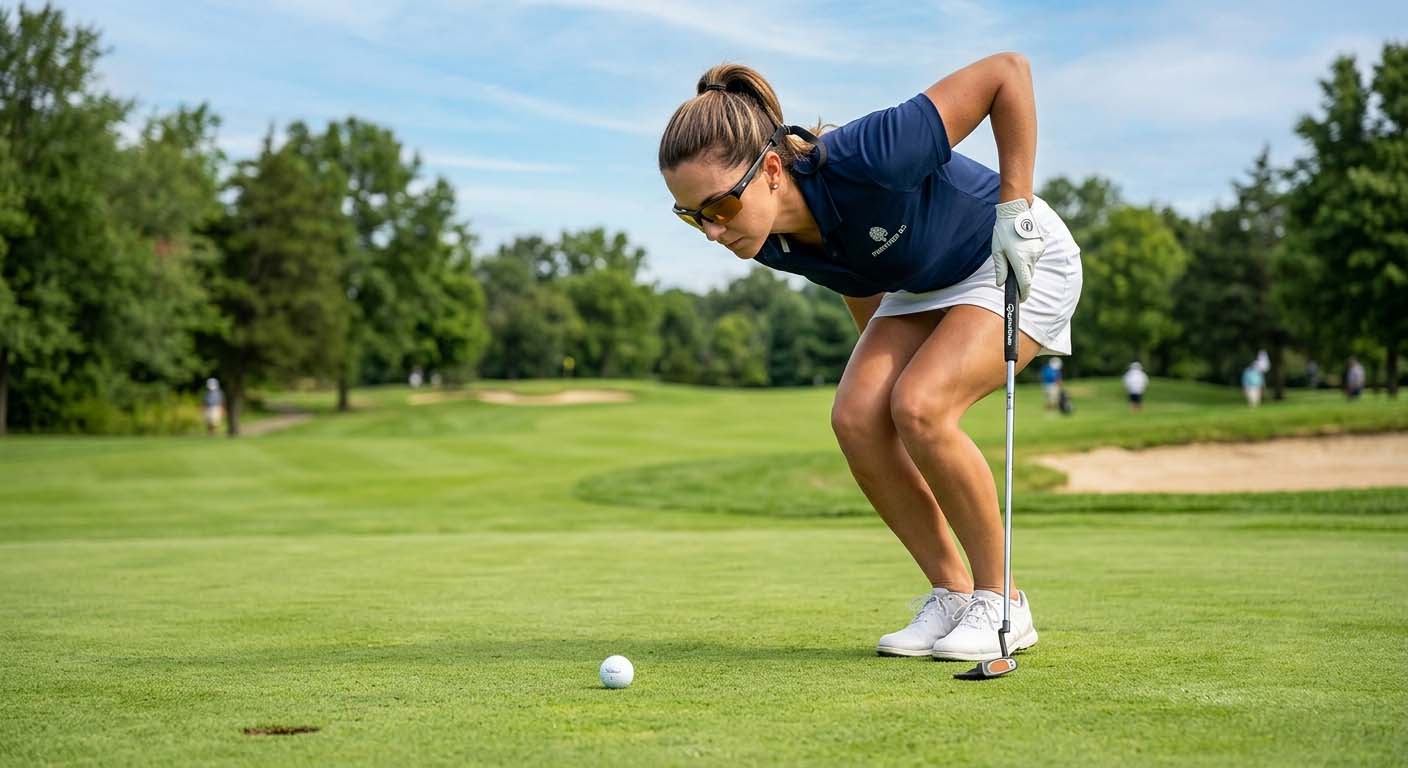
A golfer bends down to pick up a tee, repair a ball mark, or line up a putt. The sunglasses slide forward and drop. It happens fast. The reason is simple physics. When your head tilts forward, gravity pulls the glasses away from your face. The nose bridge loses contact, and the temple arms rotate upward.
The fix starts with understanding why this happens and what you can do about it, both on the course and at home.
Why Bending Down Triggers Sunglasses to Fall Off
Glasses slip during a golf swing or when picking up a ball because of the angle. When you stand upright, the frame weight rests on your nose and the temple hooks behind your ears. This balance works well when your head is level.
But when you bend from the hips to look down, your face tips toward the ground. The center of gravity of the glasses shifts forward. The nose pads slide down the bridge of your nose. The temple arms no longer hold the frame in place because they point upward instead of backward.
Standard wrap-style sunglasses with shallow temple bends are the worst offenders. They rely on friction rather than a mechanical lock behind the ear. Once your head tilts, that friction is not enough.
Quick Fixes on the Course
You do not need tools for these solutions. They work right now, during your round.
Clean the nose pads with a dry cloth. Sunscreen, sweat, and skin oils create a slippery layer on the rubber. Wipe them dry and the grip comes back instantly.
Adjust your hat brim. A baseball cap or visor pushes the glasses forward when you bend down. The brim hits the top of the frame and acts like a lever. Push your hat back so the brim clears the glasses, or wear the hat without a brim at all. A sweatband under the hat also prevents the hat from pressing on the temple arms.
Tighten the temple screws with a mini screwdriver. Keep one in your golf bag. Loose screws allow the arms to wobble, which reduces the grip on your head. A quick tighten can stop the slipping.
Use a temporary grip patch. A small piece of grip tape or a silicone ear grip placed behind your ear adds friction. You can buy these at any sports store or use a piece of medical tape in a pinch.
Permanent Adjustments for a Secure Fit
These fixes require a few minutes at home but solve the problem for good.
Bend the temple arms for a cable wrap. The part of the frame that goes behind your ear should curve around the back of your ear, not just sit on top. A proper cable wrap has a gentle curve that follows the contour behind your ear. If your temples are straight or have only a slight bend, they will not hold when you lean forward.
To do this yourself, hold the temple arm with both hands and bend it inward gently. Use small adjustments.
Heat metal frames with warm water first to avoid breaking them. Acetate frames need a heat gun or hair dryer. If you are not comfortable, visit an optician. They can do it in two minutes.
Add silicone nose pads. Most sport frames use fixed nose pads. You can replace them with self-adhesive silicone pads that offer better grip. These pads also add height, which changes how the glasses sit on your nose. Test a few positions to find the spot where they hold best.
Install ear hooks or temple grips. These are small silicone tubes that slide onto the temple arm behind your ear. They add friction and a wider surface area. They are invisible under a hat and cost very little.
Choosing Golf Sunglasses That Resist Slipping
If you plan to buy a dedicated pair for golf, look for these features.
Lightweight frame materials. Heavier frames pull forward more when you bend. Choose titanium or thin acetate frames. They reduce the leverage that causes the nose pads to lose contact.
Adjustable nose pads. Not all frames have them, but they are the best option for a custom fit. You can pinch them together or spread them apart to match the shape of your nose bridge.
Temple length that matches your ear position. Temples that are too long create a lever arm behind your ear. When you tilt your head, the long arm acts as a fulcrum, pushing the frame forward. A proper fit means the temple ends just past the curve of your ear, not dangling down your neck.
Wrap vs. aviator frames. Wrap frames hug your face and provide more surface contact along the temple. Aviator frames sit higher on the nose and have thinner temples. For bending down, wrap frames are usually more secure. But if you prefer aviators, use the temple grip add-ons to compensate.
Advanced Considerations for Prescription Wearers
Prescription lenses are heavier than non-prescription lenses. Progressive lenses and high-index lenses add weight because of the thickness required for the prescription. That extra weight increases the forward pull when you bend down.
The best option is a dedicated pair of prescription golf sunglasses with a lightweight frame and cable-wrap temples. Prescription inserts inside a non-prescription sport frame are lighter and more aerodynamic than full prescription frames. They also allow you to change lens colors for different light conditions.
Photochromic lenses are worth considering. They darken in sunlight and turn clear indoors. This means you do not have to swap glasses between the course and the clubhouse. Less handling means less chance of bending or loosening the frame.
Maintenance Checklist for Golfers
A quick monthly check keeps your sunglasses secure.
| Check | What to do | Frequency |
|---|---|---|
| Temple screw tightness | Use a mini screwdriver to tighten if loose | Every round |
| Nose pad condition | Replace if cracked or worn smooth | Every 6 months |
| Frame alignment | Check for splay after one-handed removal | Monthly |
| Temple cable bend | Re-bend if it has flattened over time | Yearly or as needed |
| Professional adjustment | Visit an optician for a full re-fit | Annually |
Do not take glasses off with one hand. This stretches the frame and causes the temples to splay outward. Always use both hands. This simple habit prevents most alignment issues.
Critical Consideration: Why a Cap Can Sabotage Your Fix
Many golfers wear a baseball cap, especially on sunny days. When you bend down, the cap brim makes contact with the top of your sunglasses. The brim pushes the frame forward and down. This happens even if your temples are perfectly bent and your nose pads are clean.
The fix is easy. Switch to a low-profile hat with a short brim. A visor without a brim also works. If you must wear a cap, angle it slightly back so the brim clears the glasses. Another option is to wear a sweatband under the cap. The sweatband creates a gap between the cap and your glasses.
This is the most overlooked factor in slipping sunglasses on the golf course. In a test with a standard baseball cap, glasses slipped 2 centimeters forward when bending from the waist. Without the cap, the slip was almost zero.
Myth Busting: Tightening the Frame Is Not Always the Answer
Some people respond to slipping by squeezing the temples inward. This puts pressure on your head and can cause headaches during a round. It also does not solve the problem because the frame still rotates forward when you bend.
The real need is grip, not clamp force. Adding silicone to the nose pads or temples creates friction without pressure. Overtightening screws or bending temples inward can also crack the frame or loosen the hinges over time.
Frequently Asked Questions
Will silicone nose pads work on metal frames?
Yes. Most self-adhesive silicone pads stick to metal frames. Clean the area with alcohol first to remove oils. Let it dry before pressing the pad on.
Can I use double-sided tape for a temporary fix on the course?
Yes, but only as a last resort. Place a small piece on the inside of the temple arm where it touches your head. It adds friction but may leave residue. Remove it at the end of the round.
Should I avoid polarized lenses for golf?
Not necessarily. Polarized lenses reduce glare and help you see the ball in the air. Some golfers find they make it hard to read greens because they reduce contrast on the grass. Try a pair before committing.
How often should I replace ear hooks?
Replace them when they lose their grip or become shiny from skin oils. This is usually every 3 to 6 months, depending on how often you play.
Is it worth buying dedicated golf sunglasses vs. using my everyday pair?
If you play frequently, yes. Dedicated golf sunglasses are lighter, have better temple curvature, and use high-grip materials. Everyday fashion frames are not designed for dynamic movement. You will notice the difference the first time you bend down to pick up a ball.