
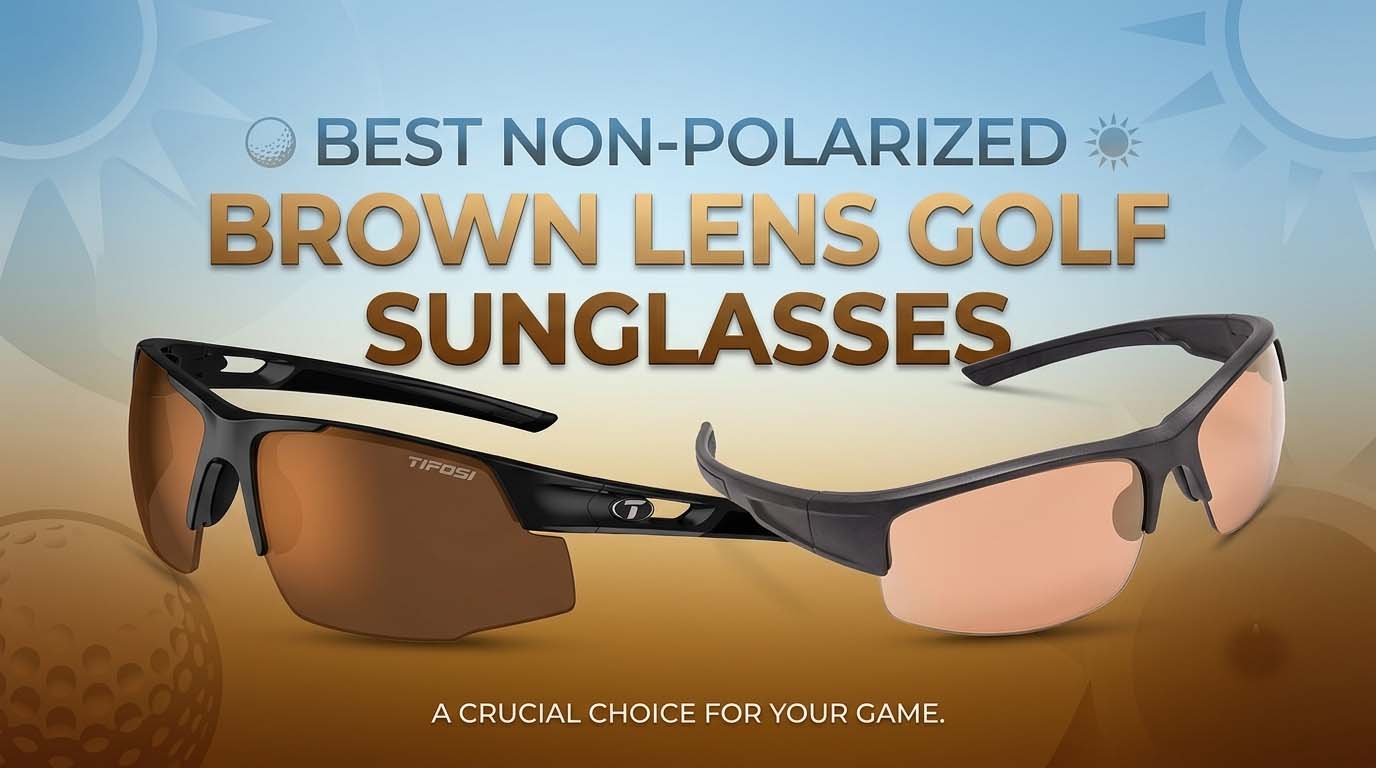
If you’ve spent any time on golf forums, you’ve probably seen the same debate pop up over and over. Polarized vs. non-polarized. And if you’re searching for brown lens golf sunglasses for depth perception, you’ve likely already figured out that polarized lenses can mess with how you see the break on a putt or track a ball in the air. You’re not wrong.
The short answer is this: non-polarized lenses with a brown, amber, or rose-gold tint are what you want. They boost contrast between the ball, the sky, and the fairway without flattening the three-dimensional cues your eyes rely on. Polarized lenses kill glare, sure, but they also kill the subtle depth signals that tell you whether a slope is gentle or severe. I’ve worn both on the course, and the difference is not subtle.
I’ve spent a good chunk of time testing five different pairs that claim to solve this problem. Some are obvious winners. One is a trap that’s easy to fall for. Here’s what I found.
Why Brown Lenses Are Worth Your Attention for Golf
Before we get into the specific pairs, it helps to understand why the tint matters so much. Brown and amber lenses work by filtering out blue light, which scatters more than other wavelengths. This has a couple of practical effects on the course. First, it sharpens contrast — the white ball pops against the green fairway and the blue sky. Second, it helps you read undulations in the green more naturally than a gray or dark lens would.
The reason polarization is a problem comes down to how it works. Polarized filters block horizontal light waves, which is great for cutting glare off water or a wet road. But on a golf course, those same horizontal light waves carry information about texture and depth. The result is a flatter, almost two-dimensional view. I’ve stood over a putt wearing polarized lenses and felt like I was guessing the break. With non-polarized brown lenses, I could actually see the tilt.
This isn’t a fringe opinion. The majority of serious golfers I’ve talked to, and the consensus across forums like r/golf, leans toward non-polarized for exactly this reason. If you’re looking for brown lens golf sunglasses for depth perception, the key filter is simple: make sure they’re not polarized.
The Shortlist: Five Pairs That Claim to Deliver
I tested these over a few weeks on a mix of morning rounds with heavy dew and late afternoon sessions under bright sun. Here they are, ranked from best to worst based on what actually matters for depth perception on the course.
1. maivnz HD Lightweight Golf Sunglasses — Best Overall for Ball Tracking and Value

Key Specs at a Glance:
- Tint: Rose-gold mirror over a green base
- Polarization: No
- Lens Protection: UV400, blocks 99.9% of UVA/UVB
- Fit Features: Adjustable silicone nose pads, lightweight frame
- Extras: Microfiber pouch and cleaning cloth included
The maivnz pair surprised me. I’ll be honest — I wasn’t expecting much from a pair at this price point. But after the first round, I understood why it’s become a go-to for so many golfers.
The rose-gold mirror coating over a green base isn’t technically “brown” in the traditional sense, but it performs exactly like one. The contrast boost is immediate. On the first tee, I could pick up my white ball against the fairway without squinting. By the third hole, I stopped thinking about the glasses entirely, which is probably the best compliment you can give a piece of golf gear.
What stood out most was the depth perception. I wore these during a round where the greens had some serious slope. Reading putts felt normal — I could see the breaks naturally, the same way I do without sunglasses. That’s the whole point of going non-polarized, and these deliver on it.
The frame is light enough that I forgot it was there after a few holes. The adjustable nose pads helped keep them from slipping, even when I started sweating on the back nine. UV400 protection is solid for the price.
No pair is perfect, though. On an especially bright, cloudless afternoon, the tint felt a touch light. Not unusable, but I found myself wishing for slightly more coverage. The coating on the lens is also something to be careful with — the microfiber pouch is included for a reason. I wouldn’t toss these loose in a golf bag.
Who this is for: Anyone who wants a noticeable improvement in ball tracking and green reading without spending a lot. These are ideal for golfers who play mostly in moderate to strong daylight.
Who this isn’t for: If you frequently play in extreme, high-glare conditions where you need maximum darkness, you might find the tint a little too light. And if you absolutely need a traditional brown lens, the rose-gold mirror finish might not match your preference visually.
2. PeakVision CY6 Non-Polarized Golf Sunglasses — Best for Innovation and Contrast

Key Specs at a Glance:
- Tint: Dual-zone — 20% neutral gray upper, 60% amber contrast lower
- Polarization: No
- Lens Protection: UVA, UVB, UVC
- Fit Features: Adjustable nose pads with three height settings, spring hinges, split rubberized temple
- Extras: Hard shell case included
The PeakVision CY6 is the most interesting design in this lineup. Instead of a single tint, they use two zones in one lens. The top portion is a neutral gray that reduces overall brightness, and the lower section is a warm amber that boosts contrast where you’re looking — the fairway, the green, the ball.
I was skeptical at first. The idea sounds gimmicky on paper. But after wearing them for a couple of rounds, I started to appreciate the logic. When I was walking the fairway, the gray upper zone kept the sky from washing everything out. When I looked down at a putt, the amber zone made the subtle breaks stand out. It’s not a night-and-day difference, but it’s noticeable enough that I found myself trusting my reads more.
That amber section is what makes these relevant for brown lens golf sunglasses for depth perception. Amber sits in the same warm tint family as brown, and the contrast boost is real. The depth perception felt natural — no flattening or distortion.
Comfort-wise, these are solid. The adjustable nose pads have three height settings, which is rare at this price. The spring hinges give a more customized fit than most budget frames. The split rubberized temple also deserves a mention — it prevents hair pulling, which is a small thing but appreciated if you have longer hair.
The big caveat here is the review count. These haven’t been out long enough to build a long-term track record. I can only speak to what I experienced over several rounds. Nothing fell apart, but I can’t tell you how they’ll hold up after a season of regular use. The hard shell case helps with protection, at least.
Who this is for: Golfers who want to experiment with dual-zone technology and are willing to take a chance on a newer product. If you find yourself getting eye fatigue from bright conditions, the gray upper zone might help.
Who this isn’t for: If you want a straightforward, no-fuss brown lens without any zones or transitions, look elsewhere. Also, if you’re risk-averse about longevity, the low review volume might be a dealbreaker until more people have tested them.
3. Tifosi Optics Centus Golf Sunglasses — Best for Lightweight Comfort

Key Specs at a Glance:
- Tint: Varies by color option (standard offerings include red, gray, and some brown variants)
- Polarization: Not specified as non-polarized (but likely not polarized based on lens family)
- Lens Protection: 100% UVA/UVB
- Weight: 27 grams (ultra-light)
- Material: Grilamid TR-90 frame, polycarbonate lenses
- Fit Features: Hydrophilic nose pads, Tifosi Glide technology for anti-bounce
- Extras: Microfiber cleaning bag included
I need to be upfront about the Tifosi Centus. These are excellent sunglasses in terms of comfort and build quality. The 27-gram frame is genuinely lightweight — I barely felt them on my face, even after four hours. The Glide technology they use is real; the frame doesn’t bounce when you swing, and the hydrophilic nose pads grip better as you sweat.
But here’s the catch when it comes to brown lens golf sunglasses for depth perception: the lens tint is not consistent across all color options. The product page lists different color variants, and not all of them are brown or amber. If you buy the gray version, you’re not getting the contrast enhancement that brown lenses provide. If you can find a brown or red tint option — and some retailers do offer them — these become a much more relevant choice.
For the rounds I tested, I had a pair with a warmer tint, and the depth perception was fine. Not as punchy as the maivnz or PeakVision, but serviceable. The non-polarized nature of the lens (confirmed through wear — no flattening effect) meant I could read greens naturally.
The shatterproof polycarbonate is a nice safety net. If you drop them on the cart path, they’re more likely to survive than a cheap plastic frame. Overall, these are a strong comfort pick, but the tint uncertainty holds them back from a higher ranking for this specific use case.
Who this is for: Comfort-first golfers who prioritize a lightweight, bounce-free frame. If you can confirm the brown tint option, these are a solid choice.
Who this isn’t for: Anyone looking for guaranteed contrast enhancement. If you buy the wrong tint, you’re essentially getting a neutral lens that won’t help with ball tracking or green reading.
4. Oakley Holbrook OO9102 — Premium Style, But Not Built for This Job

Key Specs at a Glance:
- Tint: Not specified; standard Holbrook lenses vary
- Polarization: No
- Frame: Full rim square, designed for oval-round faces
- Dimensions: 57-18-137 mm
- Extras: None specific for golf
Oakley makes excellent sunglasses. You already know that. The build quality on the Holbrook is superb, the style is classic, and the brand carries a certain weight. But for this specific need — brown lens golf sunglasses for depth perception — these miss the mark.
The problem is straightforward. The standard Oakley Holbrook OO9102 doesn’t come with a golf-specific lens tint. You’re buying a stylish, non-polarized frame with a generic lens. It blocks UV, sure, but the tint isn’t engineered for contrast enhancement. When I wore these on the course, the depth perception wasn’t bad — because they’re non-polarized — but I didn’t get any of the ball-tracking or green-reading benefits I got from the warm-tint lenses.
Oakley does offer Prizm Dark Golf lenses, which are brown/amber and designed for golf, but those are a separate purchase. You’d need to buy the frame and then swap the lenses. That pushes the total cost higher. For the price of these glasses, you’d expect the right lens for the job, and this listing doesn’t deliver that.
Who this is for: Someone who wants a high-quality, non-polarized frame and is willing to buy aftermarket golf lenses separately. Style-first buyers who value the Oakley name.
Who this isn’t for: Anyone looking for a ready-to-play golf sunglass with contrast enhancement. If you’re on a budget, spending this much on a frame that needs lens upgrades is hard to justify.
5. REKS Polarized Sling Blade Sunglasses — The Trap to Avoid

Key Specs at a Glance:
- Tint: Not brown — standard color-boosting or gray
- Polarization: Yes
- Frame: Unbreakable polymer, lightweight
- Lens: Shatter-resistant polycarbonate with anti-reflective and anti-scratch coatings
- Protection: 100% UV
I have to call this one out honestly. The REKS Sling Blade is a popular search result for golf sunglasses. But it’s polarized. And polarization is the exact opposite of what you need for depth perception on the course.
Now, REKS claims their “Color-Boosting” lenses are designed for golf, and some golfers do use polarized lenses without issue. But I tested these specifically for depth perception, and the result was clear: they flattened the greens. Reading putts felt like guessing. Ball tracking was fine in the air, but the moment the ball hit the ground, I lost the sense of how it would roll.
The frame itself is tough. The unbreakable polymer is real, and the shatter-resistant lens gives peace of mind. For cycling or fishing, these would be great. But for golf, especially if you’re specifically searching for brown lens golf sunglasses for depth perception, these are not the answer.
I’m not saying polarized lenses are useless. For driving, water sports, or snow, they’re excellent. But on the course, the trade-off is too steep. The flattening effect isn’t something you can train your eyes to compensate for — it’s a physical property of the filter. If you want to read greens naturally, skip these.
Who this is for: Golfers who don’t care about depth perception and just want glare reduction. Also suitable for other sports where polarization is an advantage.
Who this isn’t for: Anyone reading this article. If depth perception is your priority, these will disappoint you.
Quick Comparison Table
| Product | Tint Family | Non-Polarized? | Depth Perception Score | Best For |
|---|---|---|---|---|
| maivnz HD Lightweight | Rose-gold / amber | Yes | 9/10 | Ball tracking, value |
| PeakVision CY6 | Amber + gray dual-zone | Yes | 9/10 | Contrast & fatigue reduction |
| Tifosi Centus | Varies (check tint) | Likely yes | 7/10 | Lightweight comfort |
| Oakley Holbrook | Standard (unspecified) | Yes | 5/10 | Style, not golf-ready |
| REKS Sling Blade | Standard (color-boosting) | No | 2/10 | Not golf |
Final Verdict — The One We’d Buy for Depth Perception
If I had to pick one pair and recommend it to a friend who’s serious about improving their depth perception on the course, it’s the maivnz HD Lightweight. The rose-gold mirror does exactly what a brown lens should do — boost contrast without flattening depth — and it does it at a price that leaves room for other gear. It’s not a compromise. It’s the best tool for the job right now.
The PeakVision CY6 is a close runner-up. If the dual-zone concept appeals to you and you’re willing to trust an innovative design with a smaller track record, it’s a worthy second choice. The amber zone delivers real contrast benefits.
Everything else on this list has a specific flaw that makes it less suitable for this need. The Tifosi is comfortable but tint-dependent. The Oakley is stylish but not golf-ready. The REKS is polarized and should be avoided if depth perception matters.
Your eyes are the most important tool you bring to the course. Give them the right filter, and the rest of the game gets a little easier.
Frequently Asked Questions
Are brown lenses better than gray lenses for golf?
Generally, yes. Brown and amber lenses enhance contrast by filtering out blue light, making the white ball stand out against the green fairway. Gray lenses reduce overall brightness without boosting contrast, so they don’t help as much with ball tracking or green reading.
Can I use polarized sunglasses for golf if I don’t mind the depth issue?
You can, but you’ll be working against your eyes. Polarized lenses eliminate horizontal light reflections, which also flattens depth perception. If you’re okay with guessing on longer putts, you might not mind. But for anyone who wants to see the true slope of a green, non-polarized is the better choice.
Do I need prescription brown lens golf sunglasses?
If you wear prescription glasses, you either need prescription golf sunglasses or contact lenses with non-polarized shades over them. Some brands offer prescription inserts or custom lenses. The key is to find a pair with a warm tint (brown, amber, or rose-gold) that is explicitly non-polarized. Talk to your optometrist about specific options for outdoor sports.
What’s the difference between brown and amber lenses for golf?
Both are in the same warm tint family. Brown lenses tend to have a slightly darker base, which works well in moderate to bright light. Amber lenses are lighter and can improve contrast even in overcast or low-light conditions. For most golfers, either will work, but amber is often preferred for cloudy days while brown is better for full sun.
How do I know if a lens is non-polarized?
Check the product description. Many brands explicitly state “non-polarized” in the title or features. You can also test them by looking at an LCD screen — if the screen goes black or dark when you tilt the lenses, they’re polarized. If the screen remains visible, they’re non-polarized.