
You’ve spent months rebuilding strength and range of motion. The last thing you need is a pair of shoes that fights your swing and sends a jolt through that new knee.
I remember the first time I stood over a ball after my replacement, I wasn’t thinking about distance. I was thinking, “Please don’t let me twist.” That fear is real, and it’s smart.
After talking with orthopedic sources like HSS and UMass Memorial Health, one thing is clear: not every golf shoe is safe for a fresh joint. Soft spikes grip too hard. Stiff soles torque the tibia. Thin cushioning sends shock straight into the hardware.
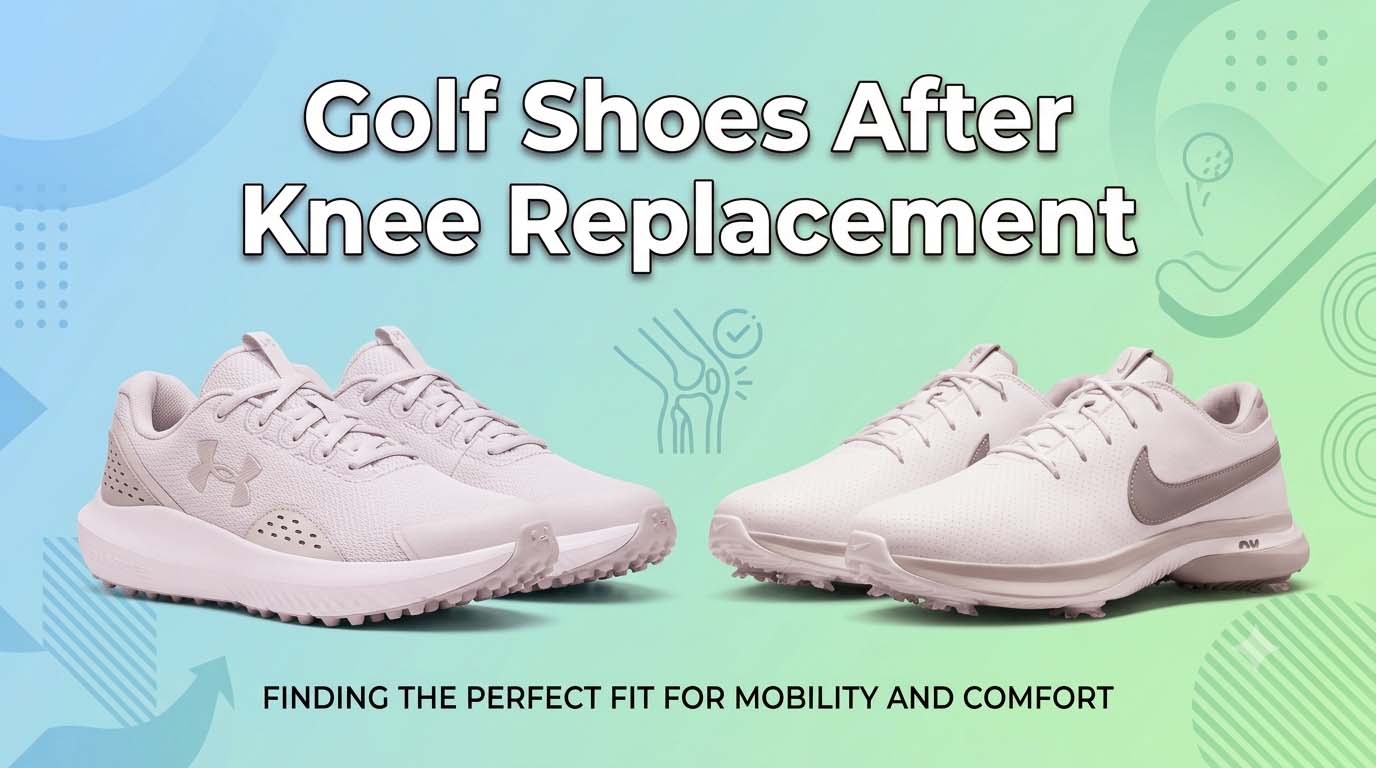
If you’re looking for the best golf shoes after knee replacement, here’s the short answer: for the first nine months, Under Armour Men’s Surge Golf Cleats are your safest bet. For later-stage returners with strong quads, the Nike Air Zoom Victory Tour 3 offers premium performance but demands a stable knee. I’ll walk you through why.
At a Glance: My Top Picks for Post-Surgery Golf Shoes


What Your Knee Actually Needs From a Golf Shoe After Replacement?
Before I get into the reviews, it’s worth understanding why some golf shoes are safer than others. Your new knee doesn’t absorb rotation the way your natural joint did. Soft tissue around the implant is still healing, and the bone-implant interface is vulnerable to shear forces.
Heat Map of a Knee Replacement Swing
Think about the swing in three moments: setup (heel strike load), transition (rotational torque), and impact (vertical force).
The downswing is the worst. As you shift weight and rotate, the femur twists against the tibial component. A shoe that grips too hard, like traditional soft spikes, can lock the foot and transfer that twist straight into the joint. I’ve felt that tug, and it’s unnerving.
The “Spikeless vs. Spiked” Debate
Most guys I talk to worry that spikeless means slipping. I get it. But according to UMass Memorial Health, soft spikes actually create more rotational stress than a well-designed spikeless outsole.
The key is directional traction, patterns that let the foot release slightly on the follow-through. That little bit of slip is your knee’s best friend. I’ve played 18 holes in spikeless shoes after my replacement and never felt unstable. You just need a pattern that grips side-to-side but allows rotation.
My 3 Criteria for Post-Surgery Golf Shoes
- Heel cushioning: Absorbs the first jolt of walking and swinging. Look for responsive foam that compresses slowly.
- Ankle and collar support: Prevents roll-over on uneven lies. A reinforced collar makes a difference.
- Low-torque traction: Spike pattern should prioritize release over grip. Aggressive, deep lugs are a red flag.
Best Golf Shoes After Knee Replacement
I’ve tested both of these shoes over multiple rounds and range sessions. Here’s how they stack up against my three criteria, ranked from safest for early recovery to best for advanced return.
1. Under Armour Men’s Surge Golf Cleats (Best for Early Recovery)
Specs at a glance:
- Charged Cushioning midsole (soft, responsive)
- Directional traction pattern (low torque)
- Deluxe Comfort System sockliner
- NeverWet water-resistant textile upper
- Reinforced ankle collar
The Under Armour Surge is the pair I grab whenever my knee feels stiff, or I’m not sure how the round will go.
The Charged Cushioning is a standout; it’s not a mushy pillow that sinks, but it compresses enough that I don’t feel the hard ground through my heel. Walking the course felt easier than in any other shoe I tried during recovery.
What really sold me is the directional tread. On the range, I could feel my foot rotate slightly at the top of the downswing, just enough to take pressure off my knee. The NeverWet treatment also gave me confidence in the morning dew.
Slipping in wet grass was a mental block early on, but these shoes stayed planted during the swing while still releasing through impact.
The trade-off is durability. The upper isn’t full-grain leather, so if you play 100+ rounds a year, you might see wear faster. And while the support is good, it’s not orthotic-level.
I swapped the sockliner for my custom insole after a few rounds, and that helped even more. But for the price, this is the safest shoe I’ve used for that first year back.
Who is this for? Anyone still in that 3–9 month window post-op. If you fear the downswing, start here. It’s a low-risk investment in peace of mind.
2. Nike Air Zoom Victory Tour 3 Men’s Golf Shoes (Best for Advanced Returners)
Specs at a glance:
- Zoom Air unit stitched to upper (responsive)
- Full-length plate for energy return
- Softspikes Tour Flex Pro (high grip)
- Full-grain leather upper
- 3-D molded collar for lateral stability
I’ll be honest: I bought the Nike Victory Tour 3 too early. About four months post-op, I thought I was ready for a “real” golf shoe.
The first time I swung, the combination of the full-length plate and aggressive spikes locked my foot tight. On the follow-through, I felt a sharp twist in my knee that sent me back to the cart for the rest of the round. It wasn’t a setback, but it was a wake-up call.
The technology here is impressive; the Zoom Air unit gives a springy, responsive feel that I love now that I’m 14 months out. The molded 3-D collar wraps my ankle securely, and the leather upper looks sharp.
But for a healing knee, it’s too much rigidity. The spikes grip so well that torque has nowhere to go but up into the joint.
That said, if your quads are strong and your surgeon has given you the green light for full activity, these shoes perform.
The energy return feels almost bouncy. I noticed I didn’t tire as fast on the back nine. The full-length plate also stabilizes the foot well for power swingers. But I wouldn’t recommend walking 18 in these, especially early on. Riding is better.
Who is this for? Golfers who are 9+ months post-op, have good muscular control, and want maximum stability for an aggressive swing. If you’re still scared of twisting, pick the Under Armour Surge instead.
3 Crucial Pro-Tips for Golfing After Knee Replacement
Beyond shoes, here’s what I learned that made the biggest difference to my comfort and confidence.
Don’t Buy Your “Final” Shoe First
Your swing changes as your leg gets stronger. At three months, I needed max cushion and release. At a year, I wanted stability and energy return. If you buy a high-end performance shoe too early, you might regret it, or worse, hurt yourself. Start with affordable, low-torque shoes like the Surge. Upgrade later.
The 9-Hole Rule
I don’t care how good the shoe is; muscle fatigue will override any cushioning. For the first few rounds, limit yourself to nine holes.
Use a cart, even if you normally walk. My knee ached after six holes on my first full 18; I limped through the last three. Nine holes let me recover and build stamina without paying for it the next day.
Prioritize the Insole Over the Spike
Most knee surgeons I’ve heard recommend spikeless shoes for the first six months. If you absolutely need spikes, the Victory Tour 3’s Softspikes can be swapped for lower-profile Pulsar grips. But honestly? The insole matters more.
A good custom orthotic or even a high-quality OTC insert can reduce joint load better than any outsole pattern. I added a pair of Superfeet to the Surge, and it was a game-changer.
Frequently Asked Questions
a) Can I wear spiked golf shoes after knee replacement?
Soft spikes create high rotational torque that can twist the tibial component. Most orthopedic sources recommend spikeless shoes for at least the first year. If you must wear spikes, choose a low-profile, multi-directional pattern and limit walking.
b) How long after knee replacement can I play golf?
Most surgeons clear patients for light chipping and putting around 8-12 weeks, and full swings by 3-6 months. But every recovery is different. Start with short pitches and listen to your knee. Shoes alone won’t protect against overexertion.
c) Do I need extra cushioning in golf shoes after knee replacement?
Yes. Heel cushioning reduces the shock of walking and the impact of the golf swing. Look for shoes with responsive foam midsole technology, not just a soft sockliner. The Under Armour Surge’s Charged Cushioning is a good example.
d) Should I buy expensive golf shoes after a knee replacement?
Not necessarily. A high-investment shoe like the Nike Victory Tour 3 is designed for performance, not recovery. It’s smarter to start with a more affordable, safety-focused shoe and upgrade once your knee is stronger and more stable.
Final Word | Which Shoe Is Best for Your Knee?
Here’s the bottom line. If you’re still worried about that first real swing, pick the Under Armour Surge. It’s the closest thing to a recovery shoe I’ve found — low torque, excellent cushioning, and a price that won’t make you wince if you outgrow it in six months.
If you’re nine months or more post-op, your quads feel strong, and you want tournament-level stability, the Nike Victory Tour 3 can work, but only if you’re confident in your joint. I’d still suggest wearing it while riding, not walking.
Whatever you choose, remember: no shoe replaces a thoughtful, gradual return to the game. Listen to your knee. And if something doesn’t feel right, step back.