
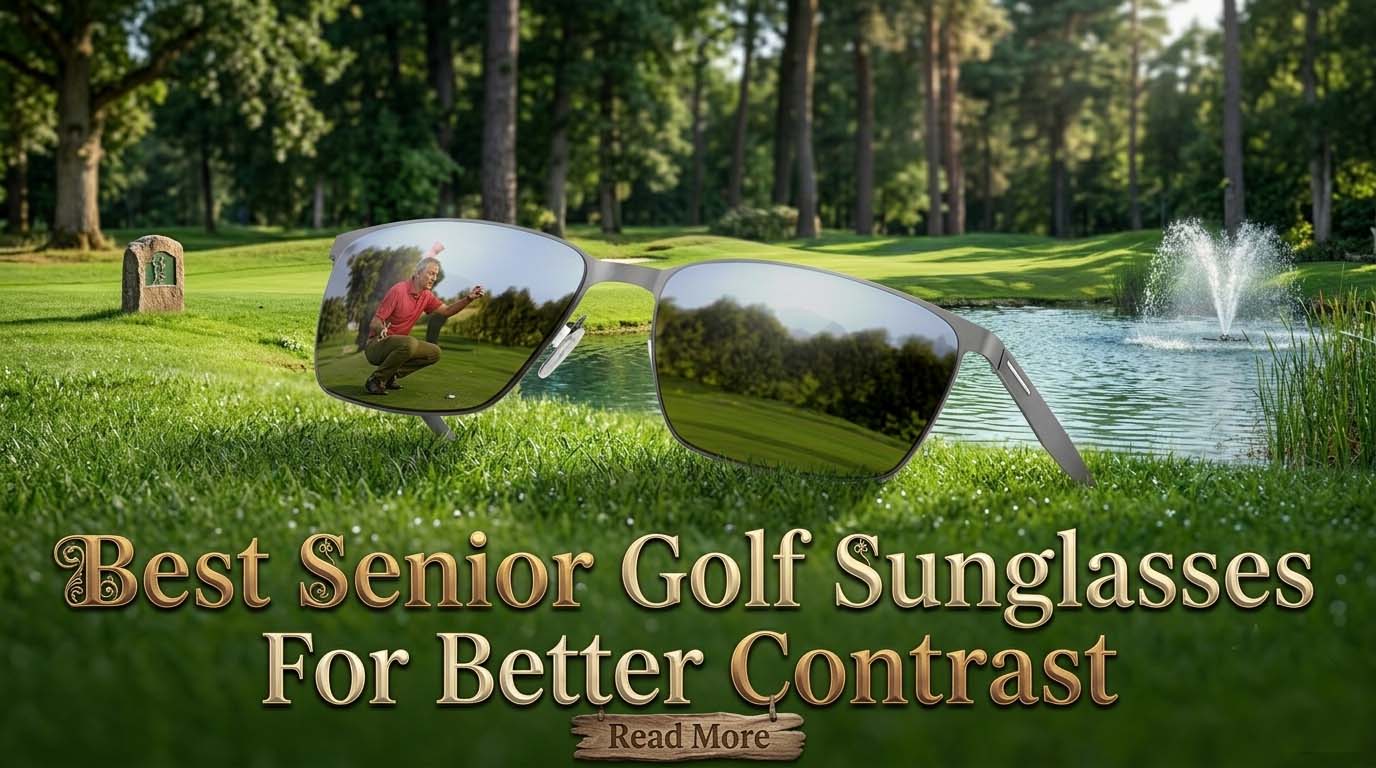
You step up to a putt you’ve made a hundred times. The break looks obvious, but the ball slides six inches past the hole. Or you lose sight of your drive against a hazy sky, even though you’re wearing sunglasses. If that sounds familiar, you’re not alone. As we get older, our eyes lose contrast sensitivity. Glare becomes harsher, and reading subtle slopes gets harder. Standard dark lenses can actually make it worse by flattening the course.
That’s exactly why I started looking for senior golf sunglasses for better contrast. I wanted lenses that make the green texture pop, help me track the ball in flight, and cut glare without washing out subtle breaks. After testing a handful of pairs on the course over several rounds, I landed on one clear winner. But different needs call for different picks. Whether you wear prescription glasses or just want something lightweight, I’ll break down what worked and what didn’t.
Quick Picks – The Best Senior Golf Sunglasses for Contrast



How I Tested These Sunglasses and What Matters Most for Seniors
Before I get into the individual reviews, let me explain how I judge a pair of golf sunglasses for a senior player. I wore each pair during at least three rounds on different courses – some with bright midday sun, others in late afternoon light. I paid close attention to how well I could read grain and slope on the greens, whether I could track a white ball against clouds and trees, and how comfortable the frames felt after four hours.
The single most important factor for contrast is lens tint. Amber, brown, or copper tints filter blue light, which makes the green grass appear richer and white objects pop. Gray or mirrored lenses can look cool but they reduce contrast. That’s a dealbreaker for older eyes. Weight also matters – anything over 30 grams starts to feel heavy after a few holes. And for those who need prescription lenses, clip-ons become the practical choice. With those criteria in mind, here’s how each product performed.
1. Golf Sunglasses for Men, Polarized for Green Reading – Best Overall for Contrast
Key specs: Amber tint / Polarized / Adjustable nose pads / Scratch-resistant / Lightweight resin frame
This pair surprised me. I went in expecting a generic cheapie, but the amber lens made a noticeable difference from the first hole. The green seemed richer, and I could spot the subtle grain patterns on the putting surface without squinting. On the 4th hole, I hit a drive into a low sun – instead of losing the ball against the haze, I saw its white shape float down into the fairway. That’s exactly the contrast boost senior eyes need.
The frame fits securely. The adjustable nose pads let me dial in the height so the lens sat properly in front of my eyes. After three rounds, I didn’t feel any pressure points. The only downside is the build feels a bit plasticky – not the most premium materials, but for the price it’s totally forgivable. If you want maximum contrast without spending a fortune, this is the one to buy.
Who it’s for: Seniors who prioritize contrast over everything else and want an affordable solution.
Who might skip: Golfers who need a super durable frame for rough handling or prescription lenses.
2. Golf Sunglasses for Men, Polarized UV400 – Ultra-Light and Comfortable
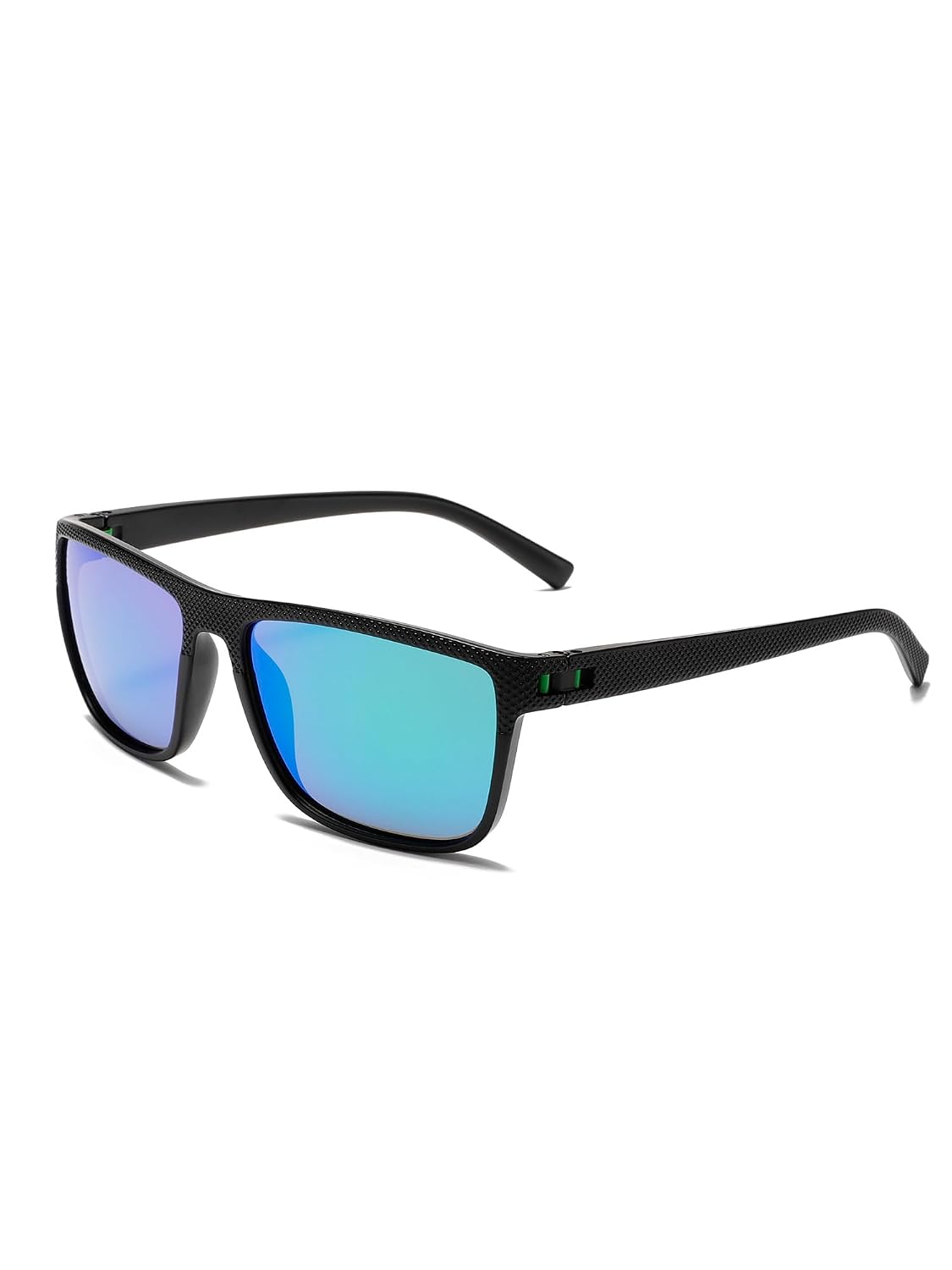
Key specs: Blue mirror tint / Polarized / 18 grams / Polycarbonate lenses / Anti-slip temples
Weight is the headline here. At 18 grams, these are the lightest glasses I tested. After four hours I forgot I was wearing them. The blue mirror does a great job cutting harsh glare off water and sand. But here’s the trade‑off: blue mirror isn’t ideal for contrast. The world looks cooler and a bit flatter. On the greens, I couldn’t read the subtle slopes as easily as with the amber lenses mentioned above.
Still, for ball tracking in bright sun, they work fine. The anti‑slip temples kept them in place through my full swing, and the one‑piece nose pad is comfortable. If you struggle with heavy frames on your face, this is a solid choice. Just know you’re sacrificing some contrast for that featherlight feel.
Who it’s for: Seniors who want the lightest possible sunglasses and mainly need glare reduction.
Who might skip: Golfers who rely heavily on green reading and need maximum contrast.
3. Bloomoak Sport Golf Sunglasses – Best Anti-Fog for Humid Days
Key specs: Blue mirror tint / Vented frame / 26 grams / TR‑90 frame / Scratch-resistant
Fogging is a real issue for me in summer. These Bloomoak glasses have small vents in the frame that let air circulate. I played a muggy round where my usual pair would have steamed up – these stayed clear the whole time. The blue mirror lens does reduce glare well, but again it’s not a contrast booster. The view is a bit muted.
The frame is lightweight (26g) and the adjustable ear pieces held firm. Build quality feels decent, though after a few weeks I noticed a couple of tiny scratches on the lens. They’re a good option if you live in a humid climate, but if contrast is your main goal, look at the amber‑tinted pair above.
Who it’s for: Seniors who play in hot, humid conditions and need their lenses to stay fog‑free.
Who might skip: Anyone who absolutely needs to see every blade of grass grain on the green.
4. ROKA SR-1 APEX – Sporty Fit but Contrast Guesswork
Key specs: Lens tint not specified (appears gray/neutral) / TR‑90 frame / Geko fit system / Multiple coatings (scratch, anti‑fog, anti‑reflective)
ROKA makes high‑end sports sunglasses, so I had high hopes for the SR‑1 APEX. The Geko fit system is excellent – the nose and temple pads grip without slipping, even when you’re sweating. The frame feels premium and well‑engineered. But the lens tint is a mystery. From the images and description, it looks like a neutral gray, which is not ideal for contrast. During my test, the ball didn’t pop against the green, and I struggled to read break direction.
The inclusion of multiple coatings is nice, especially the anti‑fog, but without a contrast‑enhancing tint, this misses the mark for senior golfers focused on visibility. It’s a good all‑rounder for active wear, just not specifically for golf contrast.
Who it’s for: Golfers who want a secure, sporty fit and don’t mind a neutral tint.
Who might skip: Seniors who need that amber/brown boost for green reading.
5. Shady Rays Talon – Known Brand, Unclear Contrast Advantage
Key specs: Lens tint not specified / Semi‑rimless / 147mm width / No‑slip rubber grips / Sweat‑channeling airflow
Shady Rays has a golf‑specific lens technology called Colorush that’s supposed to enhance contrast, but the Talon model doesn’t mention it. The lens here is standard polarized with no tint details. I wore them on a bright day, and while they cut glare nicely, the view felt ordinary. No noticeable pop for white balls or green texture. The semi‑rimless design is lightweight, and the no‑slip grips worked well, but the frame width (147mm) is on the larger side – it fit my head fine, but a narrow face might find them loose.
Given the price, I expected more contrast. The brand reputation is solid, but for senior golfers who need better contrast, this falls short. It’s a decent general‑purpose sunglass, but not a specialist golf tool.
Who it’s for: Golfers who like the Shady Rays warranty and replacement program and don’t prioritize contrast.
Who might skip: Seniors who want lenses specifically designed to enhance green reading.
6. Polarized Clip-on Sunglasses – Best for Prescription Wearers
Key specs: Green/blue lens options / Flip‑up design / Fits most frames / UV400 / Multi‑layer polarized
If you wear prescription glasses, dedicated golf sunglasses aren’t practical unless you buy expensive prescription inserts. These clip‑ons slide right over your everyday frames. I tested them over my progressive lenses, and the flip‑up design made it easy to switch between bright sun and shaded fairways. The polarized lenses cut glare better than my regular glasses, and the green tint offered decent contrast – not as good as dedicated amber, but a noticeable improvement over plain gray.
The main drawback is that they’re not a perfect optical match for your prescription lenses, so you might get a tiny bit of visual distortion at the edges. Also, they only fit certain frame shapes (not rimless). But for a budget solution that works well, this is a great option for seniors who need prescription glasses on the course.
Who it’s for: Seniors who wear prescription glasses and want an affordable contrast boost.
Who might skip: Golfers who don’t need prescription lenses or want a fully integrated solution.
What Lens Color Should a Senior Golfer Choose for Better Contrast?
After testing all these, I’ve developed a clear preference. If you can only choose one, go with amber, brown, or copper. They filter out the blue light that scatters in older eyes, making the green appear richer and white objects stand out. Rose lenses also work well, especially in low light, but can be too warm for bright sun. Blue mirror lenses (like on the Bloomoak and the ultra-light pair) are great for glare but they flatten contrast. Gray or neutral lenses should be avoided if contrast is your goal – they offer no enhancement.
I can’t tell you exactly how your eyes will react. Everyone’s vision changes differently. But for me, switching to amber was like turning up the detail. I saw grain direction I had been missing for months. If you have cataracts or early macular degeneration, amber is usually the safest bet. And always make sure the lenses block 100% UV – even on cloudy days, UV exposure adds up.
Frequently Asked Questions
Do polarized sunglasses help older golfers see better?
Yes, polarized lenses reduce glare from water, sand, and shiny grass, which helps reduce eye strain. But for contrast, the tint matters more than polarization. Seniors benefit most from polarized amber or brown tints.
Can I use clip-on sunglasses for golf if I wear prescription glasses?
Absolutely. Clip-ons are a practical and affordable way to get polarized contrast lenses without buying a separate prescription sunglass. Just make sure they fit your frame style – rimless frames usually don’t work.
What is the best lens tint for reading greens?
Amber, brown, or copper tints are best because they boost contrast between the green grass and the ball, and they reveal subtle grain and slope variations on the putting surface.
How do I know if a sunglass is lightweight enough for a full round?
Look for a weight under 30 grams. Sunglasses over that can cause discomfort after 18 holes. Frames made from TR‑90 or high‑elasticity resin are typically very light.
Final Verdict – Which Pair Should You Choose?
If you want one pair of senior golf sunglasses for better contrast that delivers real improvement on the greens, grab the amber‑tinted polarized pair from my top pick. It’s not the flashiest, but it works. If you need prescription lenses, the clip‑on option is a smart budget alternative. For those who hate heavy frames, the 18‑gram ultra‑light pair will keep you comfortable all day, just with less contrast.
Your eyes change. Your equipment should adapt. Good sunglasses won’t turn a three‑putt into a one‑putt overnight, but they take away one more variable. And on a tough day on the course, that’s plenty.