
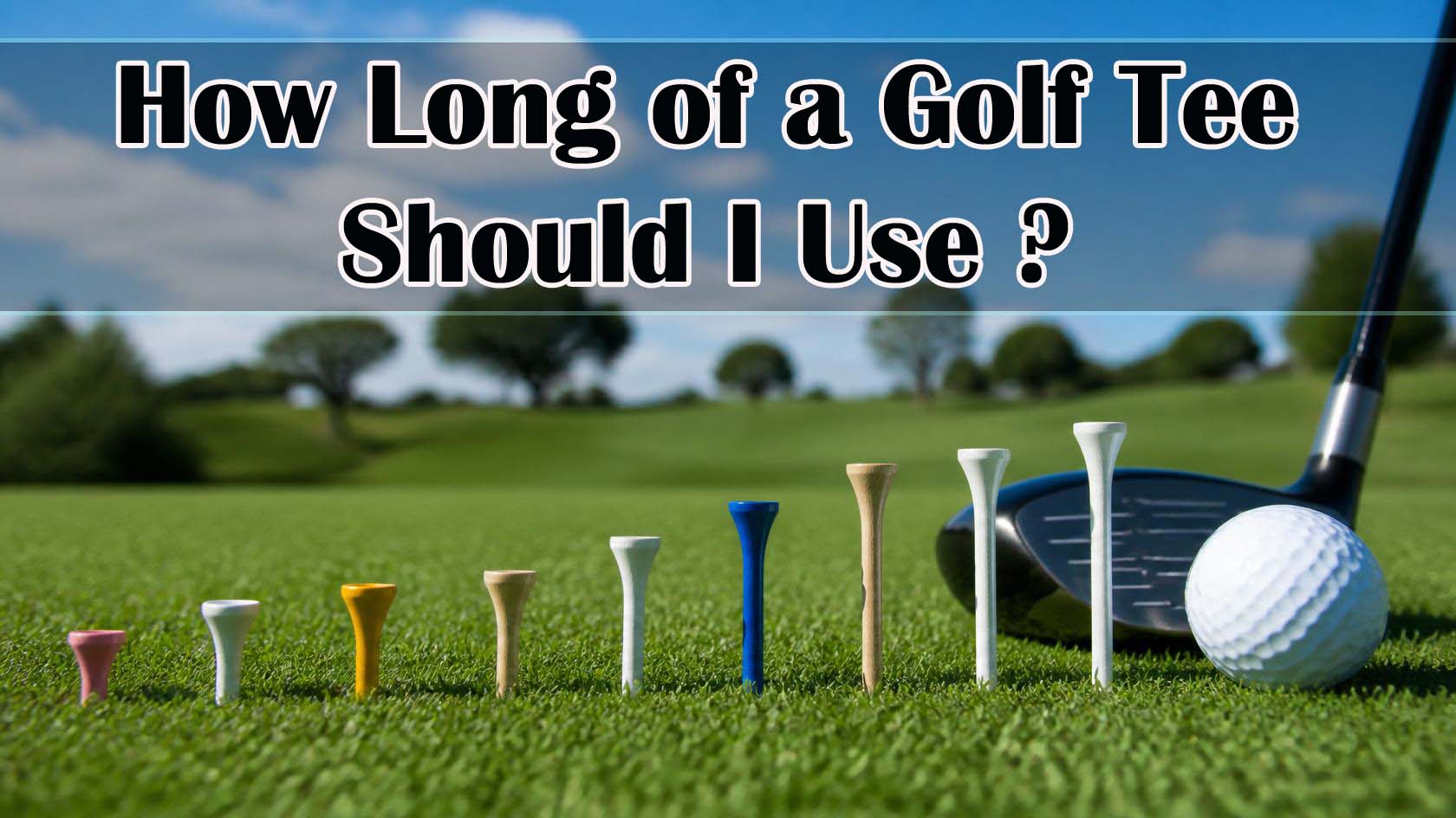
The right golf tee length depends on your club and swing. Learn how to choose the perfect height for driver, irons, and more.
If you have ever stood on the tee box wondering if you grabbed the right tee from your bag, you are not alone. The length of your golf tee directly affects where you strike the ball on the clubface. Get it wrong, and you lose distance or consistency. Get it right, and you give yourself the best chance at a solid shot.
The simple answer is this: use a tee that puts the ball’s equator at or just above the top edge of your driver’s face. For fairway woods and hybrids, the ball should sit just above the grass. For irons, use a short tee or no tee at all. But the real skill is knowing why that works and how to adjust when things are not perfect.
How the Half Ball Above Rule Works?
The most reliable way to set your tee height does not require a ruler. It uses a simple visual check. Place a tee in the ground and set your clubhead flat on the turf behind it. Look at where the ball sits relative to the top of the clubface.
For a driver, you want the top half of the ball to be visible above the face. The equator of the ball should line up with the top edge of the clubhead. This position lets you catch the ball on the upswing, which reduces backspin and increases carry distance.
For a fairway wood or hybrid, the ball should sit lower. You want the top of the ball to be just above the top edge of the face. For long irons like a 3-iron or 4-iron, the ball should barely peek above the grass. Short irons and wedges work best with the ball nearly on the ground.
Match Tee Length to Your Club
Tee manufacturers sell lengths that match common club types. Here is a quick guide to what works best for each club in your bag.
Driver: Use a 2.75-inch or 3.25-inch tee. A 4-inch tee also works if you push it deeper into the ground. The goal is to get the ball high enough to hit on the upswing. Many golfers prefer the 3.25-inch length because it gives a consistent height without being too tall.
Fairway Woods: Use a 2.125-inch or 2.75-inch tee. You want the ball just off the turf, not floating in the air. A 2.125-inch tee is ideal for a 3-wood because it keeps the ball low enough to hit with a sweeping motion.
Hybrids: Use a 2.125-inch tee. Hybrids are designed to be hit off the turf, so you only need a little elevation. Too high, and you risk hitting the ball off the top of the clubface.
Long Irons (3-iron, 4-iron): Use a 1.5-inch tee or push a 2.125-inch tee deeper into the ground. Long irons have less loft, so you need the ball low to create a descending strike.
Short Irons and Wedges: Use a 1.5-inch tee or simply drop the ball on a bare patch of grass. These clubs are meant to be hit with a steep angle of attack. A tee that is too tall forces you to hit the ball fat or thin.
Why One Tee Length Does Not Fit All?
Some golfers try to use a single tee length for every club. That usually leads to poor contact. A 2.75-inch tee works for driver and fairway woods, but it is too tall for irons. If you use the same tee for a 9-iron, you will hit the bottom of the clubface and send the ball low and short.
Carry a mix of tee lengths in your bag. A good starter set includes a few 3.25-inch tees for driver, a handful of 2.75-inch tees for driver and fairway woods, and some 2.125-inch tees for hybrids and long irons. Short tees for irons are optional but helpful.
Adjust for Your Swing and Playing Conditions
Your swing shape and the course conditions change, which tee height works best? A fixed height that works for one golfer may hurt another.
Angle of Attack Matters
If you have a steep angle of attack, meaning you hit down on the ball even with your driver, you need a taller tee. A steeper swing produces more backspin, which can balloon the ball in the air. Raising the tee height helps you catch the ball slightly on the upswing, reducing spin and adding roll.
If you have a shallow or sweeping swing, a lower tee works better. Too much height can make you hit the ball off the top of the face, causing a low, weak shot. Lowering the tee brings the strike back to the center of the face.
Turf and Weather Conditions
Soft ground makes tees sink deeper. If the turf is wet or spongy, your 2.75-inch tee may only hold the ball an inch off the ground. In that case, switch to a 3.25-inch tee or push the tee in less.
Hard ground does the opposite. A tee can stand tall even when pushed in. On firm turf, a 2.75-inch tee may hold the ball too high for a fairway wood. Use a 2.125-inch tee instead.
Wind also changes things. In strong wind, tee the ball lower with your driver. A lower launch angle cuts through the wind better than a high ball flight. Switch from a 3.25-inch tee to a 2.75-inch tee on windy days.
Why Tee Height Changes Launch and Spin?
Tee height is not just about comfort. It changes the physics of your shot. When you tee the ball higher for a driver, your clubhead approaches the ball on a more upward path. That upward strike reduces backspin and increases launch angle. The result is more roll after the ball lands.
When you tee the ball lower, your clubhead comes in on a more downward path. That adds backspin and lowers the launch angle. For a driver, too much backspin kills distance. For irons, backspin helps the ball stop on the green.
This is why the same tee height does not work for every club. The driver needs an upward strike. Irons need a downward strike. Fairway woods need a neutral sweep. Your tee height controls that angle of attack.
Common Tee Height Mistakes
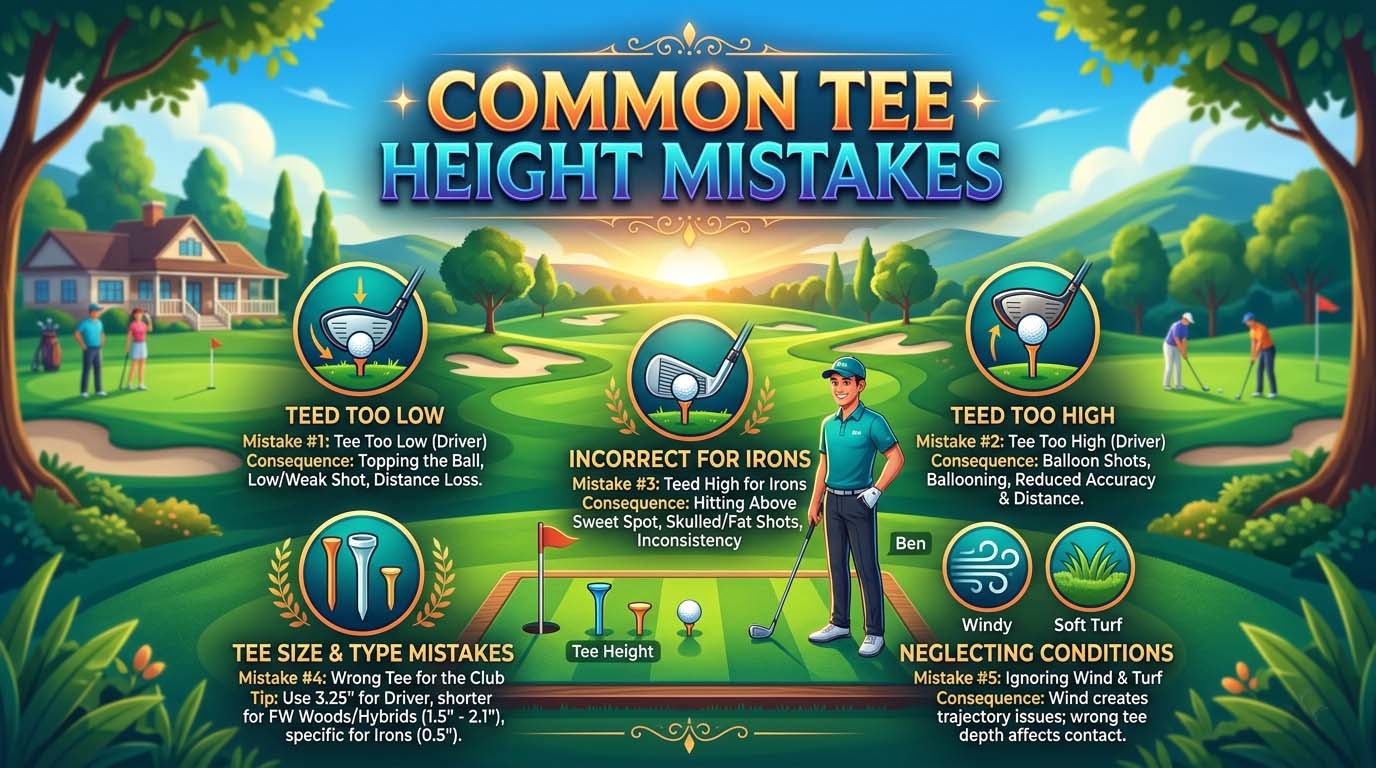
Even experienced golfers make these errors. Avoid them to hit better shots.
Teeing the ball too high with a driver. This causes pop-ups and sky marks on the top of your driver. You hit the ball off the top edge of the face, sending it high and short. If you see a scuff mark on the crown of your driver, lower your tee.
Using a 4-inch tee for a 3-wood. A 4-inch tee lifts the ball too high for a fairway wood. You end up hitting the ball thin or topping it. Stick to a 2.125-inch or 2.75-inch tee for fairway woods.
Using the same tee length for every club. This leads to inconsistent contact across your bag. You may hit your driver well but struggle with hybrids and irons. Carry multiple lengths and switch as needed.
How to Measure Your Ideal Tee Height Without a Ruler?
You do not need a measuring tape to get the right height. Here is a fast method that works on the course.
Place a tee in the ground. Set your clubhead flat on the turf behind it. Look at where the top of the ball lines up with the clubface. For a driver, the center of the ball should be level with the top edge. For a fairway wood, the top of the ball should be just above the face. For an iron, the ball should barely be above the grass.
If the height looks wrong, pull the tee and try again. After a few tries, you will develop a natural feel for the correct height. Some golfers mark their preferred depth on the tee with a dot of nail polish or a permanent marker.
Frequently Asked Questions
Can I use the same tee for a driver and a 3-wood?
You can, but it is not ideal. A 2.75-inch tee can work for both if you push it deeper into the ground for the 3-wood. But using a separate shorter tee for the 3-wood gives you a more consistent height.
What is the longest golf tee allowed?
The USGA allows a maximum tee length of 4 inches. Any longer than that is illegal for tournament play. Most golfers do not need a 4-inch tee unless they have a very steep swing.
Does tee length affect distance?
Indirectly, yes. The right height optimizes launch angle and spin. If you tee the ball correctly, you can gain 5 to 15 yards of distance compared to a bad height. It is not the tee itself, but the contact it creates.
Should I use a longer tee for a junior golfer?
No. Junior golfers use shorter clubs, so standard tee lengths work. A 1.5-inch tee may be easier for small hands to place. The same half-ball above rule applies regardless of age.
What does tee height mean when I buy a pack of 2.75-inch tees?
The number refers to the length of the tee shaft, not the height of the ball above the ground. How high the ball sits depends on how deep you push the tee into the turf. Always adjust by feel and the half-ball rule.
Choosing the right tee length is a small change that makes a big difference. Start with the golf club-based guide, then adjust for your swing and the conditions. A few extra seconds on the tee box can save you from a poor shot and give you the confidence to swing freely.
Final Word
If you’ve been asking, how long of a golf tee should I use, the answer depends on the club in your hands and your swing style. Finding the proper tee length can help optimize launch conditions, improve contact, and make your shots more predictable. A small adjustment in tee height can have a bigger impact than many golfers realize.