
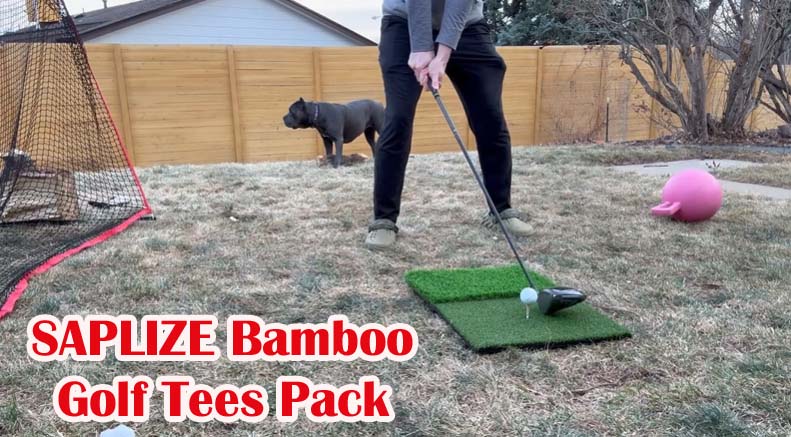
If you’ve been scrolling Amazon looking at golf tees, you’ve probably had the same thought I did: “Bamboo? Isn’t that going to snap on the first drive?” I’m a 15-handicap who breaks plastic tees like they’re toothpicks, and I was tired of digging through my bag for unbroken ones. So when I stumbled on the SAPLIZE Bamboo Golf Tees Pack,
I was skeptical. But after a month on the course with a 150-pack in my bag, here’s the honest verdict: they’re not indestructible, but they’re the best value for club protection and consistent setup you’ll find under $10. They rank #1 for value because of the price-to-performance ratio — about seven cents per tee — and the benefit of reducing side spin compared to plastic competitors. They won’t last a full round if you mishit, but that’s exactly why you should buy them.
The Problem with Standard Tees (A Quick Case for Bamboo)
Before I dive into the SAPLIZE tees, let me set the stage. I used to buy those neon plastic tees by the bucket. They’re tough, sure, but I noticed something over time: sky marks on my driver’s face. Plastic leaves scuffs, and on a sunny day, those marks catch the light and annoy me every time I line up.
Plus, plastic tees create friction. That friction can add unwanted side spin, especially on a mis-hit. I’m not saying it’s the biggest factor in a slice, but it doesn’t help.
On the other end of the spectrum, cheap wooden tees are a gamble. I’ve had packs where half of them snapped on the first swing with a 3-wood. That’s frustrating, and it makes you paranoid about using a fresh tee for every shot.
Bamboo sits right in the middle. It has high tensile strength — some sources compare it to steel — but it’s soft enough that it won’t mark up your club face. That combination is exactly what you want from a tee. It’s not about being unbreakable; it’s about protecting your expensive driver while giving you a consistent launch. And that brings me to the SAPLIZE pack.
What Makes the SAPLIZE Bamboo Golf Tees Different?
The Material: High-Strength Bamboo
SAPLIZE advertises “high-strength bamboo,” and I was curious how that would hold up. The first thing I noticed was the smooth finish. It’s not rough like some natural wood tees. That smoothness matters because it reduces friction at impact — less friction means less spin, which means straighter ball flight.
I can’t say I gained 20 yards, but I did notice my drives felt cleaner off the face, especially with the driver. The tensile strength claim checks out in practice: these are much stronger than pine tees. I’d say they’re about 70% as durable as plastic, but the trade-off is worth it when you see zero marks on your club face.
The Exclusive Black Stripe (Not a Gimmick)
This is the feature I was most skeptical about. A black stripe painted on the tee is supposed to help you set the same height every time. Sounds like marketing fluff, right? But after using it for a few rounds, I get it. I used to eyeball my tee height and ended up with inconsistent launch angles.
With the stripe, I line it up right at the bottom of my driver face, and the tee goes in to that depth. It’s not a magic fix, but it does add consistency to your setup routine. SAPLIZE tags this for a “professional” skill level, which I think is a stretch — it’s not about skill, it’s about consistency. Any golfer who cares about setup will benefit from it.
The Pack Breakdown (100 vs 150 & the 4 Sizes)
This pack comes in four sizes: 3-1/4″, 2-3/4″, 2-1/8″, and 1-1/2″. That covers every club in your bag. Here’s the quick guide I use:
- 3-1/4″: Driver (high launch) — I use these on the tee box for maximum height. The tee sits about 2.5″ above the ground.
- 2-3/4″: Driver or 3-wood — good for lower launch or windy days. About 2″ above the ground.
- 2-1/8″: Fairway woods and hybrids — roughly 1.5″ above ground. Perfect for a 5-wood or 4-hybrid.
- 1-1/2″: Irons and par-3 tees — just 1″ above ground. Ideal for a 6-iron or wedge.
I opted for the 150-pack. At that count, I can lose five tees per round for a month and still have extras. That takes away the anxiety of trying to save a tee after a good drive. If it breaks, I just grab another one. No big deal.
On-Course Performance Analysis
Durability Test: How Many Drives Per Tee?
Here’s the truth: if you hit it square, a single SAPLIZE tee can last two to three drives with a driver. I had one last four drives on a par-5, par-4, par-3 stretch. But if you catch it low on the face — that slightly thin hit — it will snap in half. I broke three in one round that way. At first, I was annoyed.
Then I reminded myself: it’s a seven-cent tee. I’d rather break a bamboo tee than damage a $500 driver face. And that’s the core trust factor here. Bamboo is forgiving to your club, not to your mishits. That’s a trade-off I’m happy to make.
Club Protection vs. Plastic
I checked my driver face after a full month with these tees. Zero new sky marks. Not a single scuff. Plastic tees left marks on my previous driver within two rounds. The natural lignin in bamboo acts like a lubricant at impact — it doesn’t grab the club faces the way plastic does. If you’re protective of your gear, this alone is worth the switch.
Side Spin & Distance
Let’s be realistic: you won’t magically gain 20 yards with these tees. But I did notice something with my slice-prone drives. On a mis-hit, the spin felt a bit more controlled — less of the violent side spin that sends the ball into the next fairway. I attribute that to the lower friction at impact.
It’s a subtle difference, not a dramatic one. If you’re already fighting a slice, every little bit helps. The SAPLIZE tees won’t fix your swing, but they won’t make it worse, either.
SAPLIZE vs. The Competition (Value Check)
I compared these to the other bamboo tees you’ll see on Amazon: Wedge Guys and Natural. Here’s how they stack up.
- vs. Wedge Guys Bamboo Golf Tees: Wedge Guys also uses bamboo and touts a lacquer finish. The main difference is the black stripe. SAPLIZE has it, Wedge Guys doesn’t. For me, that stripe is a small but meaningful edge for consistent setup. Otherwise, they’re similar in durability and price.
- vs. Natural Wooden Golf Tees: Natural offers a 100-pack in two sizes (2-3/4″ and 3-1/4″) for about the same price as the SAPLIZE 150-pack. You get fewer tees and no height guide. SAPLIZE wins on value and variety.
- vs. Plastic “Performance” Tees: Plastic lasts longer — I’ll admit that. But it marks up your driver and costs more per tee. If you’re a once-a-year golfer, plastic might make more sense. For regular players, SAPLIZE gives you better club protection and a lower per-tee cost.
- vs. Zero Friction Tees: Zero Friction tees are a different product — they use a prong design to reduce friction even further. They’re great for spin control, but they’re plastic and cost more. SAPLIZE is for the purist who wants a natural feel and doesn’t mind replacing tees after a few swings.
The Pros & Cons (The Honest List)
Pros:
- Eco-friendly and biodegradable — no plastic waste on the course.
- The black stripe helps with consistent tee height.
- Zero club marks. My driver’s face still looks new.
- Great value — 150 tees for under ten bucks works out to pennies per round.
- Four sizes cover every club in your bag.
Cons:
- Not as durable as plastic. Expect breakage on mishits, especially low-face strikes.
- Natural color only. If you lose one in the rough, you might not find it. No bright colors to spot easily.
- The box is plain. It’s a minor thing, but if you’re the type who likes a nice presentation, this is basic packaging.
My Top Pick: SAPLIZE Bamboo Golf Tees

Final Verdict: Should You Buy SAPLIZE Bamboo Golf Tees?
Buy these if: You play three or more times a month. You hate seeing sky marks on your driver. You want the best cost-per-tee ratio on the market and don’t mind replacing a tee after a mishit.
Skip these if: You play once a year and want a single tee to last an entire round. Plastic is better for that use case.
The SAPLIZE tees solve the real problem of clubhead damage without breaking the bank. The four-size pack covers every club in your bag, and the black stripe gives you one less variable to think about. Are they the most durable tees I’ve used? No. But for seven cents a pop, they’re the best balance of price, protection, and consistency I’ve found. If you’re on the fence, grab the 150-pack and don’t look back.
FAQ
Will SAPLIZE bamboo tees break on a driver swing?
Yes, they can break if you catch the ball low on the face or make a slightly thin strike. With a solid hit, they typically last two to three drives. The trade-off is that they protect your driver’s face from marks, unlike plastic tees.
What size SAPLIZE tee should I use for my driver?
For a driver with a high launch, use the 3-1/4″ size. For a lower launch or a 3-wood, the 2-3/4″ size works well. The black stripe on the tee helps you set a consistent height every time.
Are these tees biodegradable?
Yes. SAPLIZE bamboo tees are made from natural bamboo and are biodegradable. They won’t leave plastic waste on the course, making them an eco-friendly choice for golfers.
How many tees come in the pack?
The SAPLIZE pack is available in two options: 100 tees or 150 tees. The 150-pack covers every club in your bag with four sizes included: 3-1/4″, 2-3/4″, 2-1/8″, and 1-1/2″.
Do these tees really reduce side spin?
The smooth bamboo finish creates less friction at impact compared to plastic tees. While you won’t see a dramatic change, many golfers report a slight reduction in side spin, which can help keep drives straighter, especially on mishits.