

Picture this: you’ve got a dozen premium golf balls that cost you a small fortune. They’ve got a few scuffs from cart paths, but that’s fine. The real problem? They’ve turned a sickly shade of yellow. You look at them and think, “I wouldn’t hit that into a water hazard on purpose.” But you’ve got a pile of them sitting in your bag, and you’re wondering if you can bring them back to life. The short answer is yes.
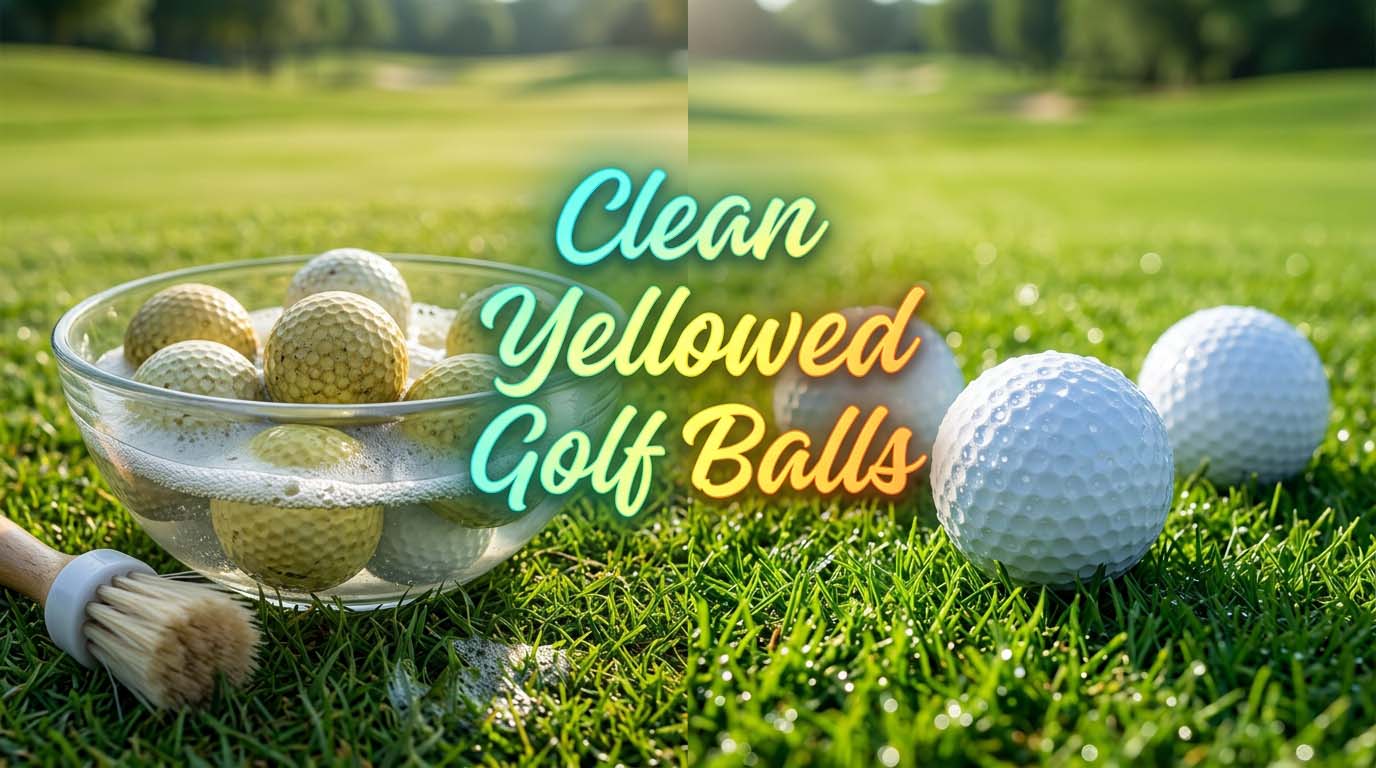
To clean yellowed golf balls, soak them in a 50/50 solution of distilled white vinegar and warm water for two hours, scrub gently with a soft brush, then dry them in direct sunlight. This method reverses the oxidation that causes yellowing, and it works on both Surlyn and Urethane covers – as long as you follow the right steps.
The Chemistry of Yellowing | Why Vinegar is the Only Fix That Works
Yellowing isn’t just dirt. It’s the result of oxidation, the same process that turns a sliced apple brown. Over time, oxygen, heat, and UV light break down the polymers in the ball’s cover and core. Sulfur compounds from the rubber core migrate to the surface, and if you’ve fished your balls out of a pond, organic tannins from decaying vegetation soak into the cover.
No amount of soap is going to fix that. You need an acid that can reverse the oxidation reaction. Distilled white vinegar is a mild acetic acid that dissolves the oxidized layer without damaging the underlying plastic. It’s not magic – it’s chemistry.
Here’s the catch: not all golf ball covers are created equal. Surlyn is a tough, durable ionomer resin that shrugs off chemicals and abrasion. Urethane, on the other hand, is a soft, porous material used on premium balls for its spin and feel. Urethane absorbs chemicals more readily, so you need a gentler touch. The table below breaks it down:
| Cover Type | Characteristics | Cleaning Approach |
|---|---|---|
| Surlyn | Durable, resistant to water and chemicals | Can handle longer soaks and more aggressive scrubbing |
| Urethane | Soft, porous, absorbs liquids | Shorter soak times, gentle scrubbing, no harsh chemicals |
Using the right approach for your ball’s cover is the difference between restoring it and ruining it. I learned this the hard way when I ruined a dozen Pro V1s by leaving them in a vinegar bath overnight. Trust me, stick to the guidelines below.
The Step-by-Step Deep Clean for Heavy Yellowing
Now let’s get into the nitty-gritty. This method works for heavily yellowed golf balls, whether they’re covered in pond grime or just have that sickly tint. I’ve used this on everything from range balls to tour-level urethane, and it delivers.
What you’ll need:
- Distilled white vinegar
- Warm water (not hot)
- A bowl or bucket
- A soft-bristled toothbrush
- A clean towel
Step 1: Prep the balls. Wipe off any loose dirt or mud with a dry towel. You don’t want abrasive grit scratching the cover while you’re scrubbing.
Step 2: Mix the solution. Combine equal parts warm water and distilled white vinegar in a bowl. Warm water helps the acid work faster, but hot water accelerates oxidation and can warp the core. Stick with warm.
Step 3: Soak. Submerge the balls completely. For standard yellowing, soak for two hours. If you’re dealing with heavy pond staining, you can push it to two hours max, but for Urethane covers, stick to the minimum. Check on them at the 30-minute mark; you’ll see the water start to turn yellow.
Step 4: Agitate. This is the step everyone skips. After soaking, the oxidation has been loosened but not completely removed. Gently scrub each ball with a soft-bristled toothbrush, paying extra attention to the dimples. Use circular motions and let the bristles do the work. Don’t press hard; you’re not trying to sand anything off. This is how to restore golf balls to their original white without causing damage.
Step 5: Rinse and use the sunlight drying hack. Rinse the balls in clean water to remove any vinegar residue. Then – here’s the secret – don’t just air-dry them in a dark room. Place the rinsed balls on a clean towel in direct sunlight. The UV rays work as a final bleaching agent, brightening the plastic further. Leave them out for a few hours, and you’ll notice a significant difference. I’ve had balls come out looking almost brand new after this step.
One more thing: never use hot water, and never use apple cider vinegar. Apple cider vinegar contains sugars that leave a sticky residue, which attracts more dirt. Stick with distilled white vinegar.
The Ultimate Prevention Plan (Prolonging the Whiteness)
Now that you’ve got your balls looking white again, you want to keep them that way. Here’s how to prevent yellowing in the first place. I wish someone had told me this years ago – it would have saved me a lot of soaking time.
- Store balls out of direct sunlight. UV light is a major culprit. Keep your balls in a bag or a covered container when you’re not playing.
- Clean them after every round. A quick wipe with a damp towel and a drop of mild dish soap goes a long way. Don’t let dirt and grass sit on the cover.
- Dry them thoroughly. Don’t put wet balls in a sealed bag. Moisture promotes oxidation and can lead to mildew.
- Avoid extreme heat. Don’t leave your golf bag in the trunk of your car on a hot day. The heat accelerates the breakdown of the cover.
- Use a separate pocket for damp or dirty balls. If you’ve fished a few out of a pond, don’t mix them with your clean ones until they’re dry.
Prevention is always better than a deep clean. A few habits will save you time and money in the long run.
Common Mistakes That Ruin Golf Balls (And How to Avoid Them)
Even with the best intentions, it’s easy to make mistakes that damage your balls beyond repair. Here’s what to avoid, based on my own trial and error.
- Using hot water. I said it before, but it’s worth repeating. Hot water accelerates oxidation. Stick with warm or cool.
- Scrubbing with abrasive materials. Steel wool, wire brushes, or the coarse side of a sponge will scratch the cover. These scratches create weak points that collect more dirt and affect the ball’s flight. Use a soft-bristled toothbrush.
- Using bleach on premium balls. Bleach will turn a yellow ball white initially, but it weakens the core and makes the ball brittle. If you must use bleach for a truly nasty ball, dilute it heavily (1 part bleach to 10 parts water) and never soak for more than five minutes. And only do this on cheap distance balls, never on Urethane.
- Soaking for too long. A long soak in vinegar can break down the cover, especially on Urethane. Stick to the recommended times.
- Expecting scuffed balls to come back. If a ball has a visible scuff or cut, no amount of cleaning will fix it. The dimple pattern is physically damaged, and the ball’s aerodynamics are ruined. Accept it and move on.
Frequently Asked Questions
Does a yellowed golf ball perform differently than a clean one? Yellowing doesn’t affect the ball’s performance for most casual golfers. The dimple pattern is what matters for flight, and yellowing is just a cosmetic issue. If the cover is still smooth and the ball isn’t scuffed, you can play it without worry.
How do I remove yellow transfer stains from a golf bag? If a wet, yellowed ball left a stain on your bag, you can usually lift it with a little rubbing alcohol or a magic eraser. Test an inconspicuous spot first. For fabric bags, a mild detergent and a soft brush should work. The key is to treat it quickly before it sets.
Why soak golf balls in Epsom salt? Some people use Epsom salt as a mild abrasive. It’s a common trick to add a bit of grit to a soak without using harsh chemicals. However, it doesn’t chemically remove oxidation the way vinegar does. It can help loosen dirt, but don’t expect it to whiten heavily yellowed balls. Stick with vinegar for that.
Can I use a dishwasher or washing machine? I strongly advise against it. The heat and agitation can damage the ball’s core and cover. A dishwasher’s drying cycle is especially bad. Hand-washing with the vinegar soak is the safest method.
There you have it. A complete guide to cleaning yellowed golf balls that actually works. Whether you’re prepping balls for resale or just want to look down at a gleaming white ball on the tee box, this method will get you there. Give it a try on your next batch of pond finds; you’ll be surprised at how good they can look with a little patience and the right chemistry.
Expert Opinion:
“As a golf equipment specialist with over 20 years of experience, I always recommend cleaning yellowed golf balls carefully rather than rushing to replace them. Gentle methods, like soaking in mild soap or vinegar and using a soft brush, not only restore the ball’s appearance but also preserve its performance.
Harsh chemicals or abrasives can compromise the cover, affecting spin and distance. Additionally, choosing a bright, high-visibility colour such as neon yellow can make a significant difference in tracking the ball on the course, reducing lost balls and improving overall play.”
Michael Trent, Golf Equipment Analyst and PGA Consultant
Final Word
For most golfers, the best method is to soak balls in warm water with mild dish soap or vinegar, then gently brush them and completely dry them. Only use bleach or baking soda for tough stains, and always test first.
Pairing clean balls with bright yellow or neon-colored balls enhances visibility, boosts confidence, and ensures you get the most from your game.